

Kanto Audio TUK Review – The Uber

Sound –
Setup –
As with any speaker, the sound will vary greatly based on positioning of the speakers and the acoustics of the listener’s room so naturally these comments will pertain to my experiences. The TUK also offers basic bass and treble adjustment, 6dB in either direction to compensate for different room sizes, listening volumes and preferences. Since I have a larger room, I was content with +5dB on the bass and +2 on the treble setting. There isn’t anything special acoustically about my setup, the room is carpeted and the speakers are placed at a third of the room’s length 4.5m apart and toed in to a central listener. The 26” stands placed the speakers at perfect ear level for my setup. Another aspect that I admire about the TUK is the extremely low level of hiss. As with most active speakers, that level will increase as the tweeter is turned up, yet even on level 3/5 hiss was not audible unless pressed directly in front of the speaker, great for desktop users.
Tonality –
As with Kanto’s former models, I hear a clean and balanced sound on display from their latest flagship. This speaker system carries a neutral tone and a slightly more engaging W-shaped presentation as opposed to the more linear but also dynamically flatter YU-series. Bass is deep-reaching and can be pushed a touch warm or lean depending on setting. It has a bold presentation on behalf of its strong extension and uptick of sub-bass focus. The midrange is very clean and naturally voiced with a slight upper-midrange bias. Treble is well-detailed with a very sharp, agile transient response and a focus on air and fine detail presentation. In turn, it isn’t too glaring nor diffuse sounding, certainly more aggressive than the silk-dome tweeters on Kanto’s previous models.
Bass –
When I first set up the speakers and adjusted the bass to a level that felt balanced with the rest of the sound, I was frankly shocked that the sub wasn’t plugged in. Where bass extension was a caveat on the YU6, the TUK makes considerable strides here, providing some of the best sub-bass solidity I’ve heard from a speaker of this size and price. Rumble too, is clearly defined and well-textured at the very bottom. Of course, this will not be mistaken for a home-theatre setup nor will it ever carry the chest thump of a good 2:1 system. That said, for musical representation, one would hardly want for more here. This is aided by a small sub-bass emphasis that extends linearly into a similarly enhanced mid and cleaner upper-bass tuning.
As the upper-bass sits slightly behind and there is parity between sub and mid-bass, the low-end is very clean in tone despite bass notes having a bold and weightier presentation. Notes remain of well-metered size working in conjunction with very strong driver control to deliver great separation. Note attack is surely more aggressive than the YU6, delivering a harder-hitting impact. This is set to natural decay that contributes to this impression of fullness while retaining ample separation. As the bass has a very clean tuning, the presentation isn’t bloated, muddy or ill-defined with great separation through the mid-bass and excellent detail retrieval. Sub-bass remains a touch diffuse despite offering quite a visceral slam. The benefit of Kanto’s design is that it stands confidently on its own but also offers easy sub output for mixed usage.
Mids –
The midrange is characterised by its clean, forward and well-defined vocals. From a frequency point of view, we observe a well-metered response with a small dip in the lower-midrange to provide separation from the bass followed by a progressive rise to 3kHz prominence. This grants a natural voicing that isn’t the least bit dry or wonky. There are some small deviations, however, note that this will vary based on your room acoustics too. Most notably I hear a touch more recession of the lower-midrange in addition to enhanced upper-midrange presence around the 4kHz region. These two qualities work in tandem to increase clarity and bring the vocal range a touch forward, with instruments assuming a more laid-back positioning by comparison. As such, this isn’t the most powerful, rich and warm midrange presentation but tone is dead neutral in return – the foundation for the TUK’s preference for high definition over top-notch coherence and fullness.
The TUK isn’t an organic speaker but a dynamic and revealing one while not deviating too far from neutral to retain a natural voicing and balanced overall sound. As such, vocals can come across as a touch thin, especially female as male vocals do derive some warmth from the bass. I didn’t find that the TUK sounded strained or overly forward that said, rather, the enhanced clarity and here helps to counterbalance the punchy low-end. The TUK’s smooth articulation contributes towards this, with lower-treble sitting behind the upper-midrange and ensuring that the presentation is devoid of sharpness and sibilance is reduced. For my uses, that being movies and videos in addition to music, the tuning here is ideal. There is excellent vocal intelligibility, even with a sub connected, especially for movies where the ambient music easily muddies the sound, and enough balance remains that they remain a great musical performer too.
Highs –
This is surely one of the highlights of the speaker from a marketing perspective with those AMT drivers promising a superlative performance. Of course, music is music, don’t expect any driver type to transform the sound of the source. What the AMT drivers bring is clean, agile transients that equates to an organised and effortless presentation of fine details alongside impressive top-end extension. The tuning too is very easy to enjoy albeit not perfectly linear. There’s a good 5kHz presence that retains a crisp foreground with ample detail presence. Instruments are endowed with a pleasing tone and note attack is sharp and concise, delivering strong fine detail retrieval in both the foreground and background. However, there is a sizeable 6kHz trough that takes some of the sharpness and crunch out of the sound, creating a slightly smoother note articulation noticeable especially with percussion and string instruments.
Focus appears to lie around the middle-treble instead, with treble quantity picking up following this dip. This endows great headroom and enhanced air, while pleasing linearity into this region retains a good sense of cleanliness. Extension also deserves special mention, with abundant sparkle conveying excellent energy and micro-detail presence not commonly found on a speaker of this price. The clean transient response ensures that notes are well-separated and minutiae are well-defined and easy to discern. In turn, instruments do veer on the thinner side and aren’t the most accurate in timbre and texture. However, they are delivered with pristine clarity and cleanliness similar to the midrange. The TUK appears to me, a very strong technical performer with a vibrant tuning that showcases this quality. However, in so doing, its more aggressive sound sacrifices some of the smooth, natural character the YU-series excelled with, which will come down to personal preference.
Comparisons –
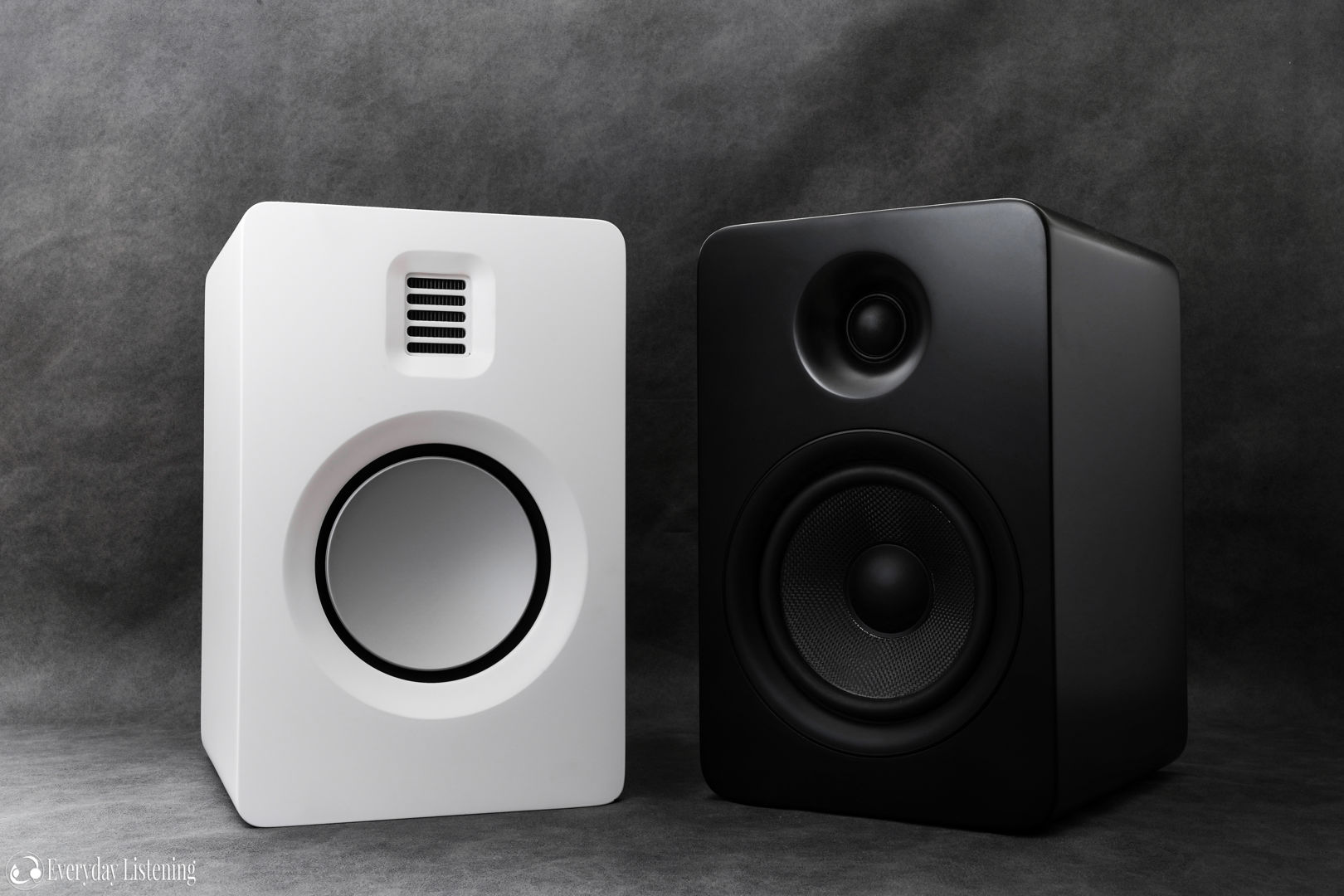
Kanto YU6 ($399): When I reviewed the YU6, I walked away impressed by its smooth and natural sound. The TUK is immediately a more technically impressive speaker. It upholds similar level of overall balance but is a more aggressive sound with its engaging W-shaped tuning. It doesn’t have more bass quantity overall, but a substantially deeper reaching sub-bass extension, delivering a lot more drive and slam than the former flagship. Mid-bass similarly shares a slight enhancement but not pushed into overt warmth or fullness and there is no bloat on either. The YU6 has a smoother attack and decay whilst the TUK demonstrates higher control with more defined notes. Both are tonally clean, and reasonably neutral in voical body and natural in voicing in the midrange.
The YU6 has a slightly smoother upper-midrange which makes it a bit denser and smoother while the TUK is more open and revealing, also a touch more vocal forward. Still, the midrange is not hugely different here. The top-end experience mirrors the experience in the bass, showcasing much improved extension alongside a sharper, cleaner transient response. The YU6 is a bit more linear here, so the instrument timbre comes across as slightly more natural with greater body. The TUK is a touch thinnere but with much more fine detail retrieval and stronger extension into the upper-treble. It has more sparkle and energy. When it comes to imaging, the TUK provides the sharper image with sharper localisation. It also provides better sepration.
Edifier S2000 Pro ($399): Another size-class competitor, the S2000 Pro came across to me as a bit more technical than the YU6. Yet despite sounding more comparable on paper with an aluminium cone woofer and planar tweeter, the TUK surely tells a different story. The TUK provides a jump over the S2000 Pro in terms of bass extension. Both have a similar voicing, that being a slight sub-bass focus that extends some part into the mid-bass. As such, both are bold and dynamic sounding speakers, the TUK more so due to its deeper reaching extension. The S2000 Pro, however, has more flexible tuneability with set eQ profiles that allow it to achieve a slightly flatter sound than the TUK is capable of. Both come across as similar in terms of control and speed, the TUK providing a slightly more concise note attack.
The midrange voicing is also quite similar, both having some upper-midrange emphasis. The S2000 Pro offers a touch more body in the lower-midrange. Both are slightly vocal forward, the TUK coming across as more open and revealing with higher definition while the S2000 Pro being a tad more full-bodied and powerful in its voicing. The top-end is also similar in tuning, a touch smoother in the lower-treble with an uptick of middle-treble energy. Here, however, the TUK provides quite clear benefit with better extension and more sparkle. Its fine detail retrieval is higher overall and the timbre less brittle with greater texture. It is not the forwardness or crispness of its treble that it holds over the S2000 Pro but the more effortless manner in which it presents it, with more separation of each note and higher resolution.
Verdict –
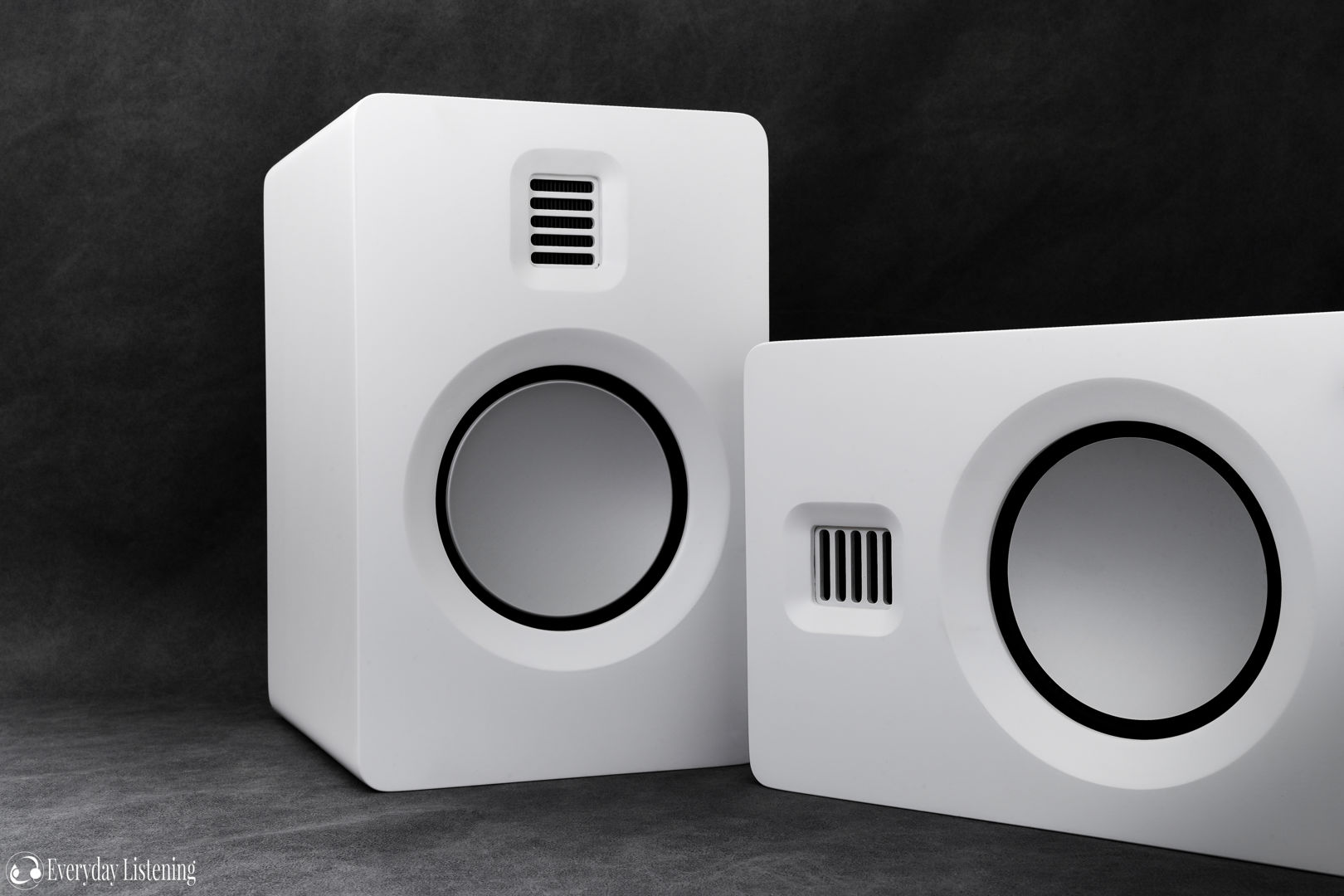
The TUK is a stunning display of what Kanto Audio are capable of and certainly proof to me that the company is bringing the pressure to larger, perhaps more established brands. Though representing a large price jump over the YU6, so to has the quality been improved in all regards. The design is easily class-leading as are the abundant connectivity options and features. The refinement of those features is also notable, think the RIAA equalised Phono pre-amp, low OI front-facing headphone output and independent eQ for each source. This makes the TUK a highly versatile speaker flatters essentially any application whether that be Wireless, TV, PC or a combination of both.
The TUK is available from Amazon (International) for $799.99 USD at the time of writing. Please see my affiliate link for the most updated pricing, availability and configurations.
Track List –
Arcade Fire – The Suburbs
Archive – Controlling Crows (Parts I – III)
AKMU – SAILING
Courtney Barnett – Tell Me How Your Really Feel
Gorillaz – Plastic Beach
John Legend – Once Again
MAMAMOO – reality in BLACK
MGMT – Oracular Spectacular
Modest House – Good News For People Who Love Bad News
NIKI – lowkey
Nirvana – Nervermind
Radiohead – OK Computer
Social House – Haunt You
suggi – cheer up!
Vampire Weekend – Father of the Bride
Vaundy – strobo

Ryan Soo
Avid writer, passionate photographer and sleep-deprived medical student, Ryan has an ongoing desire to bring quality products to the regular reader.
 Everyday Listening
After 27 yrs my Kenwood stereo system has died. Where can I find a system that can accommodate vinyl, CD, and cassettes ?
LikeLike