

Topping A50S Review – Prodigy

Sound –
Frequency Response –
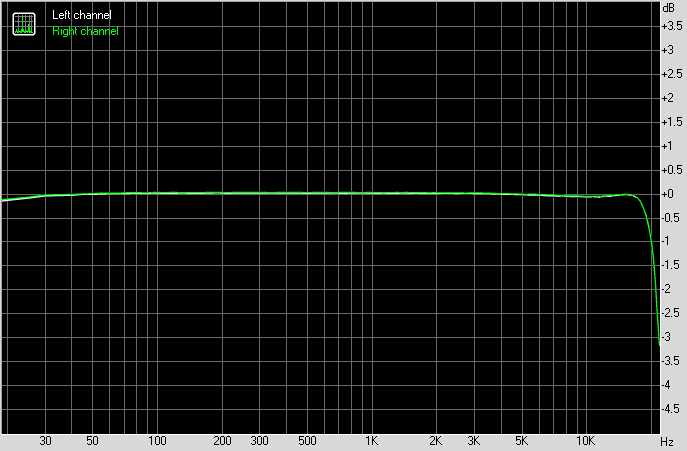
Testing Methodology: RMAA via Startech External Sound Card
The A50S offers a linear frequency response through the audible spectrum, an ideal result. This suggests that it adds no intentional coloration to the sound as per Topping’s intentions with their NFCA modules. Due to the quality of my sound card, I am unable to reliably test other measures such as distortion and cross-talk so they will be used as a personal reference only. Qualities here can impact the sound in subjective listening.
Output Impedance & Hiss –
One thing I love about the NFCA amps is that there is zero background noise, even with my most sensitive in-ears. On high-gain, noise barely started to creep in around 50% volume, however, such volumes are absolutely intolerable for enjoyable listening. As a result, I would say the A50s is essentially silent through its useable volume range and headphones aren’t sensitive enough to pick up noise at these higher volumes as well. Similarly, NFCA-based amplifiers offer a very low output impedance, in this case measured on Audio Science Review to be around 0.4 ohms. I can confirm this empirically as there was no signature colouration relative to my THX789 featuring a 1-ohm output impedance.
In fact, the A50s much like the Topping L30 is even more desirable here offering a sub 1-ohm OI and this was noticeably to me on the CFA Ara that features a mechanical crossover and very low 8.5-ohm impedance. It had a little more bass presence and, in turn, a more balanced presentation from the Topping amps as opposed to the THX. In summation, the A50S is a terrific choice for sensitive, multi-driver IEMs due to its low output impedance and essentially black noise floor. It also has excellent channel balance at low volumes which is imperative as there is no negative gain option for sensitive IEMs. This means the volume range is a little sensitive but offers a wide useable range relative to a lot of competitors.
Driving Power –
I think most apt context for the A50s would be the cheaper L30 that is similarly designed around Topping’s NFCA module. The two models trade blows, often offering spec parity. In fact, the L30 offers superior noise and power output from its single-ended output as opposed to the A50s’ ¼” TRS output while the A50s benefits from higher output power and SNR through its balanced out, especially into high-impedance loads.
Still, the A50s is perfectly sufficient for difficult to drive headphones and never left me wanting for more volume, even on my less sensitive gear. My full-size headphones were well-driven by the A50s both through single-ended and balanced outs. I did miss a little bass impact compared to my larger amplifiers with more substantial power supplies, but most listeners will be unlikely to notice this unless under direct comparison to these models. Dynamics and slam were certainly not lacking, just not as good as they can be; especially noticeable to me on higher-end DD models like the Focal Clear and Fostex TH909. I also didn’t notice a huge difference between the two outputs, especially given that the AMP is not a true-balanced design.
However, the balanced output does indeed offer a higher output power and, in turn, I did note a few subtle changes. This is my subjective opinion here so take my comments with a grain of salt. Nevertheless, switching between the two, I heard a slightly sharper note delivery from the balanced out in addition to a harder hitting bass. There was no difference to tonality or soundstage presentation to my ears but an appreciable change. If your gear is wired in balanced, there remains incentive to buy the A50s even if you do not get the “full” experience from a technical POV.
Subjective –
Testing Methodology: SPL volume matched AB with Audeze LCD-1 connected to in-line splitter between THX 789 and Topping L30 both connected to Khadas tone board with RCA splitters.
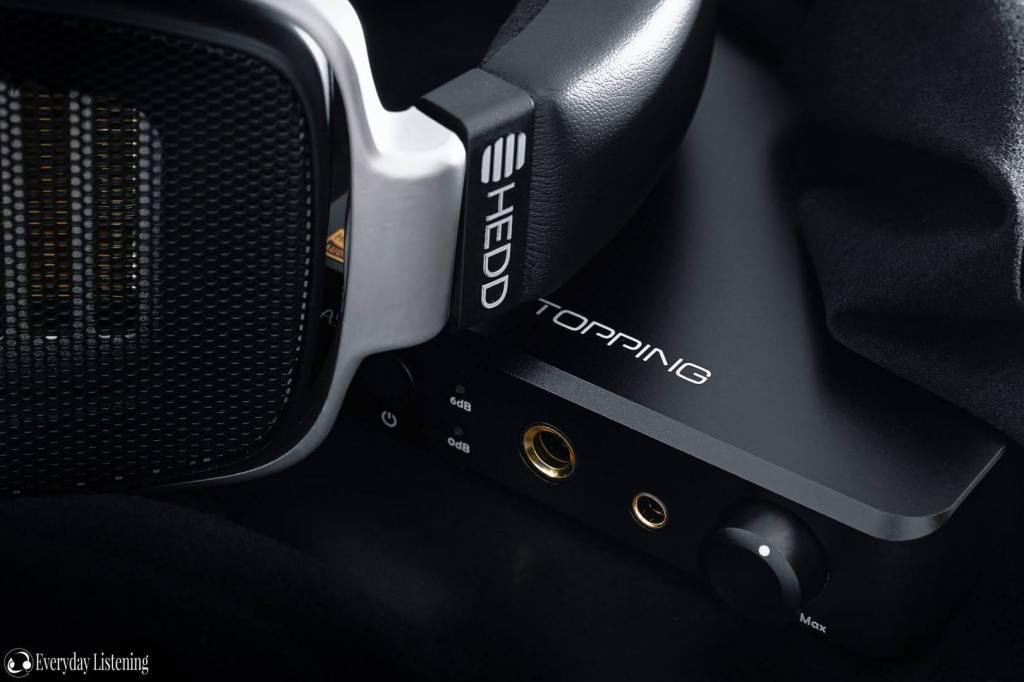
On paper, the A50s should provide a very similar experience to the L30 given that both share very similar topography and the same NFCA amp chip. However, in subjective listening, volume matched to the best of my abilities using an SPL meter, I did notice some differences worth divulging. As a brief aside, I found the L30 to be very linear and balanced but with a slightly smoother note presentation that meant it didn’t come across as sterile or lifeless. My main gripes were the bass dynamics that I felt could be improved and the soundstage width.
The A50s provides a similar experience here, albeit, a little more linear, perhaps even neutral, in its expression. Compared to my personal reference, the THX 789, I find the A50s to sound even more linear and neutral overall yet at the cost of being slightly less dynamic, the THX amplifier presenting a bit more gusto in its sonic performance.
This is most perceived in the bass but can also be observed in light midrange colouration. In particular, the THX789 has a slightly more authoritarian sub-bass slam. It doesn’t sound more bass-emphasized per say but offers greater slam at the very bottom and a slightly more concise note presentation. Meanwhile, the A50s provides a flatter experience in both a positive and negative way. Its bass is neutral with a very accurate timbre. It excels with timing and separation while the THX789 has a slightly bolder note structure that means fine details aren’t quite as apparent despite it offering slightly higher definition. To my ear, the THX789 offers the more engaging musical experience with its higher dynamics and more aggressive note attack. It comes across as more textured despite not being quite so clean and composed as the A50s.
Mids mostly follow suit and some qualities of the bass performance do carry over too. The A50s continues its linear and accurate reproduction, the voicing is incredibly natural and consistent from body to size, position and articulation. Its defining trait is surely its clean, neutral tone and the amp simply sounds “correct”. The same can mostly be said about the THX and, in fact, I would use the same descriptors for both in isolation. However, under direct comparison, I do hear a little more contrast from the THX amplifier. Once again, it sounds a bit less even and little more engaging. It has higher definition and a generally sharper transient response. Its vocal presentation has more depth and is also a little more powerful, both due to the aforementioned qualities and its more robust bass. Whereas, the A50s is slightly more intimate with higher coherence.
Unsurprisingly, the general differences in note portrayal are quite similar in the high-end. The A50s is, again, linear and accurate. Nothing sounds emphasized nor laid-back for a faithful and coherent realisation of music. The THX789 has a slightly sharper note presentation, in turn, it sounds a little crisper and more aggressive but also has slightly higher fine detail retrieval. The A50s is a touch smoother but hardly a smooth sounding amplifier in isolation, it sounds a touch more organic than the THX789 under direct comparison with slightly more instrument body and a warmer tone. I hear a little more headroom from the THX789 and a smidge more resolution of background details, though the differences are only apparent under intense scrutiny and repeated AB testing.
The differences in soundstage presentation were more overt and easier to discern when ABing between the two devices. The THX789 does have a generally grander presentation, no doubt aided by its slightly more voluminous bass. Actually, both have very similar width, stretching an impressive distance beyond the head for an immersive experience. However, the A50s does have noticeably less depth. So, though imaging is sharp and accurate on both, the THX789 is able to create a slightly more multi-dimensional image, sounding more enveloping than the A50s. On the flipside, the Topping does have slightly better separation and sounds both a little cleaner and more coherent.

Ryan Soo
Avid writer, passionate photographer and sleep-deprived medical student, Ryan has an ongoing desire to bring quality products to the regular reader.
 Everyday Listening