

Topping D70s Review – Effortless
Sound –
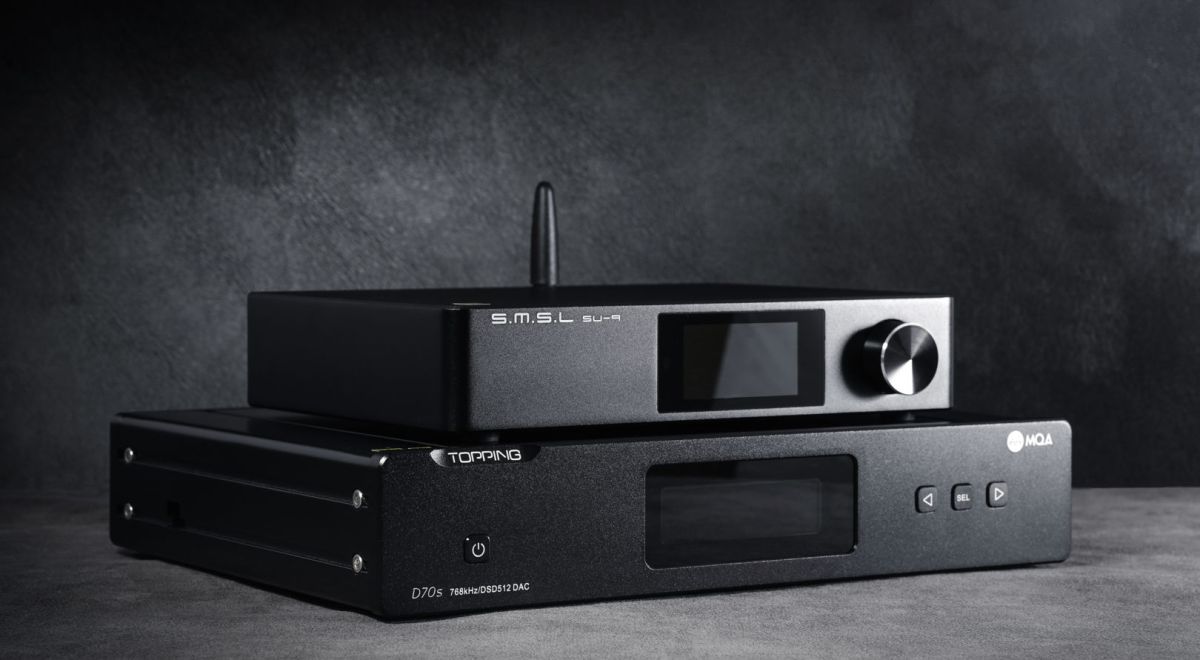
Testing Methodology: SPL volume matched comparison to SMSL SU9. Both powered by THX 789 listening through the Audeze LCD-X.
Tonality –
As I haven’t looked into the source market for quite some years now, I was very curious to see how it had evolved. And, where there were unspoken guidelines before, such as ESS chips being brighter, AKM designs being warmer, it appears that modern implementations dispel this entirely – it really does change on a case by case basis. Immediately, the D70s dispels these former notions, delivering a detailed and immediate sound. Though not overtly bright, it is certainly is a technical-orientated source focusing on a swift and highly defined note presentation in addition to high-resolution throughout. In turn, this also cannot be considered a laid-back source in any manifestation, erring a touch on the aggressive and engaging side. Such a note presentation is realised through a balanced and highly linear sound signature. What differentiates the D70s from the plethora of considerably cheaper sources that also hit a highly linear signature is its space, resolving power and range that enthral the listener.
Bass –
A strong point of the D70s, the low-end is endlessly extending, powerful and controlled. Do not mistake these descriptors for suggesting that there is any form of emphasis here as the D70s comes across as very even and balanced in its expression. It has one of the most accurate timbres I’ve heard with a clean tone and minimal colouration to my ears. Note size, separation and positioning are all faithful to the source material. This, in my eyes, is a huge asset of the D70s, granting it versatile synergy whilst upholding engaging depth and dynamics.
The note presentation is as aforementioned, being concise, controlled and highly defined. Compared to even the SU-9, the D70s has noticeably stronger bass definition, the SMSL DAC being smoother and slightly fuller but also less resolving. The D70s also has a harder-hitting sub-bass, again, impressive considering the lack of any emphasis. Timing is excellent as is separation, delivering a rather effortless portrayal of complex tracks. I’m sure a greater amp would unearth further findings, however, even on the very mid-fi THX 789, I was able to appreciate Topping’s achievement.
Mids –
Much like the low-end, the D70s targets linearity and cleanliness in the midrange, delivering a highly accurate timbre by association. Once again, the highly defined note presentation and agility of the source comes to the fore, creating the impression of a slightly more engaging and vivid sound despite a lack of any forwardness or brightness. This is an articulate source, not sharp or fatiguing, but surely concise, prioritising definition and resolution of fine detail over smoothness and warmth.

The SU9 once again comes across as a lusher source with greater warmth and body but also less articulation up top. It is not as defined nor as well-separated though does come across as slightly more layered to my ears. It is also an easier listen and I can see some preferring this style of sound due to personal preference. Still, undoubtedly, the D70s is the more detailed and resolving source here, delivering music with great tact and precision.
Highs –
Perhaps I hear the slightest hint of emphasis in the lower-treble, especially relative to the smoother SU9. The D70s provides a slightly crisper sound with a sharper transient response. Despite this, instrument body is similar, just a hair thinner and treble isn’t forward in the grand scheme of things – the SU9 simply being a slightly laid-back source. The D70s is rather neutral, leaning towards slightly analytical to my ears. It does have superior fine detail retrieval though the SU9 is not far behind despite not being as overtly resolving.
The SU9 impressed me with its dark background and in juxtaposition, the D70s provides a more linear expression here with greater air and headroom. It has similarly strong extension as that model and a bit more sparkle in its top-octave. It’s not an energetic or sharp source once again, but an agile and resolving one for sure. The linear extension permits high resolution without glare or sharpness and I do personally find the foreground detail presentation to be in good taste as well.
Soundstage –
The D70s provides a medium sized soundstage, clearly more spacious and expansive than the lower-end sources I’ve heard but not quite as large as the SU-9. In fairness, the D70s has a very different style of presentation, you sacrifice some space and atmosphere instead for a presentation that is more focussed and direct. The SU-9 has better layering on behalf of its more laid-back top-end that enables a stronger ability to project distance and a dark background that provides stronger contrast.
By comparison, the D70s has sharper imaging with a much sharper centre image especially. While its layers may not be as delineated, it has quicker, more defined directional cues, the SU-9 being more holographic but less precise in its positioning. The D70s also has a leg up on separation due to its highly defined note presentation combined with its neutral and linear presentation throughout. These qualities contributes greatly to its effortless detail portrayal.
Suggested Pair-ups –
With a linear, slightly vivid sound and focus on technical performance, the D70s is best paired with a neutral to warm source. The slightly more powerful sounding THX789 was on the cusp of balance with its slightly higher contrast sound to my ears, though with a hugely dynamic bass that I found healthy counterbalance and immensely satisfying in general. The slightly less substantial sounding SMSL SH-9 meanwhile, did come across as a little thin so I would personally recommend a fuller, warmer or dead neutral source as ideal companion for the D70s.
Verdict –

We truly live in blessed times to see such a mature implementation of high-end parts at reasonable midrange prices. Whilst not as accessible as something like the Khadas Tone Board, the D70s is considerably more outfitted in terms of IO and features, and does provide very tangible performance benefits over cheaper models. The design isn’t the sleekest and access to the settings could be refined, though as any great source should, the D70s provides a streamlined daily experience alongside a focus on delivering superlative sound. As Topping have achieved renown for, the D70s provides a highly linear, balanced expression, engaging with its focused, highly-defined note presentation. A larger soundstage can be found, similarly, a more musical tonality – this, arguably, is not the D70s’ intention. Rather, its strength lies in its ability to effortlessly resolve the minutiae and do so without any fatigue, all the while upholding an almost perfectly even-handed presentation. If this sounds like your schtick, the D70s represents a strong value proposition.
The D70s is available from Apos Audio (International) for $649.99 USD at the time of writing. Please see our affiliate link for the most updated pricing, availability and configurations.

Ryan Soo
Avid writer, passionate photographer and sleep-deprived medical student, Ryan has an ongoing desire to bring quality products to the regular reader.
 Everyday Listening
I totally disagree, the reviewer never ever said how many hours they used for run in time .
I doubt many having owned a Audiostore for 10 years digital can taker longer then most
Forit is a very low voltage .I bought theD70S for a second system .it has a small 1/2 amp T fuse
Which I will be replacing with a synergistic 🍊 fuse. Also any decent dac deserves a decent power cord . Out of the box even after 24 hours this D70S is on the detailed neutral side .
I let it play for a full week it was noticeably better in character, bigger soundstage and image depth
It was noticably warmer sounding .I plsy 10 reference songs from different types of music And this dac was very well balanced I actually like this better then the current D90 Mqa dac
Detail is on par , nit quite as nimble or fast but a more natural character which was more enjoyable . I let it play for 2 weeks straight and it got abut better still in refinement .
On the front panel for adjustments I found easy .just hold the front. Center button then turn on
I turned off BT since I run direct ,and put in direct Dac mode, and I was only using rca I turned off
Xlr rca combo . And Mqa set to hard where . The Is2 I use from my Blu tooth this sounds better and has adjustments for no is2 standard . My brothers has the Denafrips Arias2 dac which is a R2R dac ,this has a similar character after 2 full weeks run in and the dual AKM 4497 dacs Are my favorite AKM chipset in naturalness. The latest Xmos 216 has 16 cores, 2 x the processing power and 4 x the ram of the older xmos 208 and sameness thst in the90 Mqa.
There is a firmware upgrades so flats April 21 for a slight glitch withMQA thst solves this on toppings website . I like this dac better then theDenafrips Aries 2 similar character but this 70s
Has better detail and low bass ,both has excellent midrange .
Update I installed the synergistic orange fuse with writing synergistic facing up direction of electrical flow. After a full week this added. A noticeable improvement in detail resolution and depth .this dac has very good detail to start with .well deserving of the$$ fuse. It sounds excellent
My favorite dac under $1 k .
LikeLike
One more thing to add ,whst did the reviewer use fora power cord ? The Usb cable thst comes with the unit, as well as power cord pure junk. Treat it with respect a
For any dac worth its salt at least a $150-$250 power cord .I used the Wireworld under $200
And A pangea $200 sig mk2 awg14 power cord. It doesnot matter if the dac was only$650
With this many quality parts inside including a decent sealed linear transformer 7 big Audio grade Nichicon capacitors for thepower supply and 8 seperate regulated power supplies ,same as in. The latest D90. The key is leave no weak link in the chain , a fuse upgrade even using a medpricedHigi tuning supreme fuse 500 Ma ,slow blow night and day less resistance = 3-4x lower distortion , judt look up metal index ,resistance steel buzz fuse 18 , top silver, copper 65.
Any Audiophile with experience knows sonicly a upgraded power cord, better usb cable, andfuse upgrade complete eliminating weak links in the Audii chain no matter what dac you have .
Using the$3 cables in the box it’s robbing you blind of the actual D70S potential .
Check other reviews they display things used ,I was the only one who changed fuses which
We changed back and forth from stock fuse a Clesr difference no brainer upgrade across the board.
LikeLike
Cardas, Audioquest,Wireworld , USBcable ,great value
Audio Advisor – pangea power cords for a 1.5m -$199 delivered forthe awg14 sig mk2
Using Cardas grade1 – 6-9s -0 crystal copper ,and gold copper connectors far better then most cheap brass much better conductor,lower resistance.andBTW use decent cablesWire world excellent valueper$$ spent
I use theirEclipse cables👍
LikeLike
Hey PJ,
Thanks for your input, I’m honestly not sure how to address this. I will not discredit your opinion, in fact, I think we align mostly in the subjective impressions. Clearly, there are some details you do not agree with and this is also okay. I personally do not have access to the wires you’re using, hence why I didn’t test using them. In turn, it is to be expected that we do not align on certain impressions given there are so many differences in our setups.
At the end of the day if you’re enjoying your D70S, this is nothing but a good thing, and I hope my review hasn’t affected your (or anyone else’s) enjoyment either. Your insights are valuable and will be kept in mind for future reviews.
Warm regards,
Ryan.
LikeLike
I’ve been absent for a while, but now I remember why I used to love this website. Thank you, I’ll try and check back more frequently. How frequently you update your website?
LikeLike