

SMSL SX-8s Stack Review – DAC/AMP On a Diet

SU-8s Comparisons –
Topping D30 Pro ($399): At a slight price increase, the D30 Pro offers a slightly more compact chassis and preamp but loses Bluetooth, the colour screen & the SMSL’s flexible GUI. Sonically, I find the D30 Pro to be slightly more linear sounding as has been a trend I’ve seen on Topping’s sources. However, it does have a markedly smoother note presentation that gives its presentation a roundness and general lack of aggression. The SU-8s has a bit more fullness in the bass, delivering bigger notes, the D30 Pro being a bit cleaner. The D30 Pro does sound slightly more articulate and separated here, the SU-8s has more body and punch properties are improved. The SU-8s has a slightly warmer/smoother leaning midrange.
The D30 Pro also isn’t especially revealing due to its note presentation but is more articulate in terms of voicing and carries over a touch less warmth from the bass, being more achromatic. This means it brings small details slightly more to the fore despite not having an overt resolution advantage. The SU-8s, in turn, does have a more powerful and coherent presentation. The SU-8s has a more defined treble presentation, its notes have a bit more bite and definition overall. It has a small advantage when it comes to separation and detail retrieval, especially on complex tracks. While the D30 Pro is more textured, it does lack some attack. The SU-8s has slightly better background detail retrieval too. Incidentally, the D30 Pro does deliver a bigger, more multi-dimensional stage. Though is isn’t quite as sharp in terms of localisation, it retains a clean background and good layering.
SMSL SU-9 ($459): Both DACs share a very similar feature set and design, the 8s being slightly smaller. Though it certainly does appear tempting to save and go with the SU-8s, I definitely think a place remains for the more resolving SU-9. Sonically, both have a similar character too, the SU-8s has a bit more treble presence that some may enjoy, while the SU-9 lies more on the smooth/lush side. The SU-9 has a general resolution advantage, its note presentation is more defined throughout which makes it more detailed and organised in general. This is more apparent in the bass, the SU-9 delivers a cleaner, more separated bass and it sounds generally cleaner.
The midrange is a bit clearer on the SU-9, the SU-8s sounds on notch denser and smoother but also not as extended as the SU-9. Treble is slightly more forward on the SU-8s, albeit, notes are thinner and not as textured. Still, this DAC has an impressively clean transient response considering the asking price, it is able to get impressively close to the SU-9 for a sum less. The SU-9 does have the advantage when it comes to sparkle and top-octave micro detail, but again, the jump isn’t huge. In turn, the SU-9 does have a slightly larger stage, but the biggest difference is with regards to imaging, where the SU-9 layers noticeably better. The SU-8s represents a very similar experience altogether, that said, at a decent discount on top.
SH-8s Comparisons –
Topping A50s ($219): The A50s is much smaller but requires an external power supply. It also has a frustratingly small volume knob and no balanced inputs, meaning it can’t take advantage of a balanced DAC. Sonically, the two are quite tonally similar, the Topping comes across as a touch more linear while the SH-8s has a brighter tilt in the top-end and a bit more mid-bass fullness. In the bass especially, the A50s has a slightly cleaner and tighter mid-bass while the Sh-8s has a fuller tuning with a slightly smoother texture. The A50s is a bit more separated and faster in its note presentation, while the SU-8s has a lick more depth and sub-bass pressure. The midrange tells a similar story, the A50s sounds a touch cleaner and more articulate. It has slightly higher note definition.
The SH-8S has a slightly smoother note presentation but lacks the same texture and separation. It sounds a bit softer around the edges. Otherwise, positioning is similar, being a hair more intimate on the A50s. Treble follows a similar trend. The A50s has a slightly cleaner transient response with a slightly more defined leading edge to notes. Despite this, it also has a bit more body, the SH-8s being slightly brighter and slightly thinner. The SH-8s has greater air while the A50s favours a cleaner background. The soundstage proportions are inverted here, the A50s having a wider stage but lacking depth, the SH-8s having a deep stage but lacking width. This will be a matter of preference, I did enjoy the cleaner background on the A50s.
DROP + THX789 ($239): The 789 is one of the original THX AAA-based amplifiers and remains a flexible and high-value option if no longer the chart leader. The 789 has a more robust, focused, and powerful sound while the 8s is daintier and more delicate but also faster and more responsive. This applies most so to the bass, the 789 providing more wallop and weight in the sub-bass alongside a thicker note expression. The 8s has a bit more mid-bass punch but less bass thickness overall, however, it is also faster and more defined with better separation. The THX789 has a noticeable advantage on complex passages where it is able to keep pace better, the 8s is slightly sloppier in this specific circumstance.
The midrange is fuller and more powerful on the THX789. The 8s has a leaner note body, it is more articulate and revealing with slightly bigger yet also thinner vocals. The 8s is slightly more textured and separated, the 789 is more layered. The 789 has a sharper note attack giving it a more defined lower-treble note presentation. It has a hair more fine detail and a cleaner, darker background. The 8s has a slightly less defined leading edge but greater air and openness. It has more energy and shimmer alongside greater headroom. The 789 has a noticeably wider stage while the 8s is deeper. I prefer the proportions on the 789 though both provide similar extension and imaging acuity.
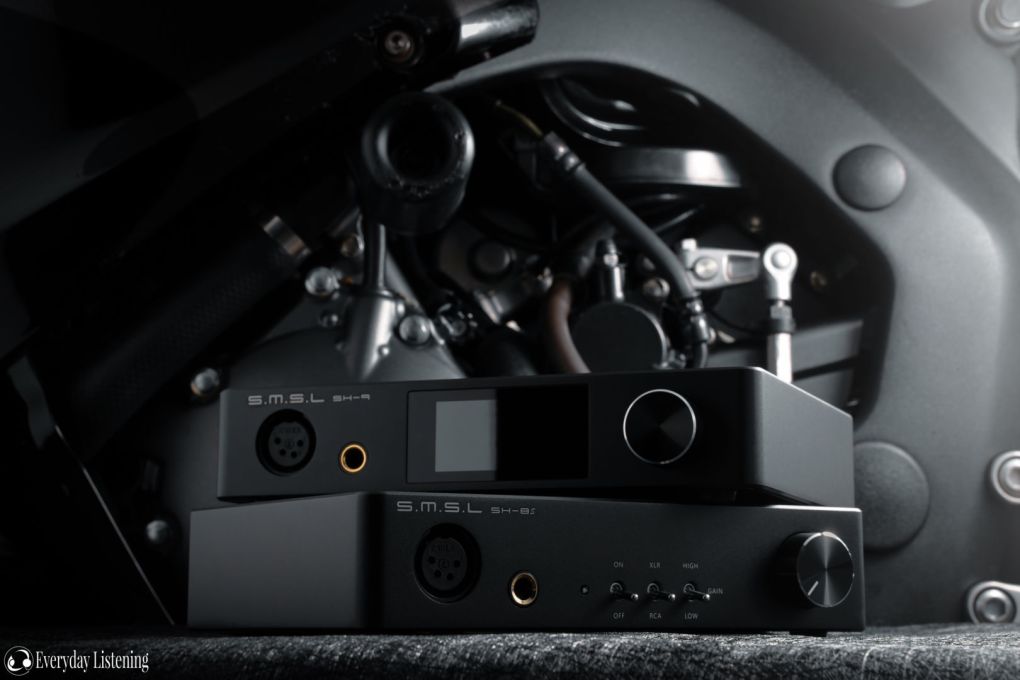
SMSL SH-9 ($289): With similar measurable performance and features, I’m sure many are curious how the 8s stacks up to its big brother. The SH-9 has some quirks like its background hiss and digital volume control meaning haptically, I do prefer the cheaper model. When it comes to sonics, the SH-9 represents a refinement of the same foundation as the SH-8s. Specifically, it has a similar voicing but key advantages when it comes to soundstage width and bass depth and dynamics. The SH-9 has a more assertive note attack in general but this was most noticeable to me in the bass. Though still slightly mid-bass biased, the SH-9’s sub-bass digs deeper and slams harder at the very bottom, giving it a slightly grander and more powerful sound. It has higher note definition and is generally a better performer. The midrange presentation is also quite similar from a tonality point of view.
Here, the differences are less stark. The SH-9 has a small advantage when it comes to resolution, small details are better resolved and are more clearly presented to the listener. The SH-8s comes across as slightly softer around the edges. The treble is similarly positioned on both amps once again, a hair brighter on the SH-8s. The SH-9 sounds more linear here, it has noticeably more note body and texture, a better balance between transient and decay altogether. The SH-8s is thinner, it has a bit more crispness but also sounds a little brittle by comparison and lacking the same fine detail retrieval. The SH-9 has a slight extension and headroom advantage, delivering a better resolved background that aids its soundstage. Here, it is noticeably wider, crafting more equal proportion between depth and width. This gives it a more immersive and multi-dimensional image overall.
Verdict –
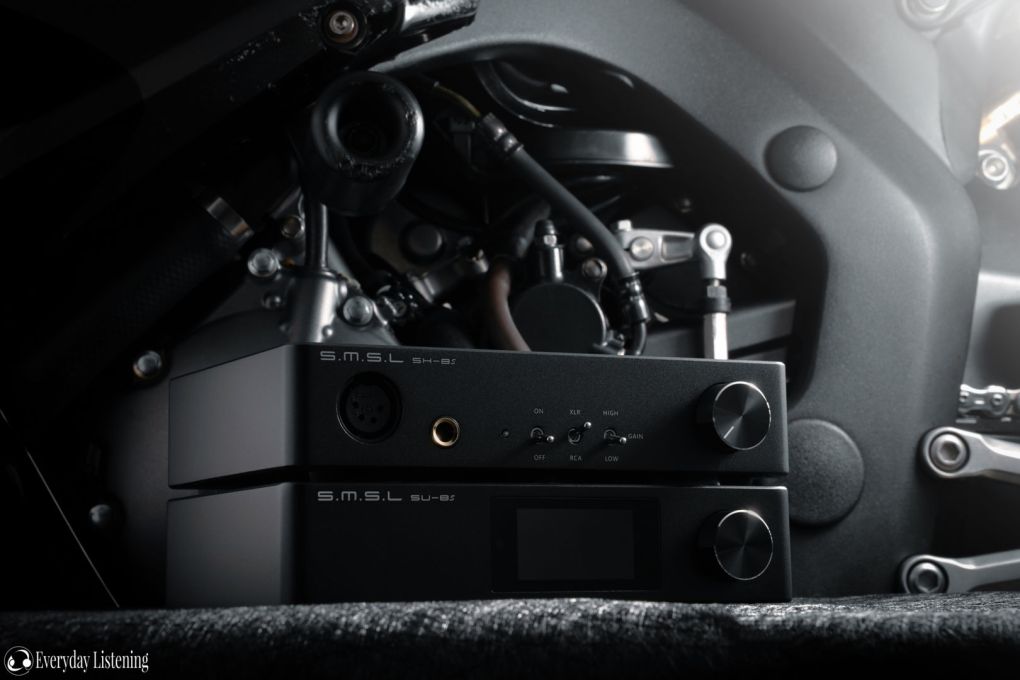
SMSL’s original SX-8 stack was a winner, a standout when objective performance and budget pricing were far scarcer than they are today. The market has moved rapidly, in fact, I would say we’ve seen more progress in terms of sources than headphones and IEMs in the last year or two. You can get a brilliant sounding, versatile source with huge amounts of clean power for a meagre sum. In such a world, the SX-8s stack no longer carves out such a distinct niche. Still, these are solid sources that are difficult to fault, and neither had the little usability niggles I experienced on the SX-9 devices – that being, coil whine on the SU-9 and sensitivity to EMI on the SH-9. Arguably the biggest contenders for these devices might just be the SX-9 devices as they aren’t substantially more expensive but do provide a sizeable sonic performance jump.
This is especially so with regards to the SH-9. While I enjoyed the usability of the SH-8s and it is a strong objective performer, the step down in dynamics and treble refinement in subjective listening do hurt its appeal to me. Otherwise, this is a dead clean amp with great driving power, a super low OI and great volume control granularity. If your budget has a hard limit around this price, I would reason you may find a slightly better sound but likely not a better all-around user experience and feature set than the SH-8s.
The SU-8s is an easier proposition to justify yet. It gets very close to the SU-9, closer than the SH-8s got to the SH-9, and delivers a similar smooth and refined experience and extensive feature set at a slightly lower price. And that sums up this stack well; the SX-8s stack represents a scaled down versions of SMSL’s higher end SX-9 devices, upholding a similar character while taking a step back in both technical performance and price.
The SX-8s Stack is available from Apos Audio (International) for $629.99 USD at the time of writing. The SH-8s and SU-8s are also available independently for $229 and $359 USD respectively. Please see our affiliate link for the most updated pricing, availability and configurations.

Ryan Soo
Avid writer, passionate photographer and sleep-deprived medical student, Ryan has an ongoing desire to bring quality products to the regular reader.
 Everyday Listening