

Dunu Falcon Pro Review – Reinvigorated
Sound –
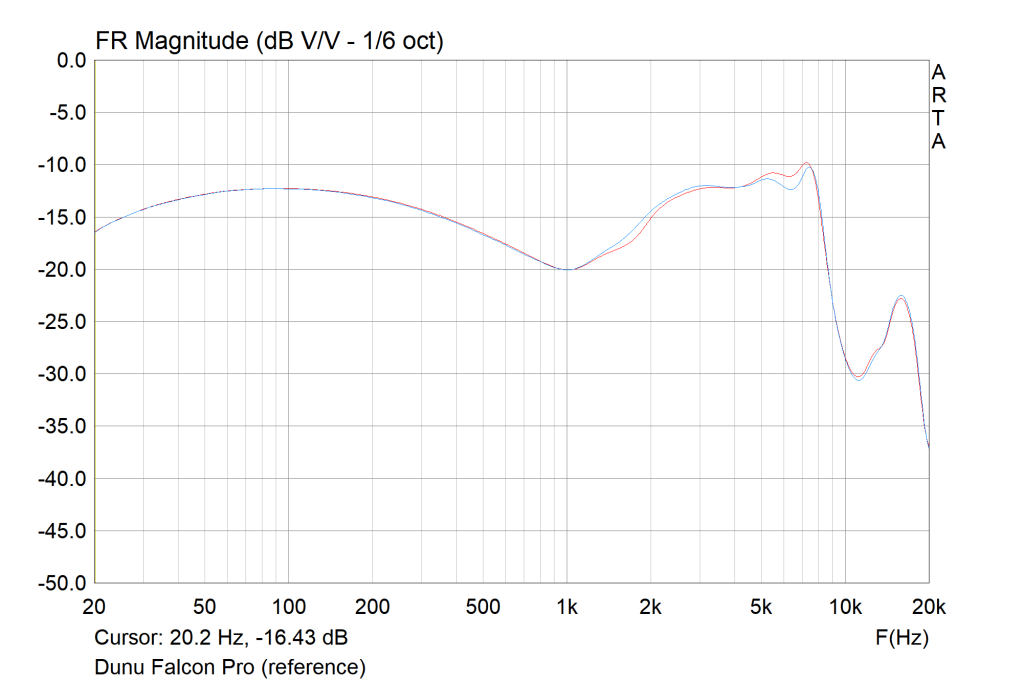
Testing Methodology: Measured using Arta via IEC 711 coupler to Startech external sound card. The 8 kHz peak is a coupler resonance as it was not audible during my testing. Measurements besides channel balance are volume matched at 1KHz. Fit depth normalised to my best abilities. Due to these factors, my measurements may not accurately reflect the earphone or measurements taken by others. I gave the Falcon Pro 100hrs of burn-in prior to review to ensure maximum performance during my subjective analysis.
Tonality –
Out of the box, the Falcon Pro offers a nicely balanced sound profile with a light L-shaped character. It has a warm and smooth voicing with a minor mid-bass focus. In turn, do not expect a perfectly linear sound going by popular reference curves but it also isn’t coloured in a polarising manner at all. The approach to tuning is distinctly different to the Falcon-C too, being less U-shaped and far less peaky in the treble. As it is also fuller and warmer, the Pro will no longer appeal to fans of a bright/revealing sound, even with the transparency filters. Altogether, I would argue that it better reflects the tastes of the times and does come across as more mature. The greater mid-bass warmth means complaints of midrange fullness won’t be repeated and hints of character from the original remains such as a small 5kHz emphasis which gives it an articulate nature. With a bump through the centre-midrange, they avoid brightness whilst retaining balanced vocal presence and solid definition.
Eartips
Dunu offers so many avenues to tune the Falcon-Pro that it can be confusing where to start. I would personally suggest selecting the most comfortable and reliably sealing ear tip for your ears first as a foundation. Then, you can move onto the tuning nozzles and subtly refine the sound with rings at the end. As for the included options, the stock silicone tips are balanced and offer good imaging. While they don’t have the best sub-bass slam, I did find the midrange to sound most natural on these tips.
The whirlwind tips offer a firmer sound tube, larger aperture and a deeper fit. The lower treble is smoother but there’s a slight increase in air above. The midrange takes a step back relative to the stock silicone tips while bass remains similarly voiced with just a hint more sub-bass slam. The blue stemmed tips are also firm and short but have a small aperture. These are even warmer and smoother than the whirlwind tips and were not to my preference. I would posit that most users will prefer the stock tips, perhaps the whirlwinds if you want a slightly smoother sound.
Tuning Nozzles
The nozzles can be easily screwed on and off, 2 additional pairs are included in addition to the stock reference nozzles that are pre-installed onto the earphone. The transparency nozzles offer a brighter sound, they are shorter with the same internal aperture. The atmospheric immersion filters are the same length but have a smaller internal diameter. The earphones also have a built-in mesh filter below the thread so even if filters are removed, the driver is still protected from particles.
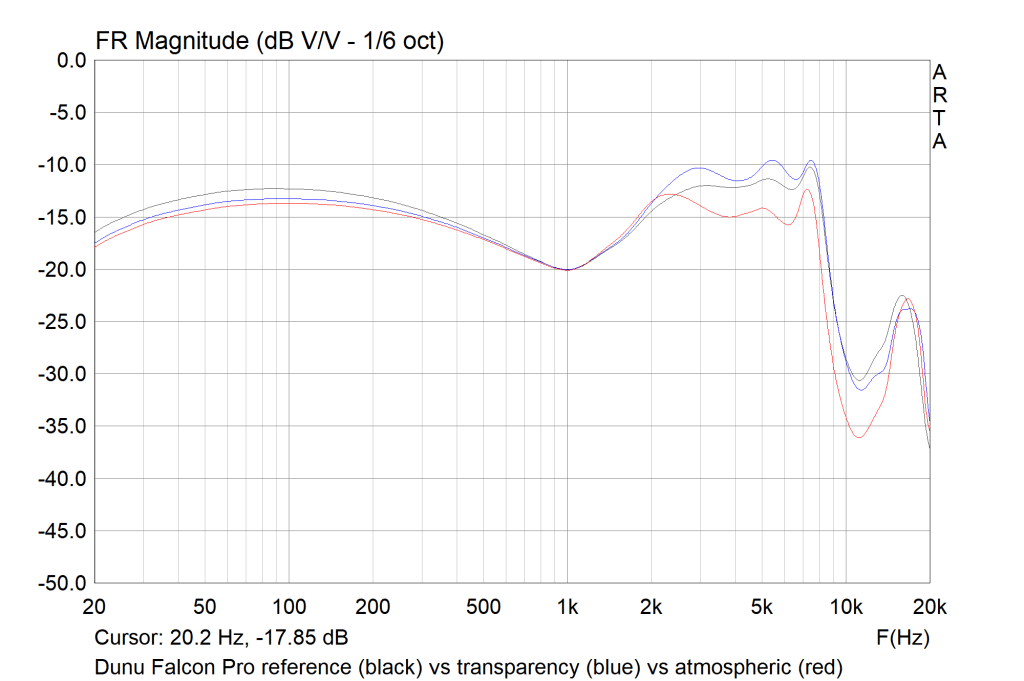
The stock filters offer a nicely balanced sound with a slightly laid-back top-end and a warm tonality as described above. I get the impression that the transparency filters will be popular with many as they offer greater top-end clarity and openness, subjectively they sounded the most balanced to my ears. They slightly clean up the bass and lower perceived warmth and tubbiness. They skew more strongly towards the upper-midrange and lower-treble instigating a clearer and more articulate sound. As there remains a good amount of mid-bass presence, I didn’t find them to skew overtly bright nor thin. On a side note, these paired nicely with the stock grey silicone ear tips but had an odd midrange voicing with the whirlwinds.

The atmospheric immersion filters are quite interesting. They also taper back bass relative to stock, more so than the transparency filters. However, they have the opposite effect to the transparency filters in the midrange, bringing back the upper-mids and lower-treble. Altogether, the sound becomes more laid-back but without becoming bass dominant. It is defined more by an increase in coherence, body and warmth as there is now less clarity to balance out their added mid-bass. It is hardly a veiled sound, but a somewhat blunted one to my ears. While not my preference, I can see those averse to treble enjoying these. Similarly, they do provide a nice sense of depth to the presentation that isn’t as apparent on the more intimate transparency and reference filters.
Tuning Rings
These have the smallest effect on the sound, and I didn’t notice massive changes fine-tuning between each ring. At a fundamental level, with a deeper fit, peaks will get pushed higher. This is one of the reasons why some may find an IEM’s treble piercing while others may not – due to the length of their ear canal. If you do find the Falcon-Pro to be too bright, these are another avenue you can use to tame the treble. However, I didn’t find the Falcon Pro to either be bright or to have peaks in a contentious frequency range so did not find the tuning rings necessary in my experience.
Bass –
Most dynamic driver earphones I’ve tested have tended to skew towards the sub-bass or present in a flatter fashion. The Falcon Pro has a moderately warm response with a mid-bass hump that sustains into the upper bass. The tuning almost resembles Knowles CL 22955 driver, a common choice, however, such a full tuning makes more sense in the context of a quickly decaying BA platform. Here, it presents as rounder and fuller with far more noticeable bloom due to the dynamic driver design. Using the transparency filters, the tubbiness isn’t quite so overt, but it does remain apparent. As bass sits in good balance with the rest of the sound, it isn’t a bloated presentation. However, it is certainly a warm one with a focus on mid-bass impact, sub-bass slam and rumble taking a step back by comparison. In turn, the Falcon Pro has a full bass but not an especially dynamic or weighted one as IEMs with a more typical sub-bass shelf provide.
While it isn’t muddy at all, it does lack the same tightness and assertive attack as a high-end dynamic driver. The mid-bass also doesn’t have a huge amount of texture and the upper-bass tuning doesn’t help with this impression due to the added fuzz. Separation is not the Falcon Pro’s strong suit due to its full, round note structure. Otherwise, I found myself enjoying the driver control on offer which yields a surprisingly well-defined bass response especially considering the fuller tuning. They also decay quicker than average which further aids definition and redeems some separation. The net result is a smoothly textured bass response that isn’t hugely articulate but full-bodied, punchy and easy to listen to. It has ample presence to flatter all genres without smearing over excessive fine detail or over-colouring the midrange. Though not the cleanest tuning, the driver is faster than average which prevents it from sounding disorganised.
Mids –
I have little to complain about in the midrange which has a euphonic mix of qualities and a tonality that is very easy to enjoy. This is especially so with the transparency filters which, to my ears, better balance out the added bass warmth. However, I can see those wanting a more refined sound going for the more coherent reference filters. Even with the brighter transparency filters, these remain warmly voiced earphones so those wanting a revealing sound may want to investigate the Falcon-C or something like the CFA Satsuma instead. There is a lower-mid dip at 1k that aids separation from the bass, resulting in only lightly full-bodied and medium warm presentation. In so doing, it upholds ample cleanliness and separation, being devoid of congestion or veil. To compensate for the mid-bass hump, the Falcon Pro has a steeper rise than most through the centre midrange before levelling off around the upper midrange. This brings vocals forward and increases their size, achieving relative parity with the bass. It also does all of this without intensity or strain as the signature isn’t biased towards the upper midrange.

Once again, separation, though better than the bass, isn’t a defining feature here. I did enjoy the texture on display but wouldn’t say the Falcon Pro has a resolving power advantage over similarly priced competitors. Vocals remain nicely defined but still err on the coherent and full-bodied side. They have slight precedence over instruments though the Falcon Pro does provide an inviting organic timbre here that flatters a wide range of genres. In addition, though articulation is lifted, the added bass warmth and body mean they are without rasp or sibilance. Rather, it acts to subtly enhance clarity and intelligibility to good effect. The Falcon Pro’s midrange presentation won’t win awards for its neutrality but is very likeable, balanced and genre flexible. If you enjoy a powerful voicing, this is certainly a good option to entertain for the Falcon Pro balances a warm tone and impressive vocal clarity with aplomb.
Highs –
The top-end is far more refined than the Falcon-C and has a nice sense of linearity and airiness with a hint of additional crispness in the lower treble. Rather than bumping the 6kHz range, the Pro has a slightly earlier 5kHz rise – but note, that this is most apparent on the transparency filters with stock being more even-handed. I found this to be in good taste, they any over-sharpening and avoid thinning out treble instrumentation as the peak isn’t large or isolated at all. At the same time, the Falcon Pro has a good amount of bite and nicely defined note attack. While they won’t best a hybrid or pure-BA model in this regard, they certainly beat out many similarly priced DD IEMs and their predecessor when it comes to fine detail retrieval.
Percussion is imbued with an engaging sense of vibrance that gives it a good contrast to the warmer bass and midrange without glaring over them. Treble instrumentation is generally well-bodied, if anything, being slightly organic. Treble decays naturally with a great balance between leading-edge, texture and shimmer above. They have a bit more air than pure neutral but, again, nothing that I would consider brightness here. While the Falcon Pro doesn’t give you any sparkle or much micro-detail, they surprised me with their background detail presence which provides a superior sense of layering to many competitors. The background is relatively clean too, not the darkest due to the lift in air, but free of grain and subtle enough to avoid colouring instrument timbre too.
Soundstage –

Despite the more open design, the Falcon Pro doesn’t present the widest soundstage I’ve heard. Rather, it extends just beyond the head whilst projecting nicely beyond giving it a depth-biased presentation. While it doesn’t sound hugely grand or expansive, this still gives the Falcon-C an enjoyable sense of dimension and space. The imaging performance is about average in-class and greater width would have helped here. The centre image is strong and instruments spread out laterally and project. Layering is also above average due to the nicely extended treble with good background detail resolving power. While it doesn’t have huge space between layers, they remain nicely defined. Separation is also about average. The warm and full-leaning tuning does it few favours here but the note presentation is well-defined and the top-end separates very well. There is a slight air around many midrange and top-end elements which gives it a leg up on your average warm/smooth type IEM and sound composure on complex tracks.
Driveability –
The Falcon Pro has a moderate 26-ohm impedance paired with a high 112dB sensitivity that enables it to reach very high listening volumes from less powerful sources.
Output Impedance Sensitivity
Given the Falcon Pro is a single driver design, you would not expect huge changes here. And this is the case as, switching between the Hiby R6 (10-ohms) and Shanling M2X (1-ohm) revealed a minimal shift in sound signature beyond colouration of the sources themselves. This means you can pair the Falcon Pro with high output impedance sources like tube amps and certain PC integrated audio solutions without worrying about the sound signature shifting to a large degree.
Driving Power
Switching between the M2X and my desktop stack with Topping D70s and THX789 revealed a noticeably deeper soundstage and a more extended, dynamic bass. The desktop stack delivered a thicker, more weighted bass note presentation while the M2X sounded nicely defined but a bit more mid-bass biased by comparisons. While the Falcon Pro is very efficient, I do still think it scales quite well with amplification especially as it did sound a bit softer yet from my Xperia 5 II. As far as noise is concerned, they are more sensitive than most DD IEMs but not too bad relative to BA IEMs. With the M2X on volume 0 with the amp circuit on, noise was just barely audible but completely innocuous once music was playing.
Suggested Pair Ups
The Falcon Pro isn’t especially affected by output impedance and has no issues reaching high listening volumes from portable sources. It isn’t overly sensitive to noise, though especially noisy sources may be more of an issue here than on other DD IEMs. They scale well with higher driving power so amplification or a dedicated source of some kind is recommended. A more powerful dongle such as the Hidizs S9 Pro is a good choice and they scale further with desktop amps. As far as colouration is concerned, the Falcon Pro is warm but not exceedingly stuffy in the midrange and can tolerate a warmer source. However, for my tastes, a neutral/revealing source provides the cleanest and most balanced presentation.

Ryan Soo
Avid writer, passionate photographer and sleep-deprived medical student, Ryan has an ongoing desire to bring quality products to the regular reader.
 Everyday Listening