

Oriveti OV800 Review – Iteration

Sound –
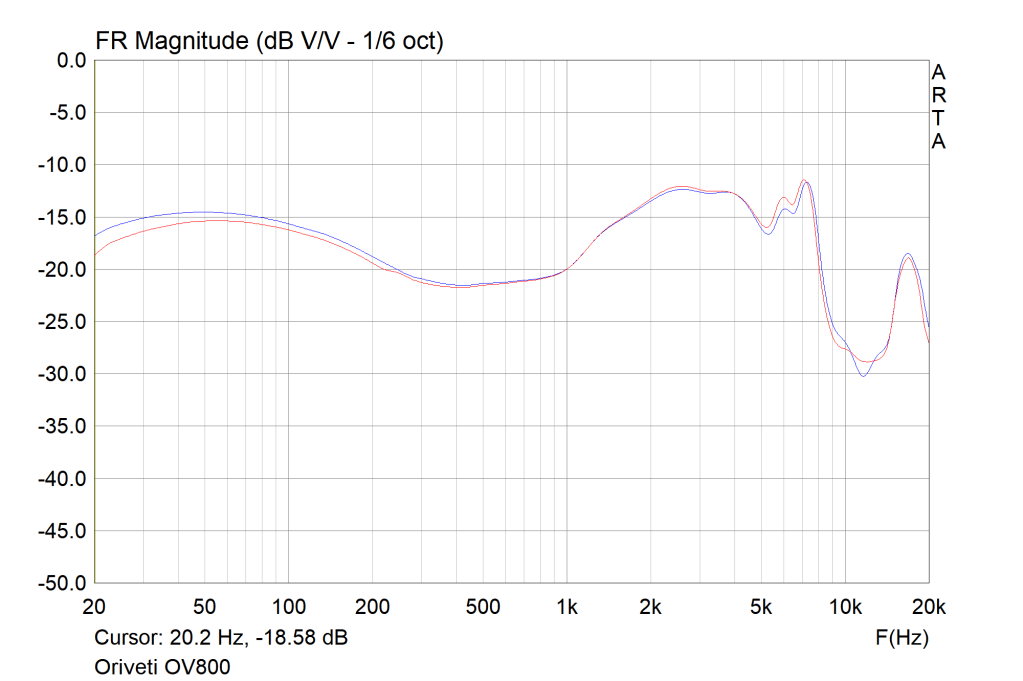
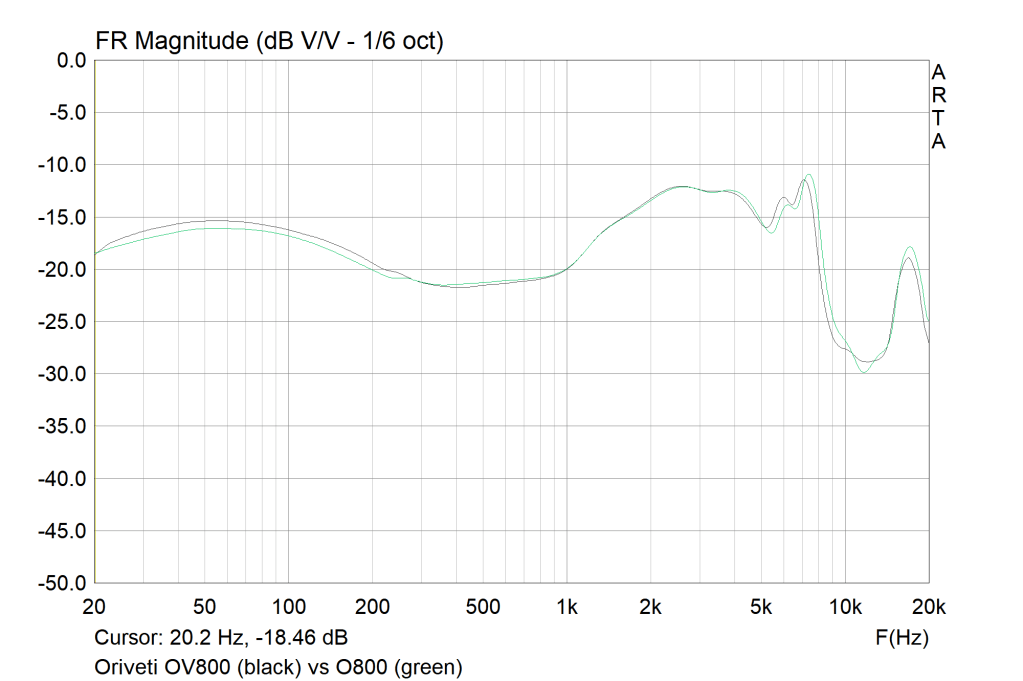
Testing Methodology: Measured using Arta via IEC 711 coupler to Startech external sound card. 7-9KHz peaks may be artefacts/emphasised due to my measurement setup, less so with deep fit. Measurements besides channel balance are volume matched at 1KHz. Fit depth normalised to my best abilities to reduce coupler resonance. Still, due to these factors, my measurements may not accurately reflect the earphone or measurements taken by others.
Tonality –
The OV800 both measures and sounds very similar to the O800 which is to be expected given that the two share the same driver setup. That means you get a wonderfully balanced sound with a light warm tone and smooth, coherent character. For more details on this, you can refer to my original O800 review here. Given the two are so similar, I will be focusing more on the tuning switch feature of the OV800 and the minute differences between the two when both settings are off (which Oriveti claims is designed to be identical to the O800).
Tuning Switches Overview –
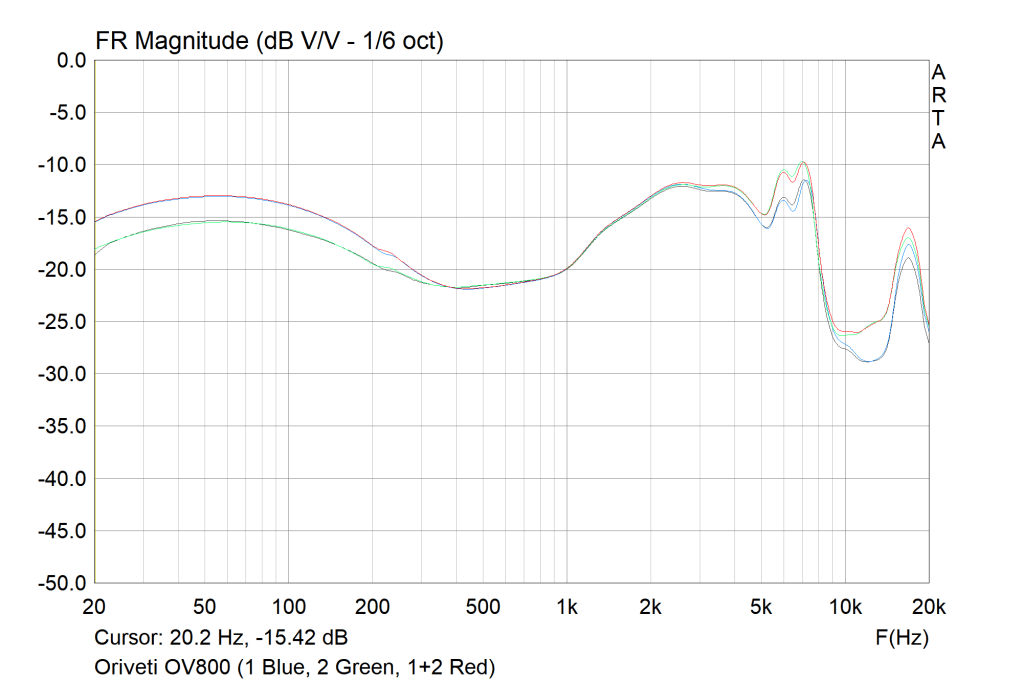
With both switches off, the OV800 still sounds slightly different, perhaps the cable change plays into this as well. The O800 has a slightly punchier mid-bass while the OV800 has a smidge more depth and deep-bass weight. The OV800 layers slightly better in the midrange while the O800 is a touch more open and articulate, retrieving greater texture. Otherwise, the two are very, very similar and I would hesitate to recommend one over the other. The tuning switch implementation is very reserved here unlike many other companies. They offer small tweaks for personal preference rather than a transformative effect, and the OV800 retains core O800 characteristics in all settings.
Switch 1
With bass boost (switch 1) on, you get a wideband ~4dB low-end enhancement from 400 Hz and below. This provides a noticeably fuller bass, the mid-bass especially. While the sub-bass is also brought forward to a similar degree, I didn’t find it introduced much more rumble or pressure due to the BA configuration, but you do get a noticeably thicker, weighted note. This provides an altogether slightly warmer tonality and a bolder note structure that appears slightly less mid-bass biased than stock. As it is subtle, the midrange and high-end are never overwhelmed nor does bass become muddy or bloated.
You simply receive a bit more body in the midrange and a slight reduction in room and separation. That means if you enjoy a more airy and layered stage, this setting is best left off. To my ears, this setting makes a lot of sense for certain genre preferences and also at lower listening volumes where the perception of bass is diminished. While power and extension aren’t increased, the added punchiness and minimal added midrange colouration makes this an easy setting to set and forget if your preference is for a slightly bass-forward sound with a big, coherent midrange and smooth treble.
Switch 2
Treble boost (switch 2) functions in a very similar manner, only from 3kHz and up. I would ignore the lift through the 8kHz+ region, this isn’t especially audible due to the extent of the nadir, the 6-8 kHz boost is most noticeable. In turn, don’t expect more midrange presence nor more sparkle with this setting. It simply serves to bring treble instrumentation slightly forward. While the overall voicing of the earphone isn’t substantially altered, you do get a more articulate midrange and more open top-end with slightly greater emphasis on overtones. Air is noticeably increased which may be to some listener’s preferences – though, I’d argue if you were looking for a brighter earphone, the dark Oriveti house sound is not for you. As below, there is no change to technical performance and treble voicing is mostly similar overall.
I am hearing a slightly lighter note weight here in favour of greatly clarity and air but no introduction of glare, sibilance or stridence due to the relatively modest level of enhancement. Given Oriveti earphones are generally dark leaning and mid-focused to some degree, I can also see many listeners finding this desirable for overall balance as it helps small transients to cut through the mix. I do think this switch makes them slightly bright leaning as opposed to being slightly treble-shy stock so neither settings offer perfect balance. But again, this is highly subject to preference and individual factors such as fit depth. This setting makes a lot of sense if you enjoy using memory foam ear tips as they attenuate treble. In this instance, this becomes less of a boost and more of a compensation. Altogether, the flexibility is good to have and I can see this being a popular setting to listen to permanently much like the bass boost.
Switch 1 + 2

If you were expecting the use of both switches to transform the OV800 into an engaging, V-shaped IEM, that is not the case. Using both switches in unison also sounds appealing given the midrange does hold a slight focus on this earphone. Introducing greater bass presence also means treble enhancement won’t appear as overt by comparison. While this is indeed the case, I found this setting slightly diminished the midrange. Vocals sounded more laid-back, smaller and more strained with the simultaneous lift in articulation and mid-bass punch. I think if you are not especially sensitive to midrange voicing as I am, then perhaps this setting makes sense as it is more engaging and aggressive than stock. However, I couldn’t help but feel the original character and balance of this earphone as intended by the designers was lost here. Though more engaging, the sound was less refined altogether and the image wasn’t as organized either.
Affinity 2 Upgrade Cable –
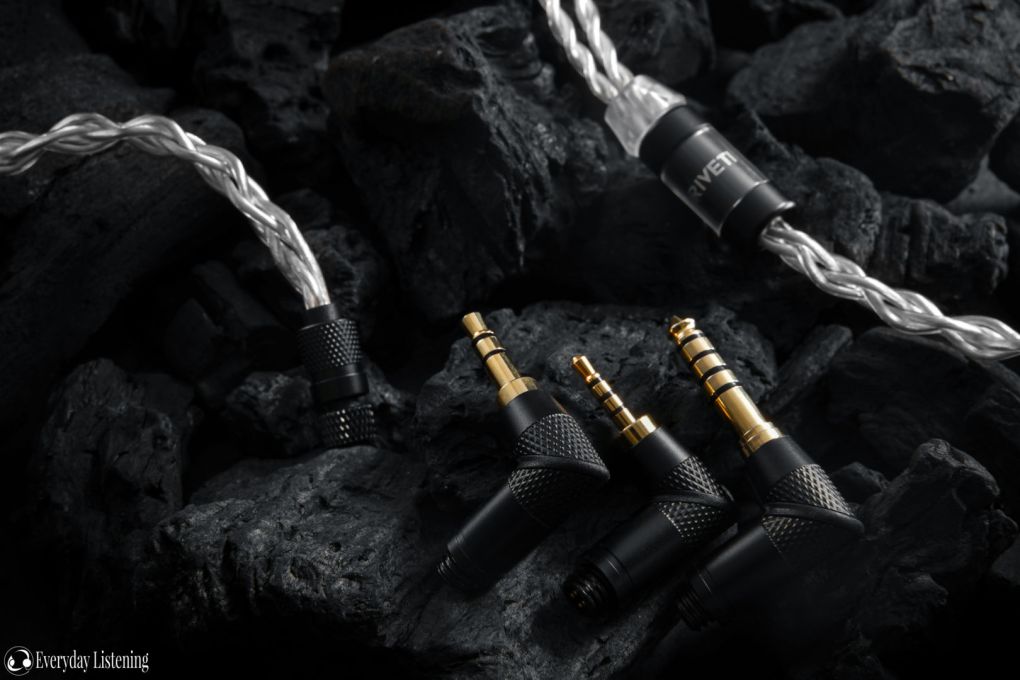
The Affinity 2 is an upgrade cable that launched alongside the OV800 and represents an evolution of the original Affinity launched a few years ago. At $299, the price has increased an addition $100 over that model, however, it also introduces a more flexible modular connector system and improvements to build and design. Note as well that the Affinity 2 switches to 2-pin as opposed to MMCX connectors, as a result, I was unable to directly compare the two. The OV800 comes with a very nice cable from factory, an 8-wire SPC cable. Interestingly, the Affinity 2 implements a 4-wire design though with a larger gauge that gives it similar overall dimensions. The reduced wire count makes it even softer, being one of the most supple cables I’ve handled. You can also see more densely packed conductors below. The company is using an ultra-pure OCC copper and SPC mix and reason this cable brings improvements to cleanliness, soundstage and coherence.
Affinity 2 vs OV800 Stock: I tested both cables from a single-ended source to rule out the source as much as possible. The Affinity 2 offers a clearer, more revealing and more articulate sound. It brings out the top-end whilst increasing clarity and resolving power in the midrange. The stock cable comes across as slightly more bass focused due to its darker top-end. The two are not dissimilar in the bass, the stock cable provides a slightly fuller mid-bass punch while the Affinity 2 offers a slightly cleaner low-end and slightly tighter, more articulate presentation. The midrange benefits from greater clarity on the Affinity 2, being both more articulate and with a slightly enhanced upper-midrange presence too. Accordingly, it isn’t as dense and wholly structured as the stock cable that those averse to brightness may prefer. The Affinity 2 is one step more revealing which works to the benefit of openness, air and definition. Arguably, the OV800 is already a coherent and well-structured performer so I feel this is a good complement and sings with female vocals especially.
The stock cable has a little more lower-treble crunch while the Affinity 2 has a slightly airier presentation with a cleaner transient response. This enables it to discern fine detail slightly better; the leading edge of noes is more defined and complex passages are presented with superior separation. However, it also isn’t brighter in this region, in fact, the stock cables appears crisper and more aggressive. The Affinity 2 offers a noticeably more refined lower-treble with less crunch and grain. It does introduce a slightly brighter middle-treble to my ears, benefitting air and headroom. At the same time if you want the cleanest background and most contrasted layering, then the stock cable may be to your preference here. In terms of sound staging, I don’t hear a huge jump in dimensions but a nicer sense of separation that helps with organisation on complex passages and also aids a sharper sense of direction.
Affinity 2 vs O800 Stock: The stock O800 cable has a slightly warmer, fuller bass but the difference is not huge. It does have a slightly softer note presentation, the Affinity 2 is slightly cleaner in the mid-bass and definition is slightly improved. Like the OV800 cable, the midrange sounds slightly clearer and more articulate when switching over to the Affinity 2. The upper-mid appears to be brought forward a notch so it isn’t quite as smooth and dense, but a more open and revealing sound. I do perceive small details as being slgthly more apparent though this could also be due to the jump in definition and clarity.
Similarly, the top-end has a touch less crunch in the lower-treble in favour of greater extension, headroom and a bump in middle-treble brightness. This gives it a more prisitne clarity with greater shimmer and a more delicate note presentation. I perceive a slight jump in fine detail retrieval due to the increase in separation. Again, contrast between foreground and background is not as clearcut due to this facet. The soundstage is deeper and slightly wider, separation is most improved with a more palpable air between each element.
Verdict –
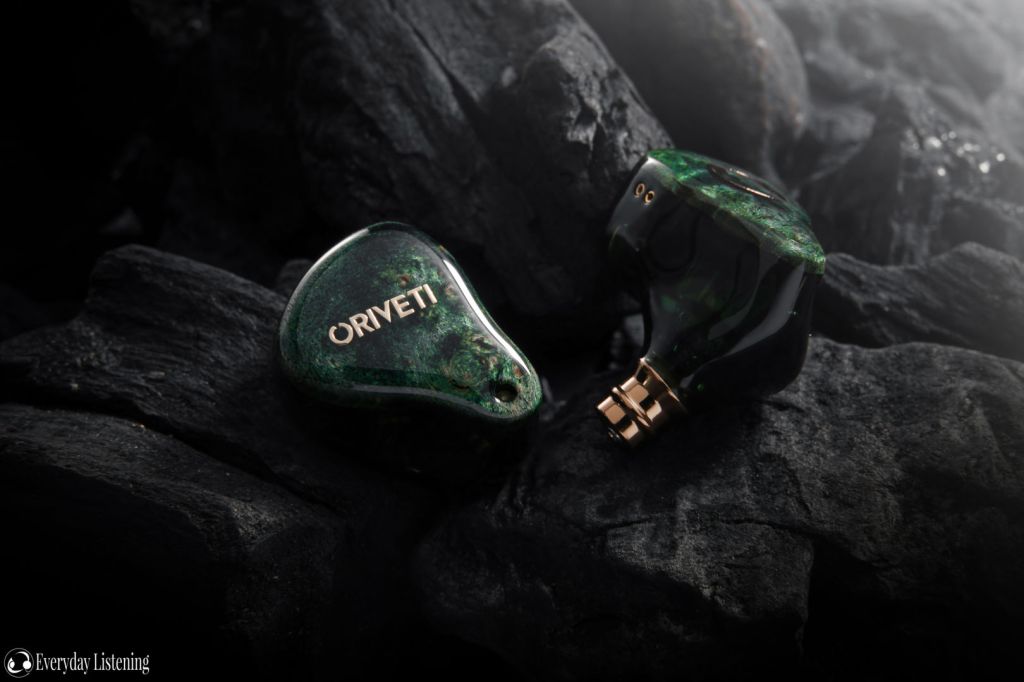
The OV800 surprised me given the relatively recent announcement of the O800, and I was also surprised that Oriveti didn’t alter the base tuning from that model either. Still, this is not a bad thing for the O800 as a model I very much enjoyed and the same can be said here. While I didn’t find the tuning switches to offer huge adjustments, having this flexibility is not a bad thing. It allows slight tweaks for user preference, listening volume and even tip choice and fit depth. These are all very realistic and practical applications for such a system. The execution is also sound, both bass and treble boost are subtle and of good character, preserving a natural listen, but slightly altering voicing and positioning.
Unlike many competitors, there isn’t a clear “best” setting that most users will want to use, at the same time, don’t expect them to transform the character of the earphone. Perhaps Oriveti would have benefit from launching the original O800 with these features, they may have garnered more conversation. Ultimately, if you are already interested in the O800, Oriveti’s updated flagship remains beautifully designed, smooth and coherent whilst introducing greater versatility than before. However, the price jump does make it difficult to recommend over that model if you aren’t the type to tinker.
The OV800 can be purchased from Oriveti for $999 USD at the time of review. I am not affiliated with Oriveti and receive no earnings from purchases through this link.
Track List –
Billie Eilish – dont smile at me
Beach House – Space Song
Bob Seger – Night Moves
Courtney Barnett – Rae Street
David Bowie – Glastonbury 2000 (live)
Eagles – Hotel California
Elton John – Honky Chateau
Fleetwood Mac – Rumours
H.E.R – I Used To Know Her
Jeff Cascaro – The Other Man
John Mayer – Continuum
Johnny Cash – American IV
Kanye West – Donda
Michael Bublé – Crazy Love
Missy Higgins – The Sound of White
Nirvana – Nevermind
Portugal. The Man – Woodstock
Radiohead – In Rainbows
The Beatles – Abbey Road
The weeknd – After Hours
Vampire Weekend – Father of the Bride
Vance Joy – Dream Your Life Away

Ryan Soo
Avid writer, passionate photographer and sleep-deprived medical student, Ryan has an ongoing desire to bring quality products to the regular reader.
 Everyday Listening