

Astell & Kern SP2000T Review – Finding Harmony in Dichotomy

Sound –
It’s becoming quite repetitive but I would like to reiterate that the sound difference between modern DAPs is far from being as overt as that between headphones. While it is something to factor into your over the audio chain, consider DAPs to be fine-tuning of the experience. This is, of course, dependent on having a lower OI less than 1/8th of that of the attached headphone alongside having sufficient driving power.
Frequency Response –
Testing Methodology: RMAA via Startech External Sound Card


The SP2000T offer a linear frequency response in both SS and tube modes, suggesting that both represent audio with great fidelity. Due to the quality of my sound card, I am unable to reliably test other measures such as distortion and crosstalk so they will be used as a personal reference only. Qualities here can also impact the sound as I will detail via subjective listening.
Output Impedance & Hiss –
Testing Methodology: SPL volume matched comparison through an inline splitter to THX789 + Topping D70s to Campfire Audio Andromeda and Ara
The SP2000T offers a 1-ohm output impedance through its single-ended output and a 1.5-ohm output impedance through both of its balanced outputs. All outputs provided a jet-black noise floor even on my most sensitive IEMs such as the Andromeda and the ultra-low impedance EE Odin. This is a huge asset for low-volume listeners with sensitive IEMs as you get excellent volume control granularity and great dynamic range at the bottom end.
While output impedance isn’t exceedingly low, circumstances when a sub-1-ohm figure is desirable are very rare. A good example of this is the Ara due to its low 8.5-ohm impedance and mechanical crossover, it is one of the handful of IEMs I’ve found to benefit from this. Even the 0.5-ohm jump when moving over to the balanced connectors showcases a slightly brighter character on the Ara and this was also the case from the single-ended output relative to my sub-1-ohm sources.
That said, the beauty of the SP2000T is that you can use the amp modes to compensate for this and the manner in which it adds colouration feels very authentic and is more granular than many eQ implementations. That said, I would still consider using the single-ended output for low impedance multi-driver IEMs.
Subjective –
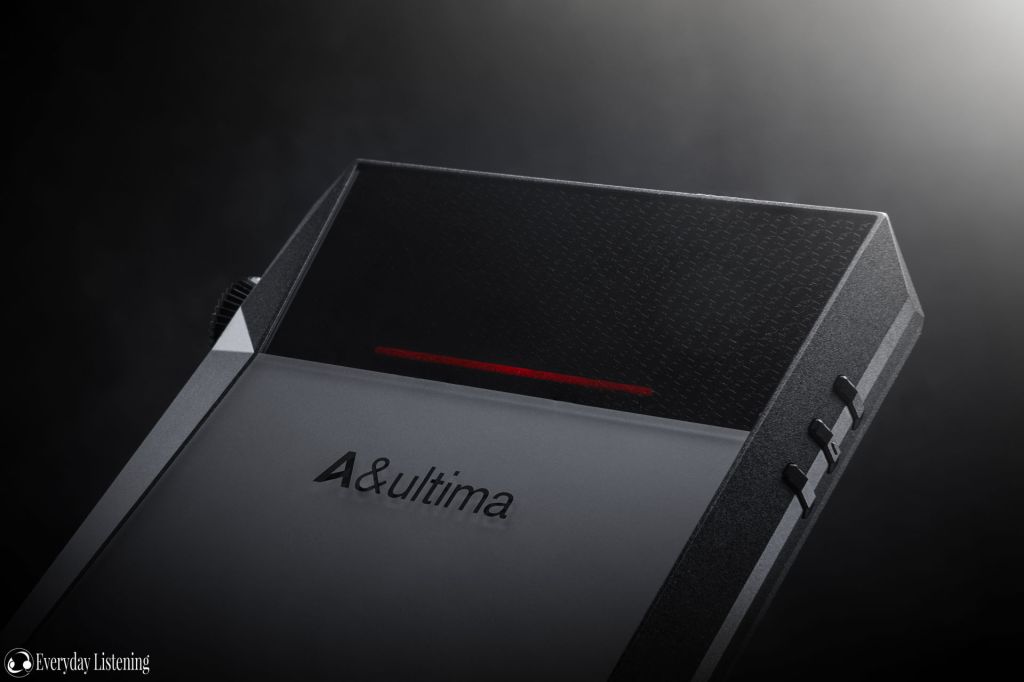
Unlike desktop audio, objective performance has been less of a universal metric for judging the sonic performance of DAPs. In turn, buyers are generally relying more on subjective impressions here; this is where Astell & Kern DAPs excel. In particular, I’ve enjoyed them for their dark background which gives each note and detail a little more vibrancy than your average DAP. By this, I am not referring to the noise floor, but a lack of glare or unnecessary information/noise that may mask fine detail.
Tonality –
This is an interesting section due to the copious AMP modes available. Indeed, OP, Hybrid and Tube modes all carry their own distinct characteristics. Regardless of the option, rest assured that the SP2000T delivers a natural and linear sound with excellent resolution, space and dynamics. There is no glare and grain is essentially non-existent, accentuating that legendary AK background cleanliness and pop.
AMP Modes
The OP setting stands out to me as more spacious and articulate with sharper imaging and a slightly faster, more defined note delivery, especially in the bass. It has a more forward foreground combined with a more defined background which provides the impression of a more upfront detail presence.
The Tube setting, though slightly less expansive, has a more laid-back midrange and top-end that heightens the sense of space that is there. Notes fade in and out more gradually from the background though at the expense of defined layers and imaging. This mode provides a smoother, darker sound, in turn. It has slightly greater body and warmth alongside a slightly punchier albeit less defined mid-bass, but not to the extent that this would be overt if not in direct comparison to the OP setting. Besides this, I didn’t find that the Tube mode had a huge technical disadvantage though I would suggest the OP mode is better suited for those wanting the best micro-detail presence.
The Hybrid setting unsurprisingly combined traits of both and really lies between the two in all aspects. You get a slightly warmer, fuller mid-bass though with a little more tightness than the Tube mode. The top-end is slightly crisper and more present though not quite as much as the OP mode. The same can be said for the soundstage.
Overall, the Tube and OP modes provide a lovely dichotomy with two very valid flavours of sound and the distinct changes in soundstage presentation makes each feel distinct. For those wanting subtle colouration, the Hybrid mode is a good medium. Due to this, I won’t be detailing the sound breakdown of the Hybrid mode as it can be reduced down to a balance between both settings. I do think the 7 granular amp modes feel exceedingly incremental though more choice is never a bad thing for those really wanting to dial in their listening experience.
Bass –
Similar to the SE180, the SP2000T provides an immensely tactile and dynamic low-end performance that stands up to desktop sources yet alone portable competitors. While power delivery cannot match a proper desktop stack on especially difficult to drive full-size headphones, I didn’t experience any issues with IEMs and most modern planars that are far easier to drive. What impressed me especially was its superbly deeply extending sub-bass and the tightness of its delivery. The SP2000T has an uptick of sub-bass weight in OP mode which gives its low-end a lot of substance and power. At the same time, the note delivery is controlled and highly defined, so it never comes across as muddy or poorly separated. Rather, expect a weighted, richly textured low-end with excellent dynamics and timing.
Switching over to tube mode provides a distinct shift in character. It relinquishes some of the OP mode’s sub-bass weight and tightness in favour of a fuller, punchier mid-bass. Tube mode provides a fuller, slightly larger bass on a whole and assumes a light warm tonality. This mode provides awesome punch and good but not exemplary tightness as enjoyed on OP mode. With a less aggressive note attack, note definition isn’t quite up to the same level though remains pleasantly controlled and composed on quicker tracks. The upside is the aforementioned increase in mid-bass punch alongside a smoother texture. Some may find the reduction in sub-bass pressure and power to provide a more natural note presentation.
Mids –
I am hearing a consistent character with most AK DAPs and the SP2000T is no different. Its midrange has a natural and musical character. While it doesn’t epitomize tonal transparency and clarity, it is structured with wholly resolved notes. This persists in both amp settings though to a lesser extent in the OP setting. Vocals are slightly intimate on the OP setting, neutrally sized with a slight uptick in body. The OP setting doesn’t strike me as warm, but coherent and well-bodied in turn. Resolution of small details is also very good despite this. More reference sources do provide slightly better separation but no more information per say. The SP2000T performs at a very high level technically due to its agile note presentation and articulate nature whilst boasting a very natural and forgiving tonality. When switching over to Tube mode, this character is further enhanced.
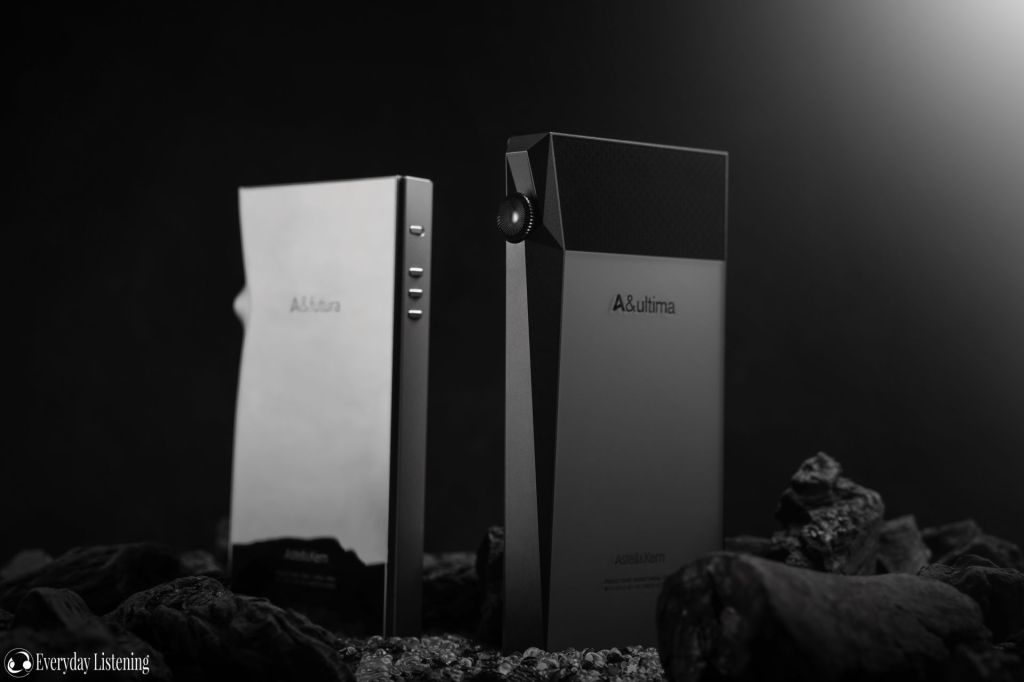
You get a slightly more laid-back vocal position but similar definition on a whole. A light warmth seeps in from the bass and body is retained. The top-end becomes slightly less articulate which emphasizes its smooth, coherent nature. The slight reduction in contrast means separation is not an outstanding performer in this mode. It is the smooth delivery of notes and generally spacious presentation that is the appeal. The OP mode impressed me with defined layers. While this is not as evident here, the darker background does return some focus to the foreground meaning though it is less intimate, details still stand out. While a more neutral OP setting may have offered greater versatility, I did find the OP setting to be highly resolving and the Tube setting to offer very pleasing synergy with my more revealing monitors.
Highs –
To my ears, the top-end is where the SP2000T really excels. In OP mode, its treble delivery is clean, linear and insanely well-textured. It combines a highly focused, stable foreground detail presentation with an immaculately clean yet well-defined background. This provides foreground details with heaps of “pop”, allowing the source to heighten detail presence without introducing any brightness. The linearity of the treble response also enamours, as notes come across as highly natural and well-bodied. The transient response is clean and sharp ensuring the leading edge is defined. However, the source’s crispness never comes at the expense of glare, grain or texture. Notes also decay naturally and this is aided by the background cleanliness.
The best way to describe this is regarding busier tracks such as Maneskin’s “Beggin’” where the SP2000T offers top-level composure and organisation even during its more chaotic passages. When switching to Tube mode, much of the same strengths remain and, as always, you give a little and get a little. Detail remains but composure, speed and separation kicks back a notch. There is a slight reduction in air and extension in favour of an even darker background. Notes are well-boded and slightly smoother in their delivery. Decay is a hint truncated due to the background darkness though many will enjoy the superb darkness and contrast on display. Altogether, it remains a very resolving and effortless sounding source with two distinct characters.
Soundstage –
Astell & Kern bring it all together with an impressive, spacious and sharply defined soundstage presentation. The dimensions are overtly spacious, on the level of a good desktop stack. Width especially impresses though depth is slightly more intimate and doesn’t perform on the same level. The Tube setting does help with this, in fact, you end up with the opposite situation. The imaging as well is very sharp. Localisation is pinpoint accurate and not only are layers defined, but there are also many of them. This provides a nice lateral spread and heightens the accuracy of distance localisation. Do note that the Tube mode has less of this quality. Separation is one of the lesser aspects of this DAP, mostly with regards to the midrange. This is due to its full and smooth nature that leaves less air around each element. With the large stage and defined note presentation, I didn’t find this to be a glaring fault but if you do enjoy that style of sound, a DAP with a more revealing tonality may better suit.
Driving Power –
The SP2000T happily drive everything from my very sensitive multi-driver IEMs to the especially inefficient, high-impedance Astrotec Phoenix. Dynamics and control were on the level of my desktop stack no matter the pairing. Similarly, full-size headphones were not a problem for this DAP. For some older dynamic driver headphones such as the 300-Ohm HD650, a desktop source remains the superior choice, especially if you’d like to experiment with output impedance matching. However, for modern planars, even TOTL models such as the Meze Elite, Final D8000 Pro and Audeze LCD-5, I was surprised by the level of drive and power the DAP was able to provide. I was all the more impressed that it is able to do so with zero noise on sensitive IEMs and a lower output impedance. The AMP modes also mean that, so long as you aren’t looking for a clearly revealing source, synergy can be achieved on essentially any pairing.

Ryan Soo
Avid writer, passionate photographer and sleep-deprived medical student, Ryan has an ongoing desire to bring quality products to the regular reader.
 Everyday Listening
Hello,
thank you for your review! How long will the SP2000T last before it will become obsolote? I would like to buy one but i am worried a litte bit that i will need a new one soon.
Kind regards from germany
Christoph Stopa
LikeLike
Hi Christoph,
I apologise for the late reply, I hope you’ve been well!
It’s honestly hard to say how future proofed any tech item will be, new breakthroughs are constantly being made and things are ever getting better. With that said, Astell & Kern’s flagships do tend to age well and I would argue that dedicated DAPs like this have a more timeless quality than dongles and stacks due to their more discrete nature. The SP2000T is still relatively new in the release cycle so we shouldn’t see a successor for some years to come. Just my 2c.
Warm regards,
Ryan.
LikeLike