

Meze Audio Liric Review – Reframe
Sound –
Tonality –
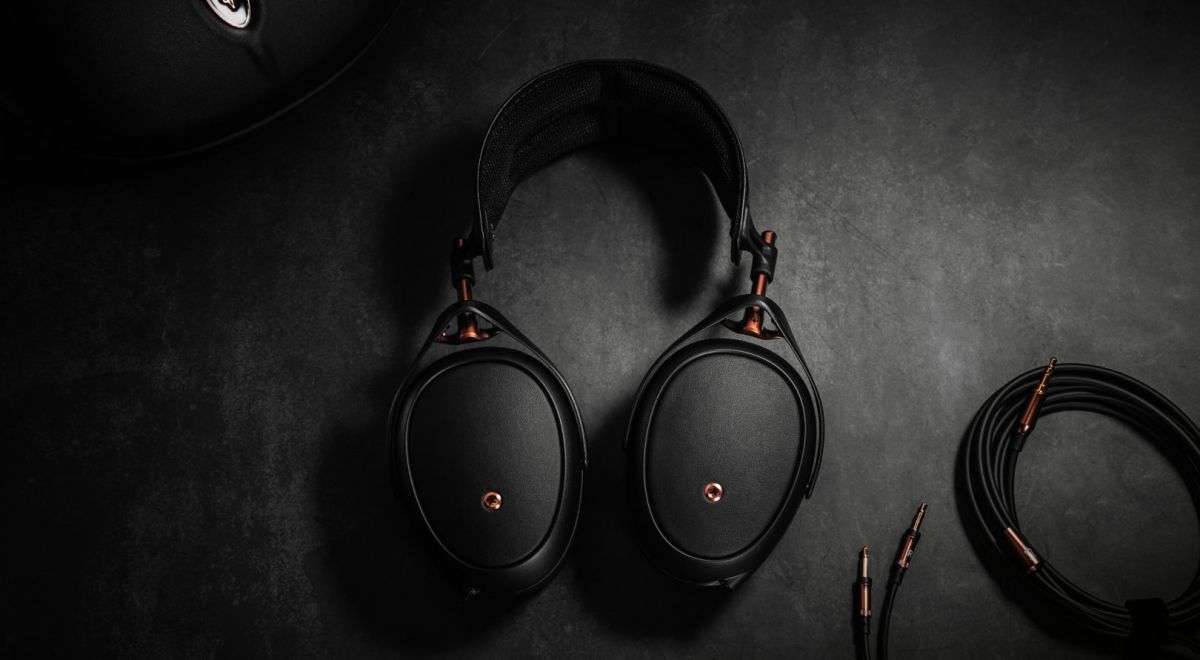
The Liric takes some inspiration from the Meze house sound realized in a more energetic and contrasted manner. Relative to their open-backs, the Liric carries a more energetic and dynamic character with higher contrast, in fact, to the extent that I would no longer consider it to be a warm sounding headphone if still a smooth leaning one. Specifically, it has less upper-bass presence and a small nadir at 2kHz that slightly shrinks vocals and brings them a step back. This instigates a slightly U-shaped character in tandem with the Liric’s more energetic lower-treble region. That said, returning customers will feel at home regarding the Liric’s laid-back upper-midrange and dark background that both feel reminiscent of the Elite and Empyrean. Of course, relative to Meze’s other headphones, this doesn’t make the Liric a V-shaped or hugely sub-bass heavy headphone. It should come as little surprise that resolution doesn’t quite match the higher-end models, however, I was very pleasantly surprised that the Liric carries over much of their spaciousness and separation.
Bass –
Where the closed-back design is felt most is within the bass as the Liric delivers a well-extended and hard-hitting sub-bass slam. The Liric isn’t a hugely bass heavy headphone but has a powerful voicing that permits strong drive and dynamism regardless. A small sub-bass shelf instigates these qualities, granting the Liric’s sub-bass a more physical character compared to essentially all open-back designs. It delivers thick and weighted notes without introducing too much warmth or roundness due to a nadir in the upper-bass and lower-midrange. This is responsible for the Liric’s relative lack of warmth and dynamic, high-contrast nature. As bass emphasis on a whole isn’t enormous, the headphone upholds excellent separation and cleanliness without muddiness or smear. However, some may find the headphone lacks a little mid-bass richness, especially if you’re coming from the company’s open backs; the Liric doesn’t have the same full, punchy presentation as before.

Contrarily, if you found the Elite or Empyrean a little bloomy, the Liric appends this handily being far more separated and tonally neutral. Bass isn’t light nor thin due to the sub-bass shelf and, similarly, you don’t get any congestion with the nadir above. The Liric has an impressively hard-hitting attack with just the right amount of pressurization for my tastes. It also has a natural decay that translates to strong dynamics and very solid timing. You can find a more defined and aggressive low-end yet, especially from dynamic driver closed backs. However, like the recently reviewed RAD-0, I did find myself impressed by the lack of planar “flubbiness” at the very bottom. Though leaner, cleaner and more articulate, the Liric’s low-end still isn’t overtly fast sounding but has I would hesitate to call it lacking texture or tightness by any means. It’s tight, it’s dynamic and it’s a whole lot of fun.
Mids –
Similar to the Empyrean and Elite, the midrange is mostly tuned in a progressive manner with a slightly laid-back upper midrange permitting it to retain a smooth, natural voicing in totality. It is slightly more articulate than those headphones with a small wideband lower-treble bump that draws a hair more attention to the leading edge of notes. The combination of sharper articulation and greater separation initially provide the impression of a more resolving midrange, however, under scrutiny it is quite apparent that the Elite is the more nuanced performer. Though the driver is very similar in origin, the Liric strikes as occupying a sensible price range considering its level of resolution within the midrange but with impressive spatial capabilities that perform well above.
What may be more contentious is its noticeably more substantial upper-bass/lower-mid dip that gives it a less full-bodied and voluminous midrange presentation. Though never hollow due to the added density and smoothness in the top-end, it does lack the organic richness and coherence that the Empyrean and Elite enjoyed. A 2kHz nadir also gives the Liric’s vocal presentation a little weirdness to my ears as vocals are a slightly small and head-voice biased in addition to bringing the midrange one step back in the presentation altogether. Combined, it possesses a slight cool tonality that isn’t as forgiving as past Meze headphones if still to a fairly innocuous extent on most tracks. At the same time, this contributes to the sense of spaciousness and layering by decreasing emphasis on room and increasing separation to a very high level.
Many do mistake high separation for spaciousness, but here the combination of both results in a unique ambient quality. Those desiring a large, powerful midrange as observed on former Meze releases will be left wanting here and are best to investigate the open-back models. While the smoother top-end tuning does aid coherence to an adequate level and ensures minimal intensity or sharpness, the Liric now lies slightly on the revealing side albeit without intensity or strain due to its laid-back character. However, the Liric does strike as a unique proposition or its ability to provide enhanced clarity and separation with an impressive sense of space and without a hint of intensity or strain.
Highs –
Treble is clear and engaging without drawing overt focus and overly skewing balance. The lower-treble picks up progressively from the laid-back upper-midrange before a dip and subsequent emphasis around 8kHz. This tuning makes sense in context of the midrange by maintaining smoothness and reducing sibilance and preventing an over-bright background. However, note that though lower-treble is indeed more present than before, I found that the Liric’s top-end was more defined by its upper-harmonic bias. This means that the middle-treble peak serves more as foundation for detail presence and, in turn, the foreground isn’t hugely focused or detail-dense. Finally, an energetic upper-treble above enhances headroom and brings micro-details to the fore. Though not especially linear nor a paragon of timbral accuracy, the Liric is rewarded by excellent separation and clarity at the expense of note body.
Its energetic tuning places showcases its strong extension and, arguably, this style of note presentation is consistent with that observed in the midrange and bass forming a coherent spirit throughout. Instruments are presented in a clear, crisp and articulate manner and, at the same time, I didn’t find the upper-treble to be boosted exceedingly to the point of brittleness nor middle-treble to stridence or glare. On the contrary, notes are evidently thin and do miss texture as a result, most noticeable to me with cymbals. Otherwise, percussion and strings are affected similarly but are presented with a mostly faithful shimmer and decay forming a convincing sense of immediacy.
The Liric’s note attack isn’t quite as keen as something like the similarly priced HEDDphone or RAD-0 yet alone top-tier headphones like the Elite and LCD-5. However, to my ears, this quality works well in tandem with the clarity-enhanced tuning to ensures highs aren’t overly sharpened or thinned out; I also doubt anyone would call the Liric ill-defined or lacking complexity either unless you were comparing it to the cream of the crop. Moreover, given the tuning, separation and fine detail presence are non-issues regardless and in return, it provides heaps of air and headroom without introducing any glare or excess weirdness into the instrument timbre.
Soundstage –
This is where the Liric really comes into its own, for it is able to craft space and position far more convincingly than the vast, vast majority of closed-back design I’ve tested. Not only does raw soundstage space extend impressively beyond the head in all axis, but the headphone also has a similar style of presentation to the Elite that exacerbates this quality. The superb general separation and layering of the Liric contribute equally. In fact, I do find the Liric to sound more spacious than many high-end open-back designs, however, in a different manner. Specifically, open-backs have a more natural gradient and fade off towards their extremities where closed-back headphones provide a hard stop at the periphery. Though large, I do find that open-back headphones provide a more natural sense of space for lack of better terminology – and this certainly isn’t something I can hold against the Liric specifically.
Otherwise, imaging is enjoyable and contributes to a nuanced and involving image. While they aren’t quite as multi-dimensional as the Elite which features more accurate distance portrayal, I actually found the Liric to have slightly sharper direction due to its more pronounced top-end and superior separation. Layers are both defined and well-delineated albeit with reduced room that means this quality isn’t pushed into the listener’s face. It also has top-level separation due to its well-defined and thin/neutral note structure throughout. In turn, there is palpable ether surrounding each element which permits greater composure on complex passages and prevents small details from becoming overshadowed. The Liric isn’t so much a creature of huge raw resolving power or linearity but a collection of qualities that work well as a coherent whole.
Drivability –
With a modest 30 Ohm impedance set to a 100dB sensitivity, it’s clear that the Liric was designed to be easy to drive.
Output Impedance Sensitivity
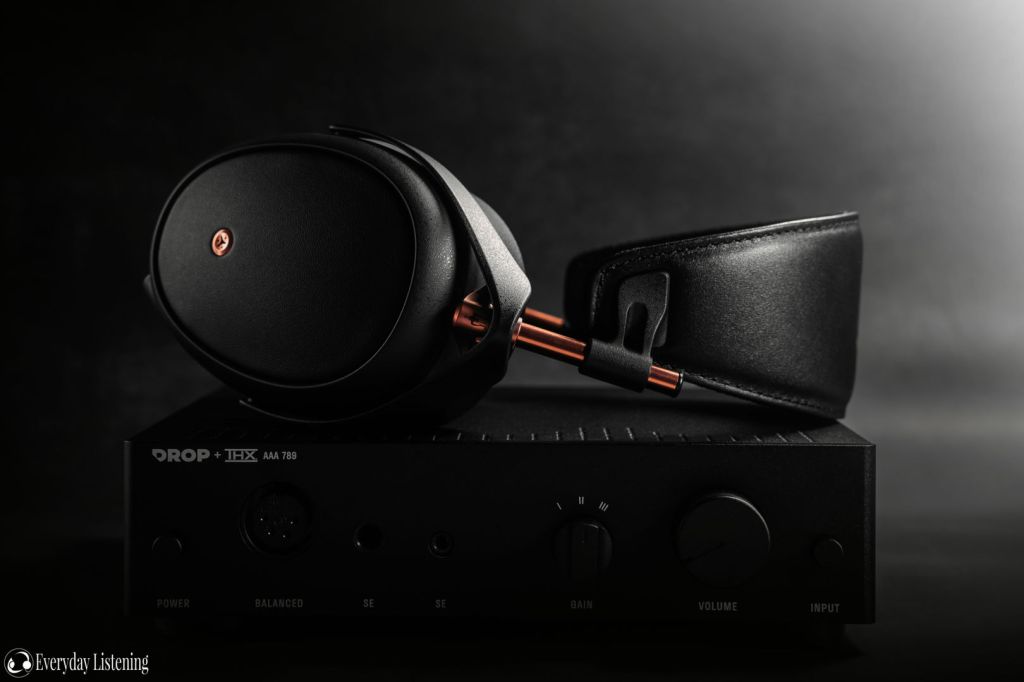
I assessed the impedance curve of the Liric empirically using two 20-ohm impedance adaptors to simulate a higher output impedance from my THX 789 (1-ohm output impedance). Besides a drop in volume, I noted minimal change in sound signature suggesting that the Liric should have a relatively flat impedance curve on sources up to 40-ohms. This means they will sound tonally similar from almost all solid-state amps and even hybrid tube amps which opens up more options for synergy.
Driving Power
The Liric is a very efficient headphone like the Empyrean and Elite before it – unsurprising given that it uses a very similar driver design. Meze has enjoyed good success here and the Liric provides a similar experience. Not only does it produce plenty of volume from lower-powered sources, it also doesn’t require much power to provide a dynamic and weighted bass performance. While a good desktop amplifier will provide the best experience here, the Liric does happily play to a high level from portable sources such as higher-end BT receivers, dongles and DAPs.
Suggested Pair Ups
The Liric is easy to drive from a power and output impedance point of view, providing a consistent character on a wide range of sources. This means you can enjoy many pairings and decide based on your personal tastes. For my ears, I most enjoyed the Liric from the new wave of reference-orientated solid-state Amps such as Topping’s NFCA and THX AAA-based devices. They provide high-definition and a clean tonality that brings out more of the engaging character of the Liric. For those valuing smoothness and warmth, the Liric pairs better with these types of sources than the company’s open-backs due to its cleaner tonality. Those that find the Liric thin will surely enjoy the headphone from a warm SS source or a hybrid tube amp.

Ryan Soo
Avid writer, passionate photographer and sleep-deprived medical student, Ryan has an ongoing desire to bring quality products to the regular reader.
 Everyday Listening