

Meze Audio Liric Review – Reframe
Comparisons –

Sony MDR-Z1R ($1799): The Z1R provides a warmer voicing with more forward vocals while the Liric is leaner and more laid-back in general. Both extend terrifically at the bottom end, delivering a physical slam and rumble with similar quantity too. The Z1R has a bit more mid-bass adding more tonal colouration that also continues into the midrange. The Liric has better bass separation but both achieve a similar level of raw note definition and control besides the tonal differences. The Z1R has a hair more drive which gives it a punchier character while the Liric has more focus in the sub-bass giving it a more responsive character. The Z1R has larger, more intimate vocals. To my ears, the Liric is slightly more natural in its voicing though both would not require much adjustment for most listeners. The Liric has slightly smaller vocals with a light cool tone but also substantially higher separation. The Z1R is more powerful, warmer and bigger sounding.
The Z1R has reduced lower-treble presence that smooths off its articulation to avoid excessive sharpness, but this also gives the treble itself a higher-contrast, more energetic character. The Liric transitions more evenly into the treble, possessing more accurate body and texture despite being slightly on the energetic side itself. This means the Z1R sounds crisper with greater shimmer and energy in the mid-treble, and it does have a slightly sharper transient response that gives it a small advantage on fine detail retrieval too. Overall, however, the Liric doesn’t strike as falling behind on overall resolution and extension, it mostly just isn’t as bright and energetic in its tuning. The Z1R does have a deeper stage while the Liric has slightly more width. I do perceive the imaging as being more multi-dimensional on the Z1R but combined with better separation on the Liric, both provide an impressive staging experience.
DCA Ether C Closed ($1799): The Ether Chas a similar style of tuning with a slightly flatter bass and midrange making it a bit more accurate for those wanting a more linear signature. The Liric has a bit more sub-bass emphasis giving it greater pressure, weight and slam. The Ether C is meanwhile flatter, being more balanced and neutrally sized. The Liric has a more assertive note attack too which contributes to this impression. However, the Ether C does sound a bit more controlled delivering a more defined and articulate mid-bass. The Ether C has a similar midrange presentation that achieves a more balanced position in context of its flatter bass. It has a bit more body in the lower-midrange which helps to fill in its midrange note body and aid a slightly larger, more intimate vocal presentation. The voicing on both is natural and reasonably similar on a whole. I do perceive the Ether C as having slightly more upper midrange presence and it isn’t as laid-back as a result. This also means it provides similar clarity despite having a bit more body.
The Ether C above is a little more articulate, feeding through from the more prominent upper-midrange. As contrast isn’t as high, it has a good amount of note body and texture too. This is where the two headphones differ more, the Ether C is more lower-treble focused, delivering more crunch and initial bite in tandem with a sharper transient response. Overall, this makes it the more detailed headphone. The Liric isn’t far behind but does have a less defined leading edge in favour of greater air and shimmer above. It has a more delicate but energetic treble presentation with similar overall headroom and extension. The Liric, to my ears, also provides a more spacious soundstage presentation. This is aided by its higher separation in the midrange especially while the Ether provides slightly sharper directionality in terms of imaging performance.
Meze Elite ($4000): The Elite is Meze’s co-flagship model that represents a more neutral take on the Empyrean. Using the same driver philosophy as the Liric, many similarities are to be found between the two. The Liric, with its closed-back design, actually has an advantage when it comes to sub-bass power and slam. Combined with greater emphasis in the sub and deep-bass regions, it sounds more fun, contrasted and weighted with greater pressure and rumble. The Empyrean is more linear and sounds less sucked out through its upper-bass/lower-mid transition. In fact, quite the opposite, it actually has a small emphasis here that contributes to considerably higher coherence and greater roominess too. The Elite does have the more controlled and articulate mid-bass, being noticeably more defined and responsive on complex tracks. However, for sheer fun factor, the Liric may come out ahead.
The midrange is where the two differ mostly as the Liric appears more laid-back with smaller vocals and a leaner note presentation. This is in stark contrast to the lightly warm, coherent and perfectly filled-in Elite which undoubtedly offers the more natural timbre between the two. The Elite also has a very noticeable advantage on resolution and spaciousness as you would expect given the price and form factor differences. Treble is similarly tuned on both, with just a hair more linearity on the Elite which has a bit more lower-treble and a bit less mid-treble. This gives it a more even-handed treble presentation, retaining crispness and air but with less daintiness and more focus. The Liric is slightly brighter but more energetically voiced. Above, the Elite extends noticeably better which gives it far more headroom. Though the Liric impresses greatly for a closed back, it still cannot replace a good full-size open-back in terms of soundstaging as the Elite is a big step up in both spaciousness and imaging performance.
Verdict –

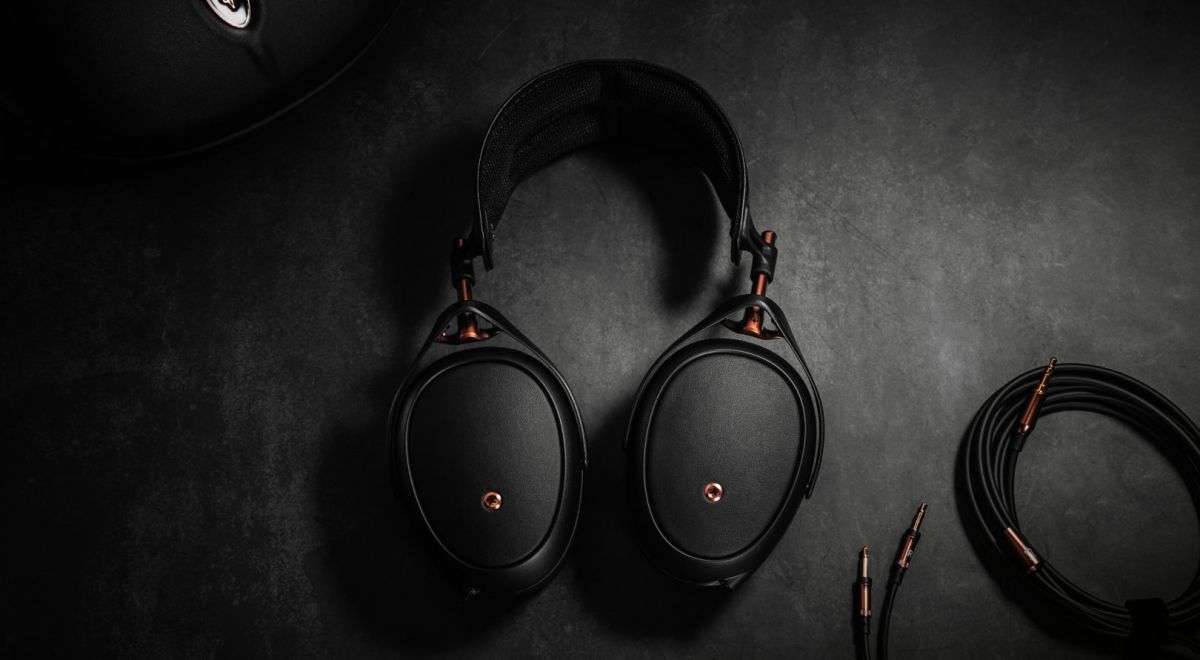
The Liric subverts a lot of expectations, both as a closed-back headphone and as a Meze headphone. Those expecting a warm, laid-back sound will certainly be surprised while those wishing for something more engaging from the company will find just that. It retains a dark background and smooth, laid-back character in the midrange in addition to Meze’s legendary design and craftsmanship in a smaller, lighter and more isolating chassis. Meanwhile, it introduces a more affirmative sub-bass kick alongside greater treble energy and air that many will be sure to find appealing. Perhaps most impressive is the Liric’s ability to soundstage as its space and separation are far more competitive to many open-back designs than its closed-back competitors. It does have its quirks, that being a slight cool tonality and thinner note body that mean it isn’t as forgiving as past Meze designs. In addition, the stock cables leave to be desired, and it still isn’t the most compact package for outright portable use. That said, the Liric strikes a brilliant balance between portable and home use from a comfort and isolation standpoint and its sound is loads of fun without being exceedingly coloured nor in a polarizing manner. Though not technically outstanding, the Liric offers sound resolving power for a high-end headphone with tastefully executed colouration that makes for a fun and engaging listen whilst benefitting from Meze’s legendary comfort and craftsmanship.
The Liric is available from Meze Audio (International) for $2000 USD at the time of writing. I am not affiliated with Meze Audio and receive no earnings from purchases made through these links.
Track List –
Billie Eilish – dont smile at me
Bob Seger – Night Moves
Courtney Barnett – Rae Street
Cream – Wheels of Fire
Dire Straits – Communique
Dirty Loops – Next To You
Eagles – Hotel California
Elton John – Honky Chateau
Fleetwood Mac – Rumours
H.E.R – I Used To Know Her
Jasen – BYE
John Mayer – Continuum
Kanye West – Ye
Missy Higgins – The Sound of White
Radiohead – OK Computer
TALA – ain’t leavin` without you
The Beatles – Abbey Road
The weeknd – After Hours
Vampire Weekend – Father of the Bride

Ryan Soo
Avid writer, passionate photographer and sleep-deprived medical student, Ryan has an ongoing desire to bring quality products to the regular reader.
 Everyday Listening