

Ovidius TX-901 Review – Beta Test
Sound –
Tonality –
I had no idea what to expect upon first listening from the company as this is their first headphone and the first product I’ve tried from the company. Unfortunately, I could instantly tell something was off about their tuning. This is not a headphone without its merits, but it won’t be a versatile buy for many. The low-end is relatively honest with a slight fullness through the mid-bass but otherwise, impressive tightness. The top-end is also a good performer, with a defined lead-edge and a vibrant, sparkly nature with a boosted upper-treble that makes for an engaging listen. The problem is no doubt the midrange which is not only quite roomy but also considerably laid-back with a dip from 2-3kHz. Relative to the Apollo that I had similar complaints with, I was more enamoured with the Ovidius for its slightly more present 4kHz range and more even bass that gives it a cleaner and slightly clearer tonality. That said, do take note if you are expecting a balanced sound or tend to focus on vocals.
Bass –
It should be evident from my description above that the Ovidius excels most with tracks that don’t necessarily have a vocal focus. Intriguingly, bass doesn’t come across as overtly enhanced here, but is given more presence and command instead through the lack of midrange. Lows are respectably even, with a slight mid-bass focus. This gives bass notes a light warmth and good sense of fullness and punch. They aren’t especially tubby or thick but I would hesitate to label lows as clean or neutral either. It’s unique balance that will suit those wanting a good amount of bass that sits at the forefront without an exceedingly coloured voicing. To empathise with its creators, such cannot be achieved unless other frequency ranges are attenuated. We can also see the merits of the huge drivers with regards to the bass note presentation.
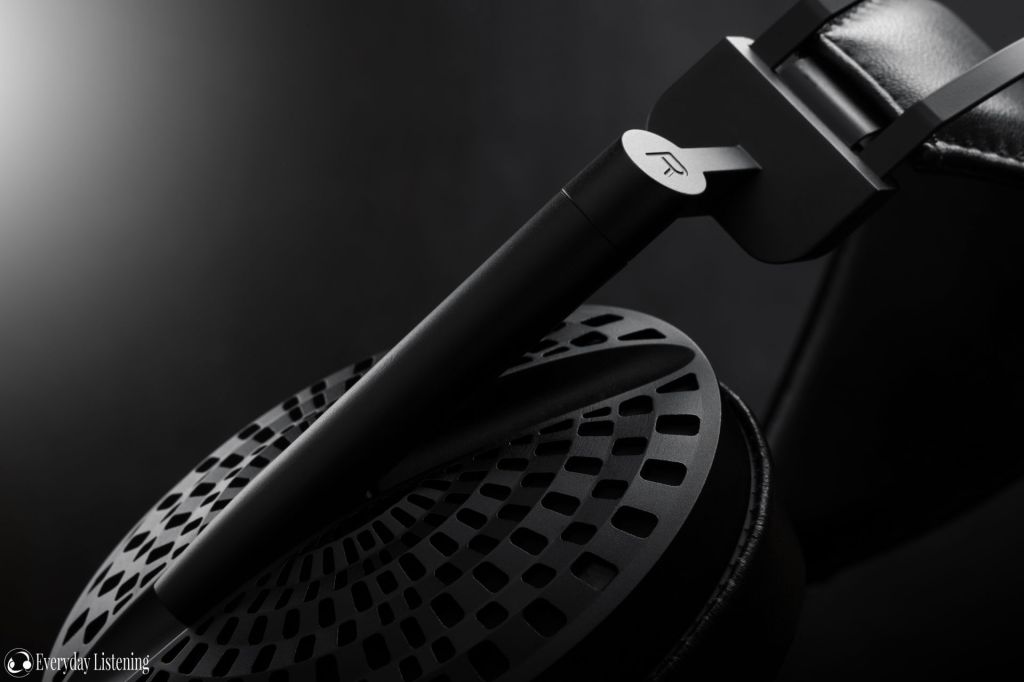
Though I wish the pads were larger and softer, I can’t help but think the snug fit is contributing to the control exercised by the low-end. Sub-bass isn’t huge, but extension is impressive with plenty of pressure and rumble. What impresses most is the tightness and control of this driver that yields excellent note definition. The TX-901 attacks with keen precision and decays quickly after. This gives the headphone a great sense of impact and pace perfect for electronic, R&B and funk think Dirty Loops, Cory Wong and Tom Misch. Due to the added fullness, don’t expect a hyper-separated reference-style sound, but a powerful low-end that keeps up with complex passages all the same. If you love a punchy mid-bass, I can’t think of a better performer in this price range.
Mids –
Now for the more controversial aspect of this headphone, the midrange is roomy, recessed and simply not a highlight of the sound in any regard. Vocals are recessed, often poorly defined and small details are prone to being smeared over due to the unbalanced tuning. It isn’t un-listenable but just serviceable and that isn’t sufficient when you can get such a solid all-rounder in the form of the Sundara for a few hundred dollars less. Of course, this is simply equating midrange for midrange and there is far more to the sound that may skew your opinion. Do note, however, that the recessed 2-3kHz range of the TX-901 heavily limits genre versatility. On the upside, the tone isn’t exceedingly warm as bass isn’t huge in and of itself. In addition, they do have a bump around 4kHz which does help with female vocals especially.
While male vocals are broadly unappealing and many instruments err on the bloated side, I did find myself surprised by the clarity and cleanliness achieved by certain female vocals. Such a tuning isn’t conducive towards excellent timbre and natural voicing nor the best fine detail retrieval. It should be noted that I think the raw resolving power of the driver is quite good, but the tuning simply makes this difficult to appreciate. In this regard, those adept at eQ may be able to eek out a very solid performance here. However, this heavily complicates the reviewing process and eQ isn’t something I use personally. For that, I can only judge the stock frequency response and I find it unappealing in the midrange due to its excessively laid-back nature that results in an off-timbre.
Highs –
While you cannot generalise and say that a V-shaped signature will excel where it is emphasized in the bass and treble, this is the case here. The top-end is defined by a small 5kHz bump and a larger 8kHz peak above. In addition, the upper treble is generally elevated imbuing a sparkly, high-energy sound. That said, as the treble is slightly laid-back through the 6-7kHz region, you do miss a lot of the sharpness and glare that treble-forward headphones usually succumb to even if a notable upper-harmonic bias does remain. The level of emphasis overall is roughly on par with the bass if not slightly behind meaning this cannot be considered a bright or aggressive headphone either, achieving good listenability long-term. The 5kHz bump follows on from the uptick of energy around 4kHz to imbue a detailed and crisp leading-edge, drawing attention to percussion. Meanwhile, the higher peak contributes to a good amount of air and elevated headroom which are a good addition considering the otherwise thicker and stuffier nature of the sound.
The tuning combined with a reasonably clean transient response contributes to above-average fine detail retrieval and a presentation that draws focus to them. On the contrary, treble notes are quite thin and, in turn, you do miss some texture and the timbre is clearly coloured. The background also isn’t the cleanest but in its place is an engaging sense of sparkle and openness imbued by the boosted upper treble. I don’t find this style of enhancement to introduce glare or brightness, rather it gives instruments below a sense of vibrance and shimmer which is the case here. Extension also impresses and resolution is better than many of its class. Small background and micro-details are apparent and sound well-expressed. Though not the most accurate treble response with a fair amount of “tizz” and a slight brittleness, it isn’t fatiguing whilst simultaneously being engaging and detail forward.
Soundstage –
Despite the treble extension and sparkle, the TX-901 doesn’t strike me as having an especially large soundstage. It has sound width stretching just beyond the head but almost no depth which gives its stage a very flat and uninspiring feel. If you can get past a hazy centre image and minimal depth projection, the imaging is otherwise not bad. They achieve a good lateral spread with apparent layers and a good sense of lateral positioning and distance portrayal. Separation is better than you may expect. While the midrange is a little muddled, the bass and treble both showcase strong separation due to the driver control and defined note structure. It is unfortunate that the unbalanced tuning makes this headphone’s strengths difficult to appreciate.
Driveability –
With a moderate 60 Ohm impedance paired with a higher 105dB sensitivity, the TX-901 isn’t especially difficult to drive but does scale with higher-powered sources. In addition, it may require pushing portable sources a little more than some other modern planar magnetic designs, many of which are more efficient yet.
Output Impedance Sensitivity
The TX-901 benefits most from a low impedance source, however, this is not difficult to achieve given its 60 Ohm impedance. Going by the rule of eighths, the headphone should be well served by any source with an output impedance lower than 7.5 Ohms. Adding an in-line 20 Ohm impedance adaptor giving an effective 20 Ohm OI to the Topping A30 Pro (0.1 Ohm) provided an even more laid-back midrange and top-end leading to a more congested sound. Given the default tuning, this is not ideal.
Driving Power
Modern headphones have come a long way in terms of driveability with many being quite happy with lower-powered sources at moderate listening volumes. The TX-901 is one of the rarer examples that sees a good benefit from proper amplification. Switching from the Shanling M2x to the A30 Pro revealed a generally cleaner, more tightly knit and more defined sound. Bass extended deeper with greater sub-bass power and lows were simply tighter overall. The midrange and treble gained some definition. Unfortunately, additional power didn’t do too much for the soundstage which was limited in both cases.
Suggested Pair Ups
The TX-901 benefits from a clean, low impedance source. The Topping NFCA devices are a perfect complement as they introduce little warmth but also aren’t too sharp in the highs. For those wanting a bit more treble bite, the THX AAA-based sources are a good alternative. I would not recommend tube amplifiers nor hybrid tube amps for this headphone due to its congested midrange. In addition, though this headphone can be pushed to volume by many modern portable sources, it does scale well with amplification in the form of dynamics and driver control. A desktop source is preferable as a result.

Ryan Soo
Avid writer, passionate photographer and sleep-deprived medical student, Ryan has an ongoing desire to bring quality products to the regular reader.
 Everyday Listening