

Focal Bathys Review – Moving the Goal Posts

Comparisons –
Sony WH-1000XM5 ($399): The Sony is a smaller and lighter headphone that also offers a superior noise cancelling performance with slightly better voice suppression and a touch less background hiss. Sonically, the two actually aren’t too dissimilar with the Sony possessing a slightly more present bass range and the Bathys being generally cleaner and more articulate. The Bathys provides much higher driver quality, immediately noticeable via its more precise delivery of treble instrumentation and superior staging performance. Still, on a tonal level, the Sony performs admirably and comes in considerably cheaper. The Bathys has a slightly less emphasized bass with a cleaner character. It has a tighter sub-bass slam and less warmth in the mid-bass giving it a noticeable edge on separation. The Sony is fuller and has greater punch but is less nuanced, lacking the texture and note definition of the Bathys.
The midrange is slightly more present on the Bathys and has a lot more space. The Sony is warmer and one step more laid-back. The Bathys is also more articulate, boasting superior transparency and resolving power throughout. Though both are naturally voiced, the Sony does sound more coloured and superficial in terms of resolving power, unable to discern layers and small details like the Bathys. The top-end is more blunted and less extended on the Sony. The Bathys has a lot more bite and note clarity in addition to a far more defined note presentation. The Sony is quite smoothed over which is good for listenability but lacks fine detail for critical listening. The Bathys boasts far more detail retrieval and has a more balanced presence. It extends much better too, the Sony is very one-dimmensional while the Bathys offers a far more spacious stage with real layering that the Sony lacks almost entirely.
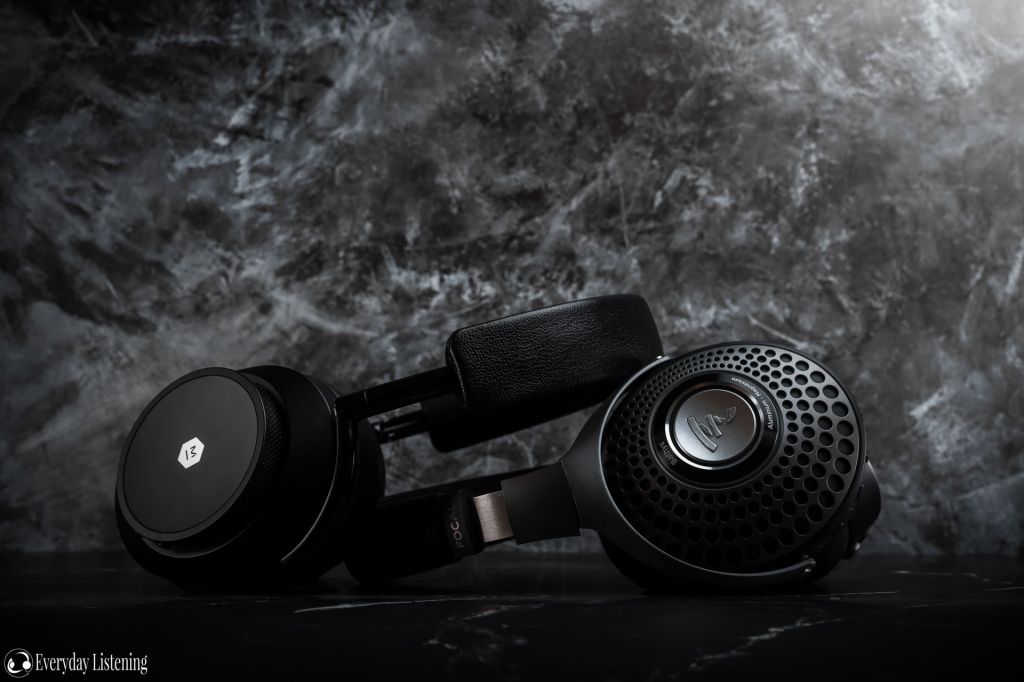
Master & Dynamic MW75 ($599): The MW75 is a slightly cheaper offering but sits in the same premium space above the majority of consumer competitors. The MW75 is a more coloured performer but less so than prior offerings from the company. It has a more V-shaped sound overall, with a boosted mid-bass and mid-treble giving it a more energetic sound. That said, the midrange is clear and well-present meaning it provides good genre flexibility overall. The Bathys is undoubtedly the more balanced performer. It has a cleaner bass tuning with a more accurate timbre. The Bathys also has better driver control and speed resulting in a noticeably more defined, discerning note. By contrast, the MW75 has better dynamics with a bigger, more powerful slam and it has a lot more fullness and punch in the mid-bass too. That said, its notes are more rounded and lack the same separation and resolving power. The midrange is similarly voiced on both, achieving a natural sound.
The MW75 is a bit more laid-back relative to its more emphasized bass and treble and vocals are smaller in size. That said, the tonality isn’t too warm and the level of clarity is similar. The Bathys is more balanced and cleaner yet. It has better layering while the MW75 is focused more on foreground details. Treble is more present on the MW75 and has a sharper, clearer character. This means small details are brought more to the fore and benefit from a crisper albeit thinner presentation. The Bathys by contrast, offers superior texturing and note body. Though not perfectly linear, it is the more balanced performer as below and sports superior headroom and extension above too. The biggest difference, however, is the soundstage as the Bathys has a far more inspiring level of expansion and imaging. The MW75 isn’t a poor performer but more typical for an ANC BT headphone. The Bathys feels more like a wired set in this regard.
Focal Celestee ($999): Coming in at a slightly higher price is Focal’s wired closed-back offering. The two are unsurprisingly, not too varied when it comes to tuning with the Celestee being a brighter headphone, the Bathys a smoother one to suits its portable intentions. It should be noted too that this comparison is with the Bathys in wireless mode which may exacerbate the differences. Bass is more present overall on the Bathys. The voicing is similar, a touch warmer and fuller but simply sits a few steps forward by comparison. The Celestee offers greater control, and its notes aren’t just leaner but faster and more defined too. The Bathys is no slouch, especially over a wired connection, but the Celestee is that extra step more discerning with a cleaner tuning to boot. It appears leaner also due to its more present top-end. The midrange is also more present on the Celestee. The Bathys is a touch more laid-back though both come across as subjectively well-balanced. The Bathys has a bit more warmth and body, it also has an uptick of density due to its less present upper-midrange.
Meanwhile, the Celestee offers greater openness and clarity. It has greater space and separation but does sound a touch bright and thin to my ears with the Bathys being a lot more forgiving. The Bathys isn’t as revealing or resolving but offers a slightly more natural voicing with less vocal bias and breathiness. The treble voicing is also relatively similar but more present on the Celestee. In addition to being brighter, the Celestee has a slightly more defined note presentation, especially the leading edge resulting in superior fine detail retrieval. The Celestee has a bit more headroom and noticeably greater sparkle like a typical high-end wired headphone. Even in USB DAC mode, the Bathys can’t compare to the Celestee from a strong source. That said, the Celestee is undoubtedly a brighter sound here and that may not be for everyone. While small details are well resolved and clearly represented, on some tracks it can be grating. The soundstage is more nuanced on the Celestee but in terms of size, the two are surprisingly evenly matched. The Bathys offers a bit more width while the Celestee has sharper positioning.
Verdict –
The Bathys is an interesting product that occupies an intriguing place in the market. As such, I have more thoughts to espouse than usual. I will preface that I think the high-end wireless headphone space is one with a confusing identity. On one hand, we have some bonafide wired legends receiving the wireless treatment such as Hifiman’s line-up. On the other, consumer models are offering more advanced convenience features and performing at an increasingly high standard sonically, but still fall well short of true audiophile quality. Then lie the intermediates, the Bathys being perhaps the best example I’ve tested yet. This headphone was clearly designed from the ground up to be a noise-cancelling wireless headphone whilst also leveraging a similar driver and form to Focal’s famous wired models. It is neither as proficient at noise cancelling as leading consumer models nor as resolving as audiophile headphones. That said, it has a genuinely inspiring tuning and a focus on sound quality over raw portability features. The result is a hybrid that might not be an outlier in either respect but balances both with aplomb.

Of course, it has a price tag to match and, again, should not be considered the best of both worlds. I’d argue that the latter is unattainable as stronger noise-cancelling performance and more slender form factors inevitably come at the expense of sound quality. The Bathys has a huge advantage over competitors with its excellent driver design and tuning. This permits it to achieve what is, to me, the best sound quality amongst its peers. It does so whilst offering a very good level of noise cancelling that is shy of the very best but never left me wanting during my testing. The downside is this has been partially achieved via digital sound tuning which rules out passive use. The tuning has also been slightly toned down in clarity relative to raw Harman, but in a very tasteful and enjoyable manner to my ears. If you were expecting a brighter, more revealing sound, then this headphone wouldn’t be for you. The Bathys rather offers excellent balance and great listenability on the foundation of a tight note presentation and extended, nuanced top-end. These qualities scale further with a wired connection and the tonality is just as charming whether ANC is on or off.
The Bathys is available from Addicted to Audio (Australia) for $1199 USD at the time of writing. I am not affiliated with Busisoft or Addicted to Audio and receive no earnings from purchases made through these links.
Track List –
Billie Eilish – dont smile at me
Bob Seger – Night Moves
Courtney Barnett – Rae Street
Cream – Wheels of Fire
Dire Straits – Communique
Dirty Loops – Next To You
Eagles – Hotel California
Elton John – Honky Chateau
Fleetwood Mac – Rumours
H.E.R – I Used To Know Her
Jasen – BYE
John Mayer – Continuum
Kanye West – Ye
Missy Higgins – The Sound of White
Radiohead – OK Computer
TALA – ain’t leavin` without you
The Beatles – Abbey Road
The weeknd – After Hours
Vampire Weekend – Father of the Bride

Ryan Soo
Avid writer, passionate photographer and sleep-deprived medical student, Ryan has an ongoing desire to bring quality products to the regular reader.
 Everyday Listening