

Kanto ORA Review – Small but Mighty
Pros –
Beautiful minimalist design, Convenient front-facing control knob, Nicely balanced and detailed sound with wide stereo separation, Sub-out with auto filter, Low noise floor, Excellent volume output
Cons –
Bass depth is improved but still limited, No high-res BT codec support, No internal pre-amp for vinyl, Matte finish is a fingerprint magnet
Verdict –
The ORA is a beautifully streamlined, versatile and powerful compact speaker that provides a refined experience at what remains an attainable price point.
Introduction –
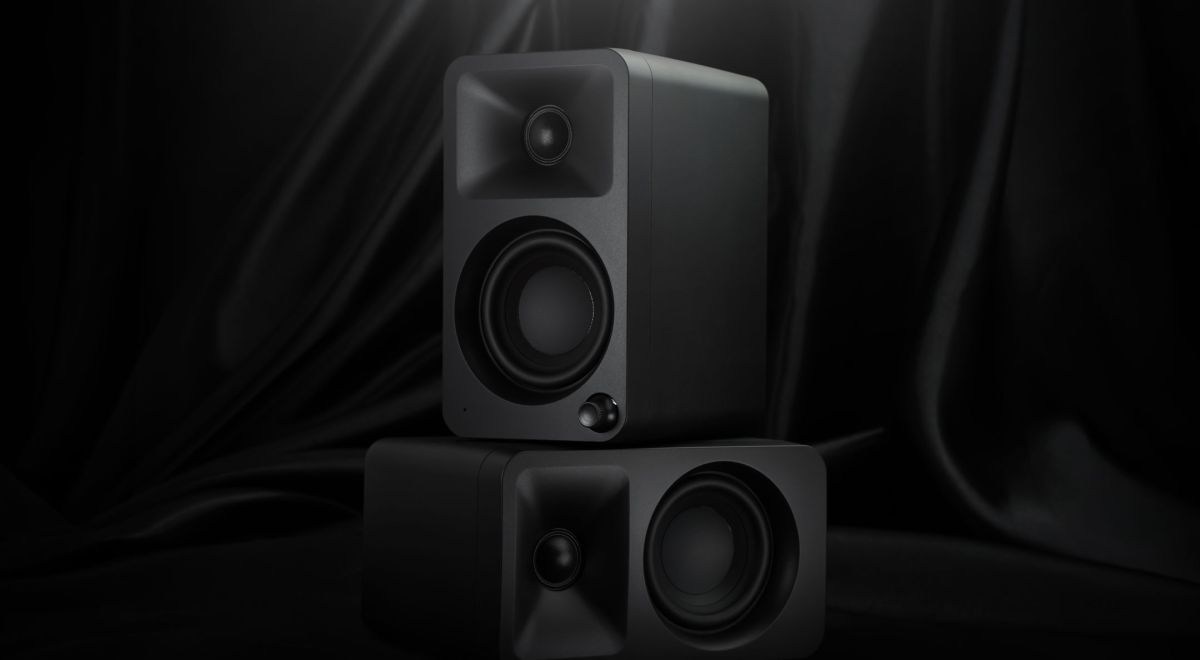
While the world of headphones and IEMs continues to operate at a breakneck pace, the same cannot be said for desktop speakers. Just a handful of options have remained relevant through the years and many have also been discontinued. Several companies have tried their hand recently, one of the more popular being Kanto’s YU series. The TUK extended this series into the higher end of the market and now, the ORA is being introduced as a cheaper and more compact option that will likely replace the YU2. The new naming scheme is perhaps indicative of a shift to a more diverse product line. As compared to its predecessor, the ORA is smarter, lighter and offers broader frequency coverage from a similarly compact form factor with the same beloved minimalist design.
The ORA is available for $349 USD. You can read all about it and treat yourself to a unit on Kanto’s website here.
Disclaimer –
I would like to thank Brett from Kanto very much for reaching out to organise a review of the ORA. All words are my own and there is no monetary incentive for a positive review.
Contents –
- Page 1: Intro, Unboxing & Design
- Page 2: Sound Breakdown
- Page 3: Comparisons & Verdict
Specifications –
- Amplifier Power Rating: Class D, 50W RMS, 100W Peak
- Frequency Response: 70 Hz – 22 kHz
- I/O: Stereo RCA input, USB-C input, RCA subwoofer output, BT 5.0
- Size: 9.9 x 17.5 x 14.2 cm each
- Weight: 1.0 kg each
Behind the Design –
Reference Quality
The ORA offers 50W RMS output power similar to the YU2 and also 100W of peak output. While they still use a Class-D amplifier, the ORA is now DSP-tuned and bi-amplified for greater separation and driver control in addition to offering a more linear frequency response. The company reasons that the more balanced sound profile of the ORA will enable the speaker to serve dual duty for studio monitoring and multimedia.
Seamless Sub Integration
Kanto speakers have always offered SUB outputs, a very appreciated feature for those that would like to expand their music system down the line. The ORA automatically applies a high pass filter enabling the speakers to provide an enhanced midrange and high-end with the subwoofer handling low frequencies.
Expansive IO
Like the YU-series, the ORA has a wide range of IO support including RCA inputs. In addition, the ORA has an in-built 24bit/96kHz DAC accepting digital input via a Type-C USB port. BT 5.0 support is also standard.
Unboxing –
The ORA comes in a compact card box that protects a gloss box with printed branding, specs and product photos. Inside are the speakers protected within a card inlet alongside a removable power cable, 4-pin speaker cable and 8 self-adhesive rubber feet should you want to place the speakers directly on a desk or benchtop. The power cable is a generic 12v cable with an external power supply. This means you can extend the cable range using a 2-pin cable… That said, the horizontal placement will be limited by the 4-pin cable system. These are available aftermarket and are more reliable than the usual banana or spring clamp systems albeit more difficult to replace in the event the user requires a longer or replacement cable.
Design –
The ORA provides a clean aesthetic that is very reminiscent of the previous YU series whilst drawing some inspiration from the higher-end TUK too. As you’d expect from Kanto, the company has gone to great lengths to deliver a handsome speaker that will complement a wide range of use cases. While the speakers do resemble a studio monitor, their uniform soft touch finish and minimalist lines give them a more approachable feel that won’t scream for attention from the less informed. That said, the finish is easily marked so you’ll want to keep a microfibre cloth handy if you’re a perfectionist.
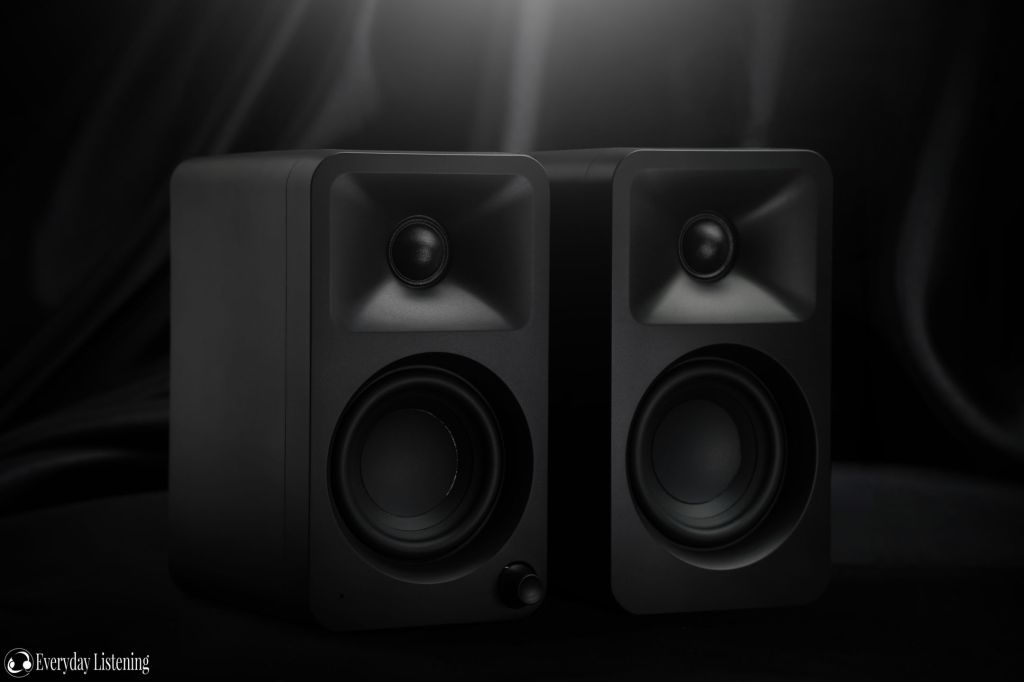
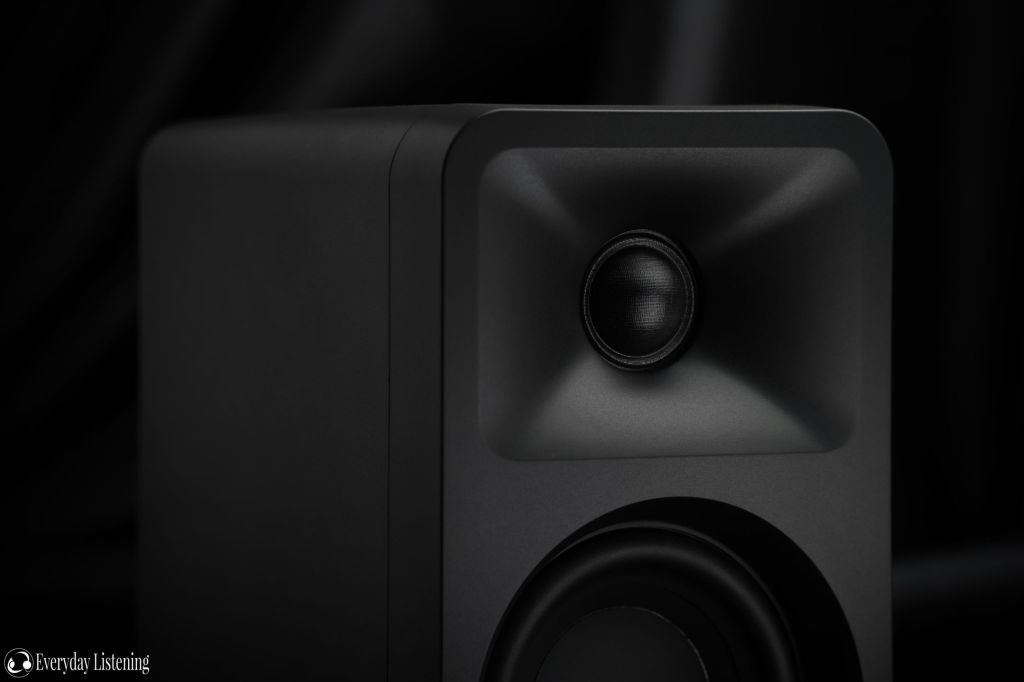
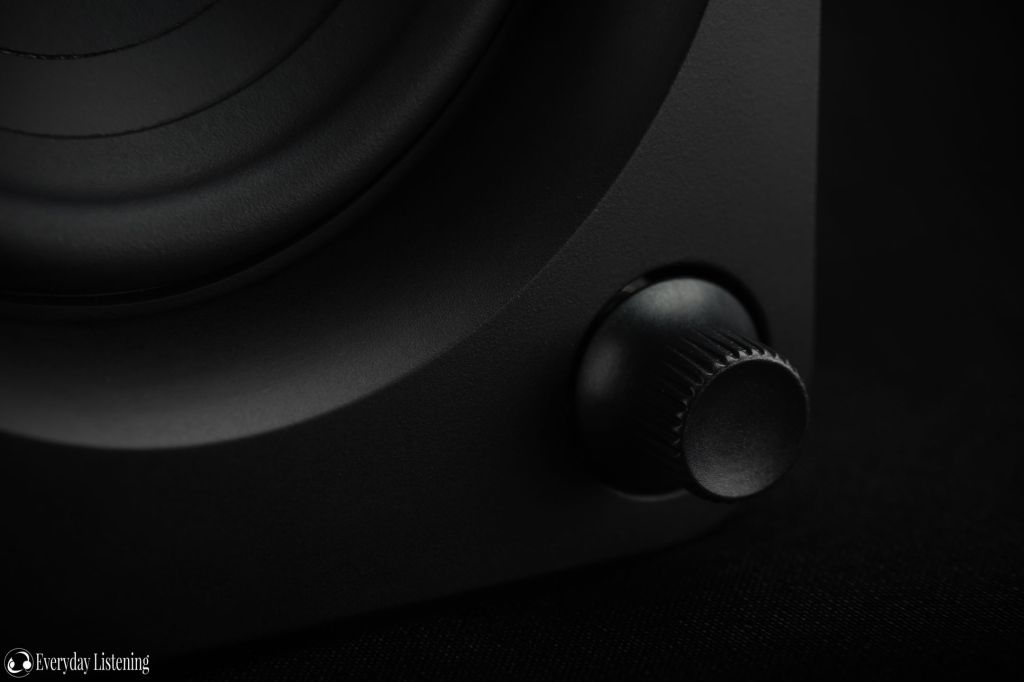
The front face is now adorned by more substantial tweeter waveguides that should contribute to a more linear frequency response and better imaging. The woofer drivers also sport paper cones as opposed to composite and lack the dome of the YU2 in favour of a flatter diaphragm more similar to the TUK. In addition, the speakers no longer have such an overt status LED with a new pinhole design and on-speaker controls have been enhanced with a front as opposed to rear-facing volume pot that now doubles as a source selector that offers more convenient function when used with a PC setup.

As before, the IO is contained to the rears of the speakers, and it has now been enhanced to meet the larger speakers in Kanto’s range. The sub-output makes a return, but the two speakers communicate using a 4-pin cable over simple banana prongs and RCA inputs are now available too. Moreover, there is also a dedicated BT pairing button alongside a shift to USB-C as opposed to the now very antiquated Type-B.
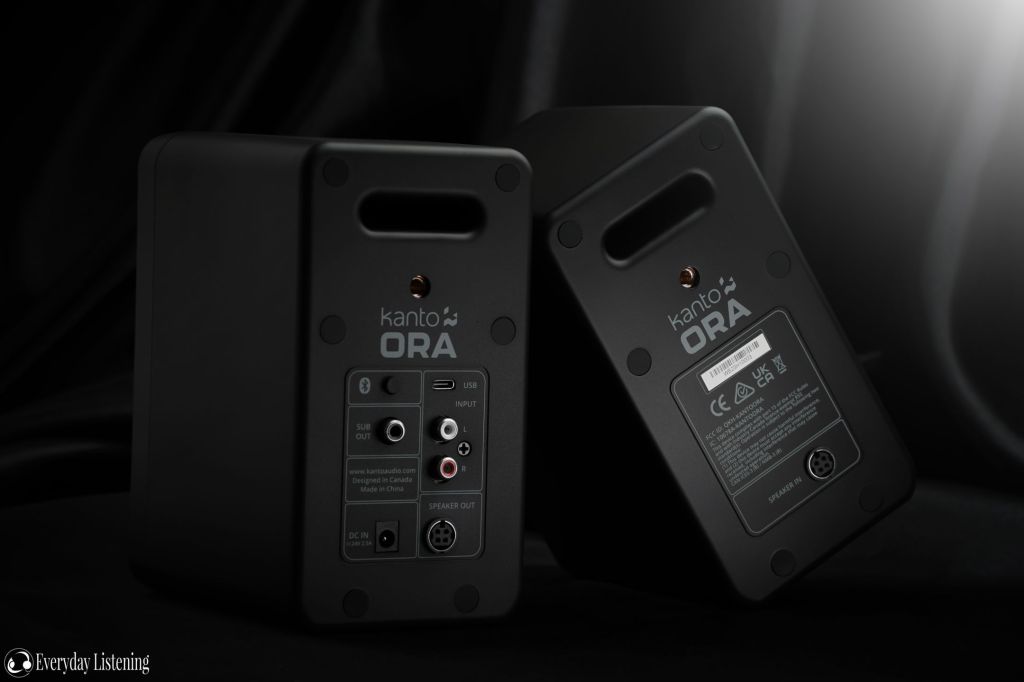
The rears of the speakers no longer have a screwed-in IO plate but have a fascia that is integrated into the body itself. This provides a cleaner aesthetic when wall mounted as the speakers now also have a rear mounting point in addition to a bottom mount point. This does mean that the housings are now a 2-piece design so there is a visible seam running along the sides of the housings. It will be a matter of taste which you prefer. Overall, a nice step up in terms of refinement, the ORA does look and feel like a higher-class of product whilst enhancing functionality and sound-specific features.

Ryan Soo
Avid writer, passionate photographer and sleep-deprived medical student, Ryan has an ongoing desire to bring quality products to the regular reader.
 Everyday Listening
At the top you state “No internal pre-amp for vinyl”. But further down you state “They have an in-built pre-amp meaning you won’t need to add additional circuitry to your audio setup to enjoy playing vinyls”. Which is it?
LikeLike
Hi,
Sorry this was an error in the initial press material. I have just fixed this in the article. To confirm, the ORA does NOT have an integrated pre-amp.
Warm regards,
Ryan.
LikeLike