

Kanto ORA Review – Small but Mighty
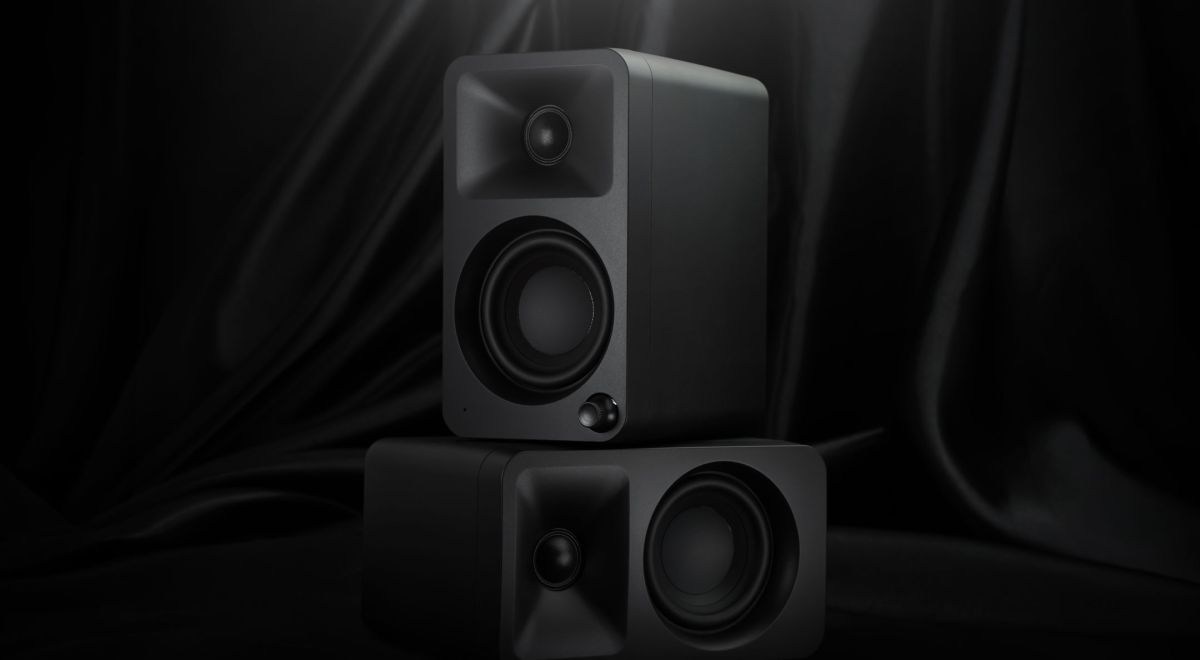
Sound –
Tonality –
The ORA strikes as a mostly linear and balanced speaker that provides the three core frequency bands in even meter. As opposed to the larger YU speakers, bass has a predominant emphasis around 120Hz before progressively rolling off beneath. Above, it slopes gently before evening off through the lower-midrange. A small nadir around the 2kHz mark is present before the response slopes back to balance through the upper-midrange and treble that showcases very good linearity. This contributes to a touch of additional warmth in the bass, slightly roomy and laid-back vocals and a balanced treble response that doesn’t wear on the ear in any way.
For a compact speaker, it provides a good amount of bass depth, especially when placed against a wall. The ORA also works well for both nearfield and as a small to medium/small room speaker. Of course, don’t expect any sub-bass slam or pressure but a sound mid-bass punch and some sense of deep-bass fullness that contributes to a slightly emboldened note presentation. Though there is little impact, bass never sounds absent or tinny. Treble has a smoother note presentation delivering good balance and detail presence without any sharpness. This makes them easier to live with despite meaning they won’t be the most overtly detail-orientated speaker.

One thing to note is that there is minimal background hiss at low to medium volumes and an auto-off function that cuts amplifier noise altogether. This makes them a good companion for PC setups and the wake time is almost immediate so it doesn’t irk during daily use either. Kanto was kind enough to send a pair of their tilted desk stands on top. They also make floor stands and elevated desk stands if required. The ORA is compatible with the smallest size S2 and SE2 stands. Angling the speakers up from the desk places the tweeters at a more direct angle to face the listener. You do get an appreciable jump in treble presence and resolving power when placed at the appropriate angle and height.
Bass –
The low-end response is appropriate for a compact desk speaker and a large improvement over any device or laptop speaker in addition to being superior to portable speaker options. Relative to other wired competitors, I do find the ORA extends a little better if still being quite unremarkable with regards to dynamics. These speakers provide just enough extension to imbue the sound with a sense of mid-bass fullness. Notes are slightly full and bold with a light warm tone. As the predominant emphasis is around the upper bass, notes can sound tubby at times though as bass isn’t emphasized overall, minimal bloat or bloom is present.
For the technicals, notes lack a strong hard-edged attack due to the relative lack of dynamics but retain a nice sense of punch and body. Decay is a touch slower which aids the impression of fullness. The mid-bass offers a nice sense of texture and definition nonetheless but some small details tend to be lost. Though not the quickest and most concise low-end, bass is pleasant, musical and full, suitable for music and ample for multimedia. The ORA undoubtedly benefits from the addition of a subwoofer but works nicely as a standalone so long as expectations are kept in check. I found myself satisfied with the performance overall even coming from larger speakers and do think they offer better performance than most competing models albeit are limited by sheer physical dimensions.
Mids –
I recall feeling frustrated by a lack of lower-midrange presence on some of Kanto’s past speakers and this has been rectified with the ORA which provides a nice, linear transition from upper bass to lower midrange. In fact, the speaker provides a slightly enhanced sense of fullness and a slight roominess. The added body and hint of warmth that spills over from the bass contribute to a well-bodied voicing that aids the overall sense of scale and grandness the speakers are able to portray. It isn’t overdone to the extent that vocals become muffled or veiled but don’t expect emphasized clarity or separation as is evident on many speakers. Once again, this is a musical performance that is easily balanced enough to retain versatility albeit not so to the extent of perfect timbre and professional application in my eyes.
My biggest gripe with the tuning overall is the 2kHz dip that lends vocals a more laid-back character. Male vocals take some precedence over female vocals as a result and sometimes the midrange can sound a bit disjoint. While the level of colouration isn’t huge it does stand out compared to most speakers that tend to emphasize the treble or upper-midrange more, leading to the opposite style of colouration. The ORA is instead quite even in these areas which means they do fall on the full and relaxed side. If you prefer a warmer and smoother sound then the ORA suits to a tee. It delivers appropriate articulation, and good delineation between foreground and background alongside a lack of fatiguing properties. While the small nadir prevents perfect balance, it isn’t a large enough issue to stand out as a weakness but a colouration that one must consider according to their preferences.
Highs –
I am quite partial to the top end for delivering a smooth and balanced presentation. I believe Kanto has done a great job at optimising the treble performance without making the speakers too directional or too bright. The key is linearity. There is a winning balance between a concise note attack, a convincing sense of note body and enough extension to grant air and realistic decay. There is a slightly mid-treble roll-off meaning notes can sound a touch truncated or overdamped at times.
However, overall treble is nicely detailed with a slightly cleaner and darker character. As there remains good balance in the foreground, detail presence and resolving power perform at a strong level for a midrange compact speaker. There isn’t ample extension to deliver much micro detail but an impressive soundscape with excellent stereo separation. I do find some speakers to deliver a more delicate, energetic response. However, if your preference is for something with better long-term listenability whilst upholding good resolving power in the foreground, the ORA does a very commendable job.

Ryan Soo
Avid writer, passionate photographer and sleep-deprived medical student, Ryan has an ongoing desire to bring quality products to the regular reader.
 Everyday Listening
At the top you state “No internal pre-amp for vinyl”. But further down you state “They have an in-built pre-amp meaning you won’t need to add additional circuitry to your audio setup to enjoy playing vinyls”. Which is it?
LikeLike
Hi,
Sorry this was an error in the initial press material. I have just fixed this in the article. To confirm, the ORA does NOT have an integrated pre-amp.
Warm regards,
Ryan.
LikeLike