

Kanto ORA Review – Small but Mighty
Comparisons –

Bowers & Wilkins MM-1 (No longer available): Though the MM-1 is no longer available, I believe it is among the finest compact computer speakers made and should be seriously considered if you can still find a set. They are, in fact, my personal near-field speaker of choice and have been for many years. The ORA puts up a great fight and truly shows the progress of technology since. Whilst it isn’t unanimously better, ultimately, the ORA strikes as a more well-rounded speaker that would be suitable for a wider range of uses. The MM-1 is a more musical offering that still bests it in some areas whilst benefitting from a slightly smaller form factor, albeit at the expense of vastly more limited IO and lacking sub-output.
Bass extension is noticeably better on the ORA giving it more mid-bass impact. The ORA is more balanced and has greater note thickness and slightly better definition. The MM-1 has a warmer upper bass and delivers a more consistent experience with its digital compensation that adjusts bass levels at lower volumes. MM-1 has a bit more bass texture but isn’t as tight nor as dynamic as the ORA, going for a more musical approach. The midrange is more forward on the MM-1 and has superior clarity. It has greater vocal extension and is much more articulate lending it a more revealing and delicate presentation. The ORA sounds roomier and has slightly warmer, richer male vocals while the MM-1 delivers cleaner and more articulate female vocals.
Due to the centre midrange dip, the ORA doesn’t sound quite as coherent as the MM-1 as this puts a divide between its bass and vocals. The MM-1 is better able to bring everything into a coherent whole that gorgeously services the midrange and vocals especially. The top-end is interesting. The ORA delivers a treble that is more balanced with the midrange. It has a more accurate note body and texture. That said, the treble is crisper, cleaner and more detailed on the MM-1 thanks to the miniature Nautilus tweeter system. It delineates fine details better and extends further into the mid and upper-treble delivering far more energy and sparkle. The MM-1 has sharper imaging too, the centre image especially is noticeably more focused while the ORA delivers greater stereo separation and distance projection.
Kanto YU-4 ($419): The YU4 being a larger speaker delivers a more sizable wallop in the low-end alongside an extended selection of IO. It also has an integrated preamp and USB charging port. Immediately, the YU4 delivers a more room-filling low-end. It has more bass extension and therefore, its low notes hit harder. Dynamics are improved albeit above the mid-bass, there isn’t too much difference in tone or tuning besides the ORA having a bit more upper-bass instead. This leads the ORA to sound a little less defined and clean despite being similarly full overall. The YU4 has a slightly more even midrange and a bit more clarity up top. It is a little more articulate which helps this impression.
The top-end is more detailed on the YU4 and benefits from adjustability with the included remote, a feature that the ORA omits. This means it can be both smoother and brighter than the ORA. Even on default, it does produce a slightly sharper transient response that leads to greater foreground fine detail retrieval. I find the ORA a bit more linear but has less bite and crunch to its notes, smoothing over some of said fine detail. The YU4 extends a bit more too having greater air and a more authentic sense of shimmer and decay. While the ORA has better listenability, the YU4 is appreciably more nuanced and can be tuned to match the ORA on smoothness should that be to preference.
Verdict –
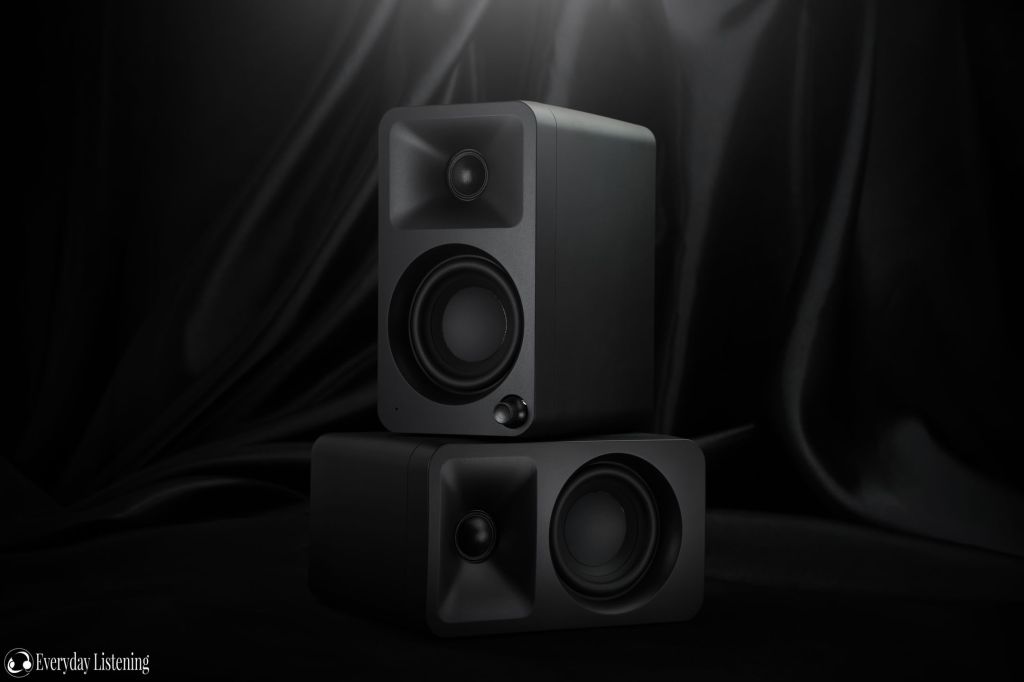
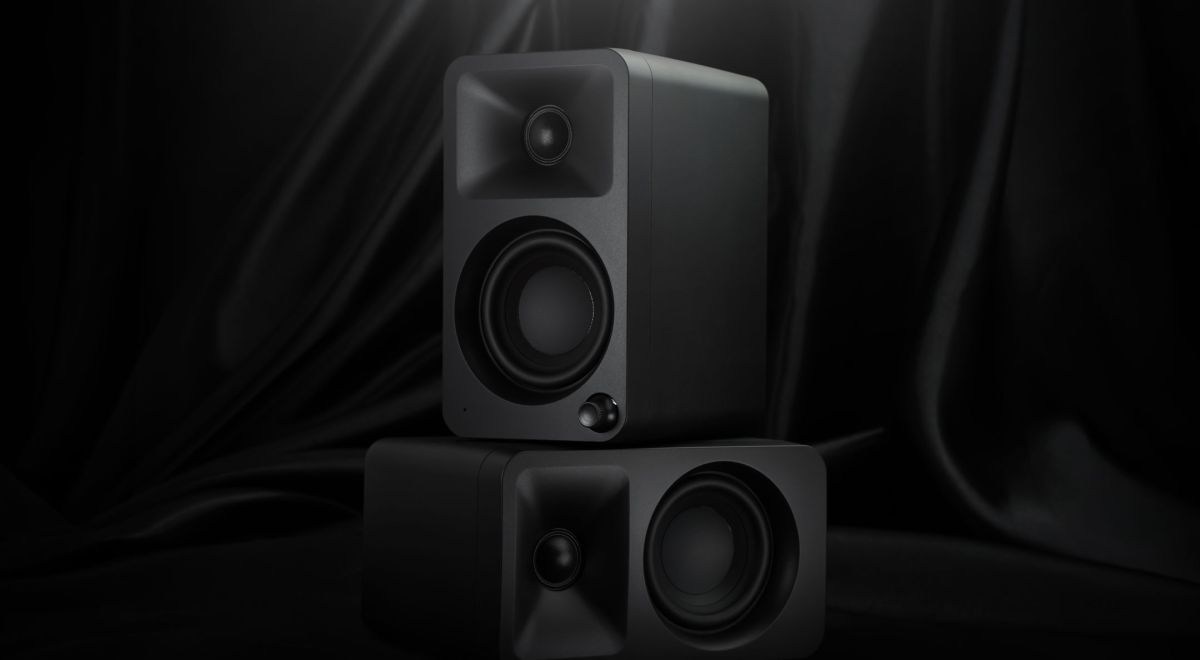
The ORA strikes as a well-rounded speaker in all regards and certainly serves as a sensible follow-up/upgrade to the YU2 given the technical strides that have been made since their inception. The ORA is deeper-extending, boasts a cleaner design and also a more linear tuning, especially in the treble. While they do have a full-bodied nature, this does counterbalance the reduced ability to output bass relative to larger speakers to some degree. In this vein, Kanto has also done a commendable job at extracting sufficient bass from a 2.0 compact speaker system even if they still won’t shock you in terms of bass volume and depth.
The sizable price jump from the YU2 has made them a clearly more premium option amongst compact PC-focussed speakers but they do a lot to earn that moniker. For instance, compared to an immediate competitor, the Audioengine A2+, the ORA manages to cram almost double the output power and larger drivers into a similarly sized chassis. I do wish they had a few additional features such as an in-built preamp or high-res BT codec support given that this is commonly available on cheaper competitors. Still, the ORA is a beautifully streamlined, versatile and powerful compact speaker that provides a refined experience at what remains an attainable price point.
The ORA is available from Kanto Audio (International) for $349 USD at the time of writing. I am not affiliated with Kanto and receive no earnings from purchases made through these links.
Track List –
Billie Eilish – dont smile at me
Bob Seger – Night Moves
Courtney Barnett – Rae Street
Cream – Wheels of Fire
Dire Straits – Communique
Dirty Loops – Next To You
Eagles – Hotel California
Elton John – Honky Chateau
Fleetwood Mac – Rumours
H.E.R – I Used To Know Her
Jasen – BYE
John Mayer – Continuum
Kanye West – Ye
Missy Higgins – The Sound of White
Radiohead – OK Computer
TALA – ain’t leavin` without you
The Beatles – Abbey Road
The weeknd – After Hours
Vampire Weekend – Father of the Bride

Ryan Soo
Avid writer, passionate photographer and sleep-deprived medical student, Ryan has an ongoing desire to bring quality products to the regular reader.
 Everyday Listening
At the top you state “No internal pre-amp for vinyl”. But further down you state “They have an in-built pre-amp meaning you won’t need to add additional circuitry to your audio setup to enjoy playing vinyls”. Which is it?
LikeLike
Hi,
Sorry this was an error in the initial press material. I have just fixed this in the article. To confirm, the ORA does NOT have an integrated pre-amp.
Warm regards,
Ryan.
LikeLike