

Moondrop Aria 2 Review – Lite
Pros –
Improved shell design and finish, Excellent build quality, Hugely improved cable with modular connectors, Balanced sound profile, Solid imaging, Great dynamics, Very easy to drive
Cons –
Treble extension and bass definition still leave to be desired, Not a huge jump over the original Aria
Verdict –
The Aria 2 brings the experience closer to the brand’s pricier DD models at the same price whilst improving upon build and accessories.
About Moondrop –
Moondrop was founded in 2015 under the guise of Chengdu Shuiyueyu Technology Co. LTD as a science and technology company. While the focus of the brand was initially on research and development, mass product and marketing, the company has since branched into audio equipment, portable audio, DAC/AMP, software and animation, comics, games and short novels. They pride themselves on their access to cutting-edge technologies such as top-class international acoustic measurement equipment, high-precision 3D printing and software simulation.
Introduction –
The new Aria 2 is an update to the popular Aria entry-level single dynamic driver IEM in Moondrop’s lineup. It occupies the sub-$100 price category but brings a lot to the table with its beloved VDSF tuning and fashionable metal shells. As opposed to the original, the update brings an improved cable with a modular connector, an upgraded driver with an inside-out redesigned acoustic chamber and a multi-vent system that works in tandem. The nozzles are now removable and made of brass and the shells are using both CNC milling and alloy cast production processes without the painted exterior of the Starfield or Aria which promises to address complaints of chipping. At the same asking price, Moondrop is looking to take the spotlight once again in the price tier.
The Aria 2 just launched for $89 USD. You can read all about it and treat yourself to a unit on Apos Audio.
Disclaimer –
I would like to thank John from Apos Audio very much for reaching out to organise a review of the new Aria 2. All words are my own and there is no monetary incentive for a positive review. Despite receiving the earphones free of cost, I will attempt to be as objective as possible in my evaluation.
Contents –
- Page 1: Intro, Unboxing, Design
- Page 2: Sound and Source Pairings
- Page 3: Comparisons & Verdict
Specifications –
- Drivers: Single Ceramic-coated dome composite diaphragm dynamic driver
- Housing: Alloy-casted, precision-milled housing
- Frequency Response: 20 Hz – 20 kHz
- Impedance: 33 ohms
- Sensitivity: 122 dB
Behind the Design –
Ceramic Coated Driver
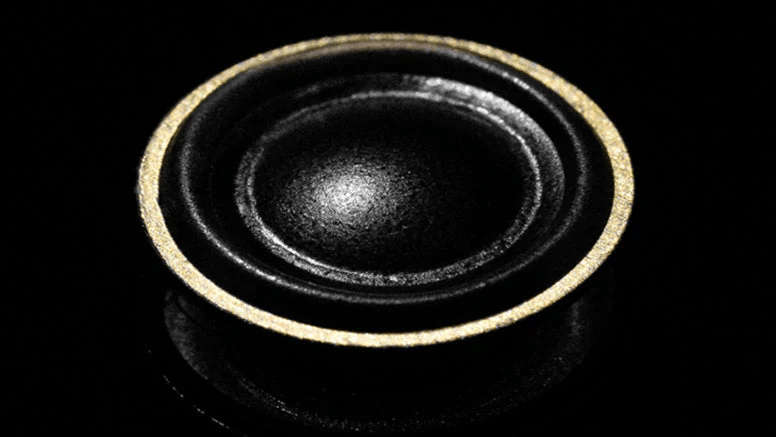
Dynamic drivers utilize piston movement to generate sound and derive force production from a voice coil magnetic motor. As the voice coil doesn’t span the entire diaphragm, the properties of the diaphragm play a large role in the distortion characteristics of the sound. Moondrop is implementing a TiN ceramic-coated dome composite diaphragm developed in-house. It involves 2-step processing of a 3-material driver that promises smoother treble than traditional metal-coated drivers and low distortion similar to crystal drivers as seen on the Aria 1.
Acoustic Design

Of course, alongside a new driver, the housings have been completely overhauled to produce a desirable sound. This involves new brass nozzles, an off-centre diversion pressure vent structure and an independent brass cavity enclosing the driver itself for precise resonance control. The magnetic circuit design is symmetrical and enables a longer stroke as opposed to a typical dynamic driver.
Unboxing –

The Aria 2 comes in a rectangular box that contrasts to their usual colour scheme by implementing a black outer sleeve. Removing this reveals a hard box inside. Under the lid, the user will be greeted by the earpieces within a foam inlet alongside the brown leather carrying case below. The case has an authentic leather construction and offers a nice balance between style and portability. It has a hard skeleton to offer better impact protection during transit. Inside is the cable alongside a separate bag containing the 4.4mm balanced termination that fits the modular connector. A separate accessory box sits below the earphones and contains the ear tips. Included are 3 pairs of silicone ear tips whose design resembles Final’s E-tips with a slightly flatter front profile and dual-density stem and dome construction. The accessories represent excellent quality for such an affordable in-ear.
Design –
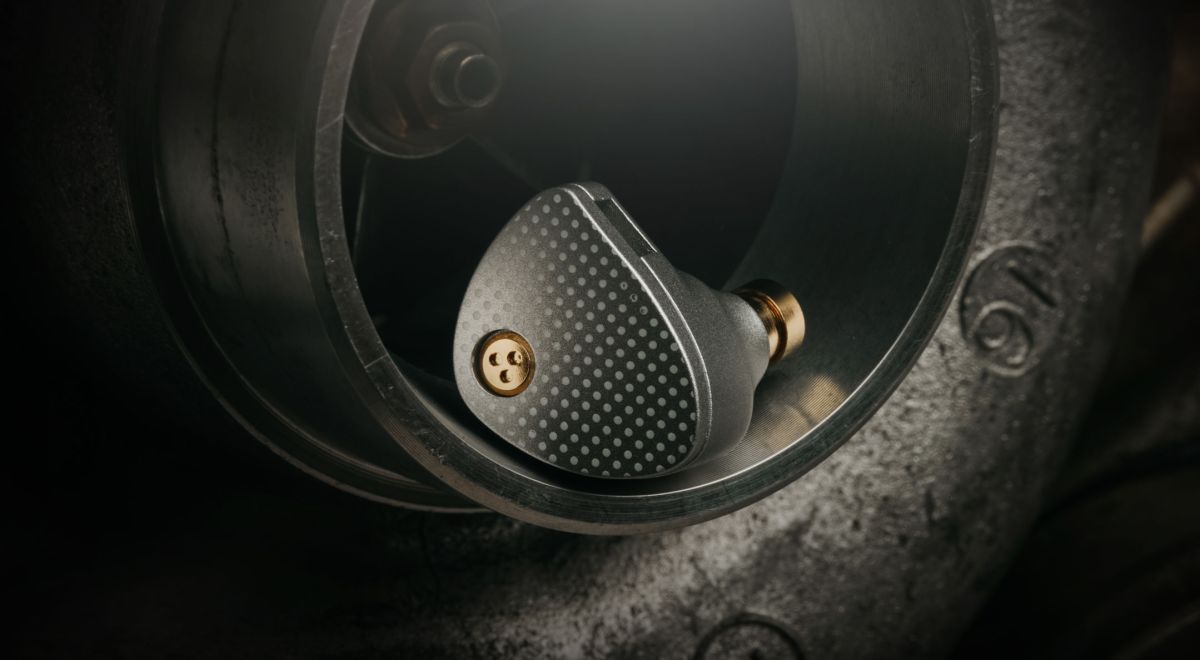
Upon handling the Aria 2 for the first time, it is striking at how much more refined the successor feels than the original. Even excluding the vastly improved cable, the housings themselves appear more refined with a more sophisticated design, improved surface finish and noticeably tighter tolerances. The seam between the housings and faceplates is smaller and the vents have greater nuance to their design, no doubt playing a role in the sound performance. Of course, the colour palette has changed and we no longer see painted artwork on the faceplates in favour of a more svelte laser-etched matrix pattern. The gold faceplate vents play complement to the gold-plated brass nozzles, altogether, providing a handsome package that feels distinctly more premium and complex than the Aria before it.

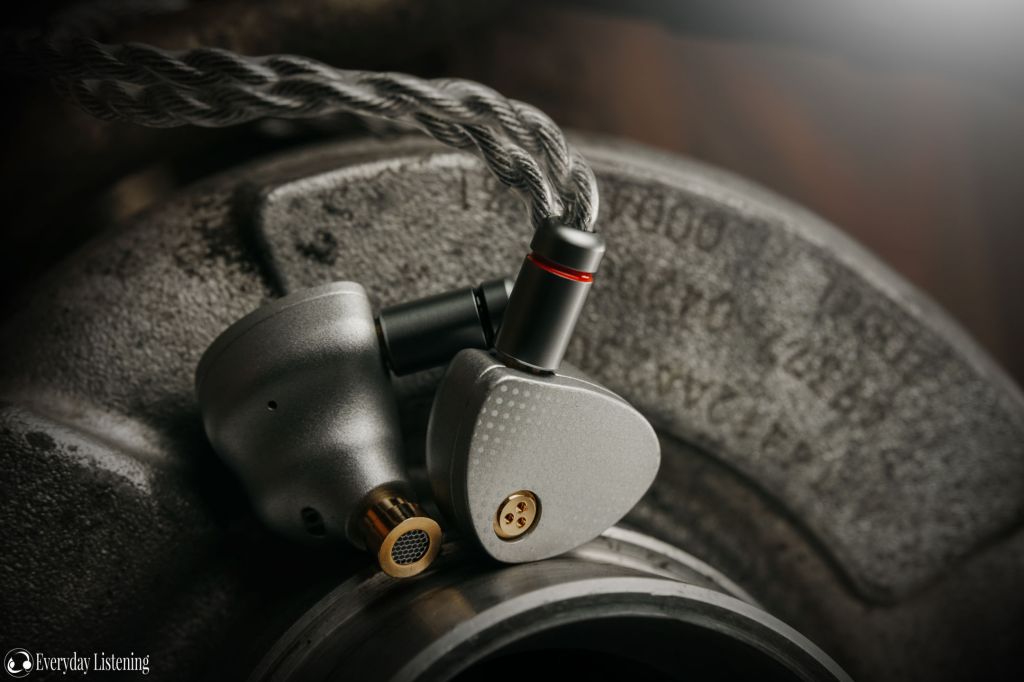
The cable also showcases huge advancement. Though implementing the same 2-pin removable interface, this is where the similarities end. The new cable is much larger and has a 4-wire braid. It has matching metal connectors that match the shells and grey conductors that further aid colour coordination. The wires are supple and have near-zero memory. Despite the larger gauge that encroaches upon custom cables, this makes them easy to live with whilst reassuring with a tough feel and excellent tangle resistance. The pre-moulded ear guides are well-shaped and offer a comfortable, stable fit. In addition, the cable has a modular connector with a typical 4-pin connector as seen on many competitors. It secures with a threaded lock and both 3.5mm single-ended and 4.4mm balanced connectors are included out of the box, wonderful!
Fit & Isolation –
The Aria 2 has the exact same silhouette as the Aria but is now slightly wider by a few mm. Chiefly, the internal face has been elongated and the sculpting to accommodate the folds of the outer ear has been exaggerated too. With that said, the wearing experience feels mostly identical to the Aria and many of Moondrop’s single-DD designs, they just protrude a little more from the ear. The sound tubes now have a protrusion that helps to retain the ear tips but the overall seal and fit stability remains just as good as before. I found the Aria 2 comfortable to wear for hours on end with minimal hotspot or ear fatigue.
There is essentially zero wearing pressure or driver flex due to the vented housings which aids comfort over time. That said, as before if you do have especially small ears you may struggle to accommodate the housings, the experience here will be no different than other Moondrop DD earphones. Isolation is about average for a dynamic driver in-ear which is sufficient for day-to-day use whilst retaining some spatial awareness. However, those wanting great passive noise isolation for travel and use in loud environments will want to look elsewhere as the Aria 2 is actually a little more open than the Aria 1.

Ryan Soo
Avid writer, passionate photographer and sleep-deprived medical student, Ryan has an ongoing desire to bring quality products to the regular reader.
 Everyday Listening