

Moondrop Aria 2 Review – Lite
Sound –

Tonality –
It was actually quite difficult to differentiate between the Aria and Aria 2 on first listen. Hooking them up to my measurement rig revealed why as the two measure extremely closely. The Aria 2 has a smidge more pinna gain and also an ever so slightly smoother upper-midrange. In fact, it measures essentially identically to the KATO making it more of a mini KATO than a mega Aria. As compared to the Aria, it has a slightly lower treble and also slightly better extension and fine detail resolution. In listening, I also noticed that the Aria 2 has noticeably better sub-bass extension and power, altogether giving it a more weighted, substantial feel, an impression that extends somewhat to the midrange.
The Aria sounds lighter-footed and thinner by comparison. Though it is slightly more revealing and actually has slightly more bite in its treble than its successor, the Aria 2 is a bit more coherent, and has better separation and dynamic range alongside a slightly higher resolution of fine detail. Despite the similar measurements, the Aria 2, unfortunately, doesn’t offer KATO-level performance at under half the cost. In listening, the KATO is clearly more detailed and technical. That said, any reviews on that model will be a good indicator of what to expect here tonally as the two offer almost identical tone, voicing and balance.
Bass –
The Aria 2 offers a similar tuning to the Aria but with notably improved extension. This lends it a noticeably more powerful voicing with a good sense of weight, pressure and slam at the very bottom. Compared to the hybrid and BA-based Moondrop earphones, the single-DD earphones have always provided a bit more warmth and this is still the case here. To my ears, this is very welcome as it makes the sound more forgiving and Moondrop places most of the emphasis in the sub and deep-bass regions meaning it doesn’t overly colour the tone or contribute to much bloat or bloom.
In my initial review of the Aria, I did enjoy how dialling back the sub-bass a smidge as compared to the Starfield contributed to superior separation and a reduction in perceived muddiness. Bass quality has been a long-standing gripe of mine with Moondrop’s in-ears yet the recent releases have shaken this up entirely. The Aria 2 has managed to bring back the slam and dynamics whilst upholding a similar sense of separation. Despite measuring very similarly, this is immediately apparent in listening. Bass is still a little soft around the edges, it lacks the razor-sharp attack and quick decay of the Blessing 3 for instance.
However, it isn’t an overtly slow bass and control is more than ample. Notes are nicely defined and there is good separation between them. Though bold and weighted, there is ample texture to each and the Aria 2 sounds noticeably more composed during complex passages than even the Aria as a result. The Aria 2 provides satisfying dynamics and rumble with ample definition to service many genres. It is best enjoyed for its dynamic qualities rather than its ability to resolve fine details or texture but performs well enough not to hold back the presentation in these regards.
Mids –
As the bass is now perceived as fuller, so too is the midrange a little warmer and denser sounding than the Aria. To my ears, this is very welcome. I do enjoy clarity and the more revealing Aria can sound more resolving on first listen. However, after adjusting to the Aria 2’s slightly more dulcet tones, it provides the more nuanced image with better separation, placement and long-term listenability. Vocals sound a bit more filled-in and there’s less grain. The Aria meanwhile provides a bit more extension which can service certain higher female vocals such as those seen in Asian genres of music. Here, the Aria 2 can sound a touch strained and damp but it isn’t a huge issue and was only present on a select few tracks during testing.

Otherwise, there is much to enjoy here. The light warmth from the bass beautifully balances the sizable pinna gain and the smooth transition into the lower treble creates adequate density and smoothness to prevent intensity. The voicing is natural with peaks and dips in all the right places and tri-frequency balance is excellent. Of course, this will be subjective and up to preference as some may find this earphone bass heavy and many will likely find it bass light. Regardless, I think most will agree that the midrange is a well-executed aspect of this earphone both tonally and technically. If anything, I’d argue it now lies just a smidge on the smooth side albeit given the level of clarity and separation on display it never mires the experience.
Highs –
The top-end is an interesting case. I noted in the midrange that the Aria sounds more resolving on first listen and this is also the case up top. The Aria has an overall brighter top-end and its treble has more bite meaning it sounds more aggressive in its detail presentation. It also sounds thinner and slightly less extended. The Aria 2 is a bit smoother and a bit more detail dense but this isn’t apparent all the time. Though it lacks the same sense of crispness, its treble notes are more nuanced with noticeably more accurate body and texture. Of course, comparing the Aria 2 to one of Moondrop’s hybrids shows there is still a lot of room for improvement.
The Aria 2 remains a more superficial experience here with middle-treble frequencies and above serving more for atmosphere rather than audible information. Moondrop’s hybrid earphones resolve noticeably more micro-detail in these regions which is smoothed over here. Overall, the original does sometimes still resolve better in the foreground with the 2 providing a bit more headroom and mostly similar detail presented in a smoother, more natural manner. I don’t think Moondrop has taken a great step forward here but simply refined the treble to make it more balanced with the rest of the sound.
Soundstage –
The Aria 2 provides a nice sense of space overall with good width similar to the Aria and improved depth providing a more rounded stage. It extends just beyond the head but tends to be more intimate due to its clear and present midrange. The imaging is improved over the Aria. Though locational cue sharpness is similar, the Aria 2 layers slightly better with more defined foreground and background layers. This gives it a better portrayal of distance which adds greater dimension to its stage. Overall separation is improved over the Aria as well despite it being a fuller sound. Complex passages sound more organized on the Aria 2 and it appears the driver is able to communicate more information at one time.
Drivability –
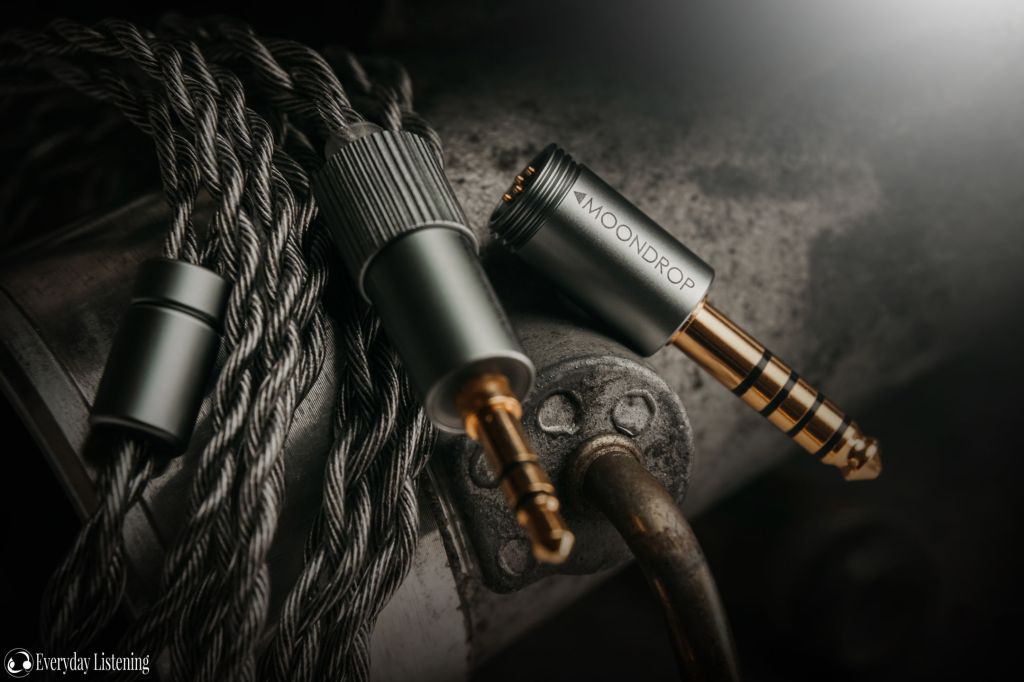
The Aria 2 provides a 122dB sensitivity and a 33 Ohm impedance that puts it mid-pack in terms of efficiency. Overall, I think it is well judged as the slightly higher impedance means the earphone won’t be too demanding of the source current-wise if requiring a little more volume than some competitors.
Output Impedance Sensitivity

As expected from a single driver design, the impedance curve is effectively flat meaning it will provide a consistent sound from a variety of sources. This is, of course, given that the source itself provides a linear output. This is a great result and means the Aria 2 can be enjoyed from a wider range of sources.
Driving Power
Comparing between my desktop stack and Hiby FC3 revealed that the Aria 2 is a fairly easy earphone to drive as there was minimal difference between the two. The chief difference between the two was soundstage width with the desktop stack extending noticeably wider, the FC3 being more in the head. Besides this, bass was slightly more present on the Hiby dongle with the desktop stack providing a bit more depth and control, delivering a tighter response. That said, treble and midrange sounded mostly identical meaning the Aria 2 can be enjoyed from mostly any source without worry.
Suggested Pair Ups
The Aria 2 doesn’t require much power to achieve high listening volumes nor does it require amplification to achieve a defined bass response. It doesn’t scale hugely with better sources but will deliver a wider stage. It isn’t sensitive to output impedance nor is it hiss prone, overall being non-demanding of the source. In terms of colouration, I did find cleaner sources provided the cleanest bass response. The Aria 2 doesn’t have an especially bright treble so I found myself preferring more neutral, aggressive sources like the Hidizs S9 Pro over warmer ones.

Ryan Soo
Avid writer, passionate photographer and sleep-deprived medical student, Ryan has an ongoing desire to bring quality products to the regular reader.
 Everyday Listening