

Jomo Instinct Emerald Review – Force of Nature

Comparisons –
Hyla CE-5 (Disc): The CE-5 is one of the original tribrid in-ears combining a dynamic driver, BAs and also a piezo tweeter. I reviewed this IEM over 6 years ago and I think I did not give it enough credit as listening to it in the modern day, it holds up very well. While it is now discontinued, you can still buy the new Sarda which has a similar driver platform. The Instinct makes technical improvements all around and it has a more robust, powerful tuning that emphasizes this quality. The CE-5 has more of a W-shaped tuning with an even sub and mid-bass emphasis resulting in a more structured and tonally cleaner sound. The Instinct is warmer and fuller by a few steps. But its bass is also more dynamic and controlled. The CE-5 has a very enticing tuning but the Instinct showcases a more detailed note presentation in general.
The midrange is more balanced on the CE-5 and has a more transparent character. It is slightly lean and revealing due to the large lower midrange nadir. The Instinct has a warmer and fuller voicing with higher coherence. It is more laid-back but its midrange resolving power is higher, delivering better layering and low-level detail retrieval. Both are articulate and sit on opposing ends of the tonal spectrum. While the Instinct is relatively forgiving, the CE-5 isn’t quite so and doesn’t have any technical edge over the Instinct besides raw separation. The top-end makes for very interesting comparison.
Both have a very similar style of note presentation that is extremely fast and crisp, leading to excellent definition and fine detail retrieval. However, the Instinct has more convincing note body and decay, sounding more realistic whereas the CE-5 is more energetic, airy and thinner. The CE-5 has more mid-treble presence while the Instinct boasts better top-end extension delivering more sparkle and micro detail. The Instinct has a much larger stage and though the CE-5 images well, the Instinct is more multi-dimensional and immersive. The CE-5 is a bit of a mini-Instinct and comes in at a much cheaper price. You get a similar note presentation and style of tonality but with less resolving power.
Fir E12 ($1799): The E12 and Instinct are similar styles of earphones, both having a powerful, V-shaped sound. The E12 goes for a more energetic sound with a cleaner tone whilst the Instinct is richer, bigger and a bit warmer. The E12 and Instinct are both bassy earphones, the Instinct slightly more so as its midrange is more laid-back. The E12 has a more even rise between its sub and mid-bass and a sharper cut through the upper bass giving it a cleaner, more structured, more powerful sound. The Instinct is warmer, delivering a smoother but rounder note presentation with less energy but more texture. The E12 has a more powerful sub-bass but the Instinct is tighter and more defined with a technical edge. The midrange is more present on the E12 and has a clearer and cleaner voicing mostly due to the bass tuning combined with a few dB of extra midrange presence.
The Instinct’s vocals sit a step back relative to the E12 and it was a warmer, fuller voicing. Its vocals are larger and more powerful but less transparent. The E12 manages to sound clean despite its bass boost, it has better separation and definition is slightly higher. With that said, Instinct has slightly better layering and texturing with greater resolution. The Instinct has slightly better upper-midrange extension, so it sounds slightly more delicate and articulate in the top end. This also contributes to a more natural presentation relative to the E12 in the context of the bassier tunings on display as the E12 does sound a bit dry by comparison due to its denser upper midrange.
The treble is equally present on both, and both also showcase a reasonably similar approach to tuning. The Instinct has a slightly sharper transient response, and its foreground showcases higher note definition and fine detail retrieval as a result. However, the E12 has slightly more mid-treble presence so its background details are brought forwards more, and it has higher note clarity. The Instinct has a darker background and superior extension. It has a more present sparkle and micro detail is more apparent. The soundstage is very impressive on both, but the Instinct is noticeably larger. The E12 almost matches it in width but the Instinct has more depth, and its imaging is more involving. It has better layering and positioning is more vivid.
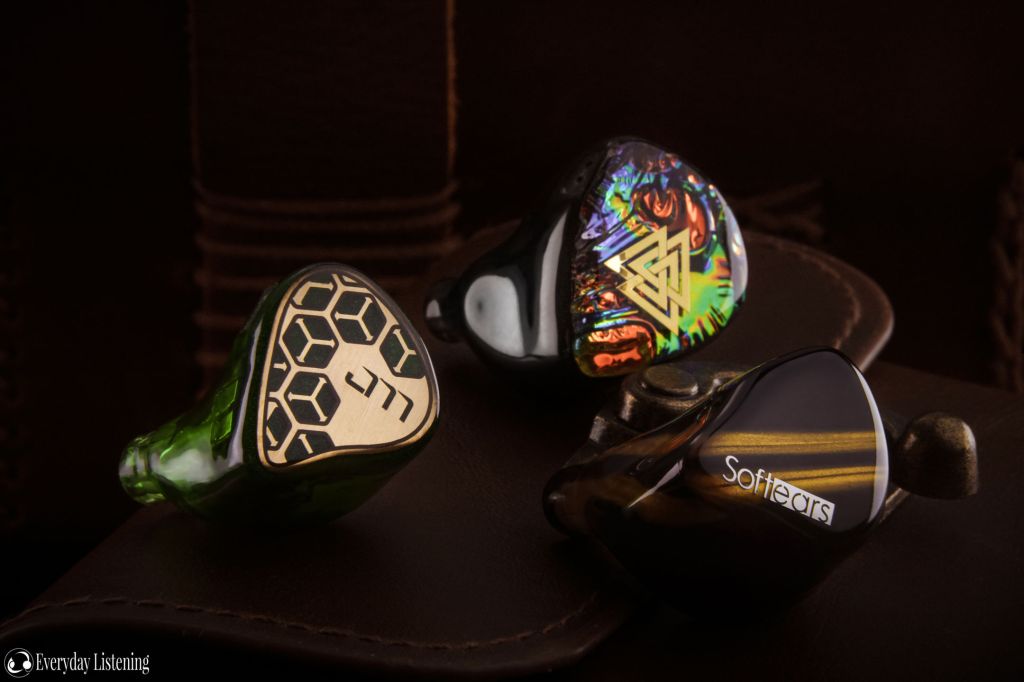
Soft Ears Cerberus ($2500): The Cerberus is a slightly more forgiving take on the reference-style tuning carried by the RS10. It appeals to a similar kind of demographic to the Instinct but takes a different approach. Immediately, it has much less bass presence albeit carries a pleasant light warm tone here and sports great sub-bass extension. The Instinct has a much larger bass all around and more mid-bass bias. It has a much more weighted, tighter slam and a lot more punch in the mid-bass. The Cerberus is a far more balanced affair with much better separation and epitomizes a natural note presentation. Its tonality is very agreeable albeit won’t suit those wanting loads of bass presence. The Instinct has higher note definition and technically, offers the better bass performance. It just has a vastly different tuning that is much bigger and more brash so as always let your preferences guide your decision.
The midrange is far more present on the Cerberus and is rather slightly highlighted. The Instinct is, of course, the opposite. While the Cerberus has a slight warmth, it is broadly highly transparent and is instead defined more by its smoother top-end giving it a darker, more coherent character. The Instinct is more revealing counterbalanced by greater bass warmth and body. As a result, it sounds more contrasted, much warmer, fuller and its vocals are also more powerfully voiced. Besides that, both sound quite natural, the Instinct just has a lot of colouration. The Cerberus has better separation but the Instinct has higher resolution and better layering despite its more coloured sound. It has noticeably more fine detail and texture in addition to a more enthralling sense of space.
Treble is more present on the Instinct with the Cerberus having a dark, smooth but also very well-extended top-end. The Instinct is once again the more vibrant of the two, it has a more defined, aggressive note attack and its foreground is generally more detailed. The Cerberus has a thinner note presentation that lacks the same bite in the foreground. It has a very quick albeit dainty note presentation with excellent background detail retrieval and a large sense of headroom and air. The Instinct has more detail retrieval and is more aggressive in its presentation. Both present a very spacious stage, almost equal in dimensions. However, the Instinct provides sharper and more layered imaging.
MMR Balmung ($2799): The Balmung is a good comparison as it is one of Joseph’s other creations under the brand MMR. Sporting 12-BA drivers, the two share a close character. The Balmung comes across as a bit more of an all-rounder with a more W-shaped sound while the Instinct offers a more capable driver platform, especially in the bass and treble. The Balmung has a similarly large bass, but it doesn’t stand out as much due to its midrange being pushed more forward. The tuning is also different with the Balmung having less of a mid-bass focus which gives it a more natural note presentation, the Instinct being a bit rounder and tubbier. The Instinct, however, has much better dynamics. The Balmung is a technical feat as far as BA drivers go but can’t match the dual woofers on the Instinct that delivers noticeably more pressure, texture and sub-bass detail.
The Balmung in return boasts better separation due to its higher note definition and quicker decay. The midrange is also more balanced on the Balmung. It shares the warm and rich voicing of the Instinct, just not to the same degree. The Balmung most notably has a more upfront vocal presence that is responsible for its more balanced overall sound profile. In turn, it has a little less warmth and body, but it also has a smoother and denser top-end that gives it a structured and coherent voicing. The Instinct is more bass-biased and thus, thicker and warmer. However, it also has a more articulate top-end that balances this out, giving it similar vocal clarity, albeit a slightly more laid-back positioning. The Balmung has slightly higher resolving power of fine details despite this, but the Instinct does have a notable advantage on staging and layering.
The treble showcases the opposite, being smooth yet crisp on the Balmung and present and defined on the Instinct. The Balmung has a greater lower treble focus giving it a crisper and denser foreground set to a darker background. The Instinct extends better delivering more headroom, background detail and air. It has more sparkle and micro-detail in addition to better separation of fine detail. The Balmung in return has a darker, cleaner, and more contrasted background alongside a bit more note body. The soundstage is notably larger on the Instinct, and it has a more multi-dimensional quality. The Balmung has slightly better separation but lacks the overall staging chops of the Instinct.
Craft Ears Omnium (2499 EUR): The Omnium is a very different style of earphone and would likely appeal to a different demographic. Conversely, one may want to own two very different flavours of IEM in which case, these two represent an excellent dichotomy. The Omnium is neutral, transparent, and balanced, coloured only with a clean sub-bass shelf and a sparkly upper treble. Immediately, the Instinct has much more bass. The Instinct is much warmer, fuller, and richer. It has a quicker note presentation with greater dynamics but also less separation and a less natural note presentation.
The Omnium offers a much cleaner bass with a more neutral tone and vastly improved separation. Despite not being quite as technically adept as the Instinct, it retrieves more detail as a result. The midrange is also more balanced on the Omnium while the Instinct showcases a more V-shaped character. The Omnium offers greater clarity and definition in addition to much better separation. The Instinct is warmer, fuller, and more laid-back. While both have a similarly impressive sense of space, the Omnium appears more spacious due to its greater separation. Both are naturally voiced but evidently, the Instinct is far more coloured. The Omnium has slightly higher resolving power and better layering while the Instinct is richer and has a bit more texture.
Up top, the Omnium offers a slightly brighter response. Despite this, the foreground detail retrieval is similar as is the instrument timbre. The Omnium has a bit more air and shimmer with the Instinct offering a more damped presentation with greater background cleanliness. The Omnium has more sparkle, the Instinct offers similar extension but less brightness overall. The Instinct is overall more forgiving while the Omnium is more revealing and puts its technical performance more on display. Both have sensational soundstage expansion with the Omnium being wider and more layered, the Instinct deeper and more contrasted. The Omnium has much better separation due to its cleaner tuning.
Empire Ears Odin ($3399): The Odin offers a similar flavour of sound but overall, greater balance and transparency with more restraint to its colouration. The Instinct has a bigger bass and warmer, rounder notes. The Odin offers greater parity between its sub and mid-bass and in turn, its note timbre is still structured but more natural overall. Both have excellent dynamics and control with similar attack and excellent, controlled decay resulting in high overall note definition. The chief difference lies in the tuning with the Instinct being bigger and the Odin being more restrained and balanced.
The midrange experiences a follow-on effect from this. The Odin has a similar ear gain to the Instinct and both also have a relatively revealing upper-midrange. As the Odin has less bass presence, its midrange appears more balanced and tonally transparent by comparison albeit a touch dry at times. The Instinct is fuller, richer and warmer but also notably more laid-back. It has similar clarity but less separation and definition. The Odin layers a little better while the Instinct portrays a greater sense of space.
The Odin offers a similar level of treble overall and has a slightly daintier note presentation due to its use of EST drivers. The Instinct has more bite and definition in the foreground alongside similar speed with its PZT driver. The Odin has more air in the mid-treble and as a result, higher note clarity with more shimmer. The Instinct is darker and more contrasted. Both have a similar level of upper-treble with the Odin having a hair more sparkle and micro detail at the very top. The Instinct has a larger stage despite this in terms of both width and depth but the Odin has sharper imaging with a more focused centre imaging and better separation.
Verdict –

The Instinct is a technically adept and musically inclined IEM that really sets itself apart with its unique and richly coloured tuning. As always, with colour comes compromises but also specific strengths that enable the Instinct to excel for certain genres of music such as jazz, classical and acoustic. I do feel that a bass tuning switch would have improved versatility but some may argue streamlining the experience results in superior refinement. Whatever the case, the Instinct appeals to a specific niche wanting a warm, sonorous and laid-back sound realized with exceptional technical ability. It has awesome dynamics, a fantastic soundstage and the unique tweeter setup delivers excellent separation and fine detail that cuts through its warm, full-bodied image. If you want balance, promptly look towards the copious other options that prioritize such. The Instinct is a creation of warmth, power and space that epitomizes the subjective nature of the hobby atop marvellous driver and acoustic design.
The Instinct is available from Jomo Audio (International) for $2999 USD at the time of writing. I am not affiliated with Jomo and receive no earnings from purchases made through these links.
Track List –
Billie Eilish – dont smile at me
Bob Seger – Night Moves
Courtney Barnett – Rae Street
Cream – Wheels of Fire
Dire Straits – Communique
Dirty Loops – Next To You
Eagles – Hotel California
Elton John – Honky Chateau
Fleetwood Mac – Rumours
H.E.R – I Used To Know Her
Jasen – BYE
John Mayer – Continuum
Kanye West – Ye
Missy Higgins – The Sound of White
Radiohead – OK Computer
TALA – ain’t leavin` without you
The Beatles – Abbey Road
The weeknd – After Hours
Vampire Weekend – Father of the Bride

Ryan Soo
Avid writer, passionate photographer and sleep-deprived medical student, Ryan has an ongoing desire to bring quality products to the regular reader.
 Everyday Listening