

Oriveti bleqk Dynabird Review – Underachiever
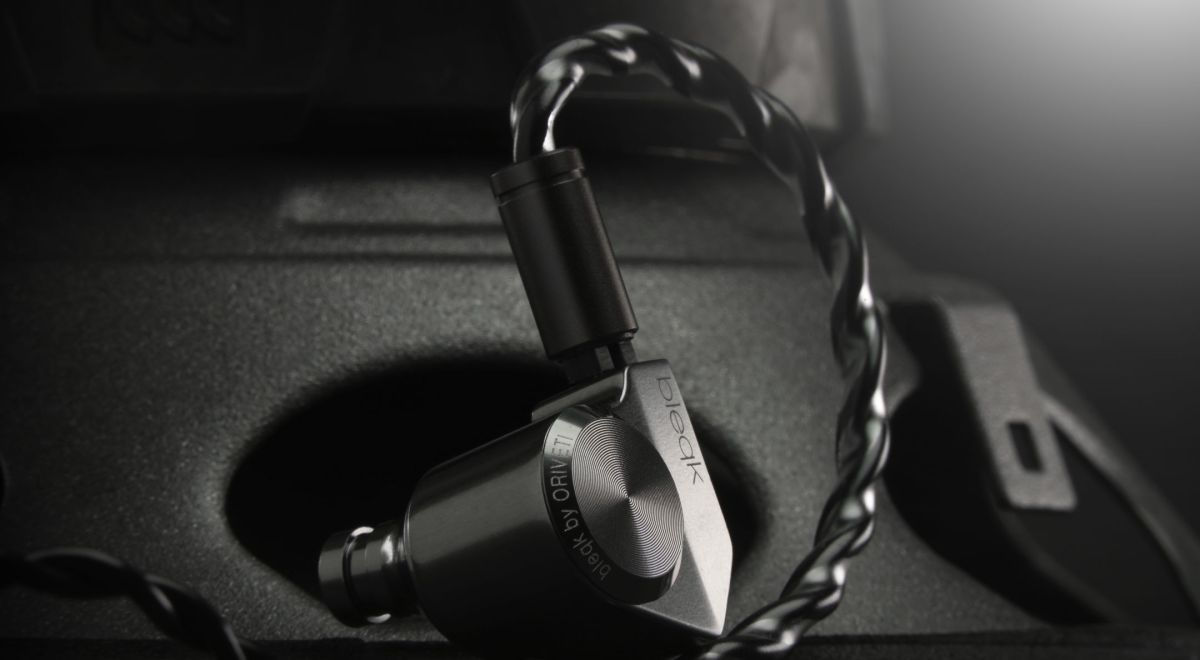
Pros –
Excellent build quality, Powerful bass tuning, Solid bass definition, Crisp and textured treble, Reasonably compact design
Cons –
Subpar midrange voicing and definition, Layering leaves to be desired
Verdict –
If you value a powerful sub-bassy tuning and enjoy a V-shaped tonality, the Dynabird delivers an engaging performance alongside strong build quality.
About Oriveti –
Oriveti is a HiFi brand from Hong Kong founded in 2015. Focusing on the core principles of sound, fit, comfort and reliability, the company seeks to innovate and deliver an impressive experience despite the wealth of competition. They were responsible for producing one of the first hybrid in-ear monitors on the market in the form of the Primacy. Since, Oriveti has spent years developing its latest range of products using many bespoke components. The company hasn’t hugely diversified but has spent time honing its existing range of products over the years.
Introduction –
The Dynabird is the latest instalment in Oriveti’s IEM lineup and the first model to sport the bleqk moniker – standing for basic line exquisite quality kept. Traditionally, the brand has garnered most of their following from their hybrid IEMs but have chosen to diversify in recent years. This started with the single-dynamic driver based OD100 that was further refined with the OD200. The Dynabird feels more like a true successor to the OD100 with its similar design. It too sports a single DD setup but targets a more engaging, dynamic sound as the name suggests. In addition, Oriveti has once again prioritised a compact shell design, harkening back to the comfortable ergonomic design seen on their original Primacy models.
The Dynabird is available for $99.99 USD. You can read all about it and treat yourself to a unit on Oriveti’s website here.
Disclaimer –
I would like to thank Marco very much for reaching out to organise a review of the Dynabird. All words are my own and there is no monetary incentive for a positive review.
Contents –
- Page 1: Intro, Unboxing & Design
- Page 2: Sound Breakdown
- Page 3: Comparisons & Verdict
Specifications –
- Driver: Exclusive 9.2mm Be-plated Dynamic Driver
- Frequency Response: 10 Hz – 20 kHz
- Impedance: 16 Ohms
- Sensitivity: 105 dB
Behind the Design –
9.2mm Dynamic Driver
At its heart lies a 9.2mm Beryllium-plated dynamic driver. The driver is housed within two chambers to maximise detail and optimise airflow. Oriveti has also used precise filters using fabric and metal to tune the driver output through the nozzle.
Metal Shells
In addition to being compact, Oriveti promises longevity with CNC-milled aluminium shells that straddle the line between durability and weight. A removable cable reinforces Oriveti’s dedication towards these goals.
Unboxing –
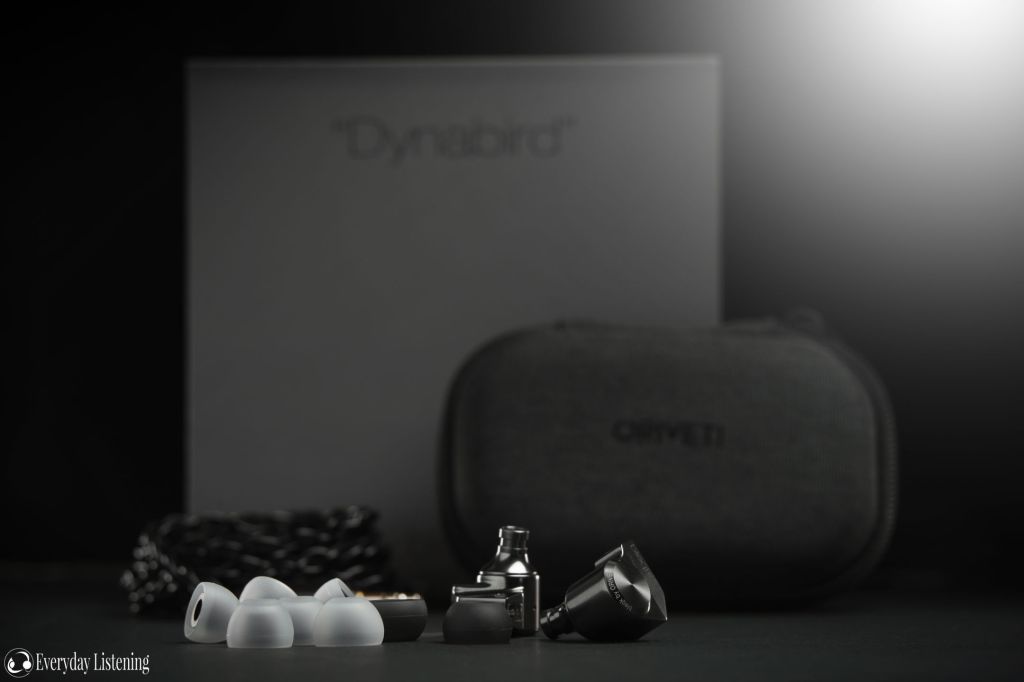
The Dynabird is an affordable IEM and with that comes a relatively stripped-down unboxing experience. Nevertheless, it is professional and adequately equipped. Sliding off the outer sleeve and opening up the hard box inside reveals the IEMs within the included fabric carrying case. The case is similar to that included with the OD100, a compact rectangular case with soft suede lining, hard skeleton and zipper. In a separate box are the ear tips. Two varieties are included, bowl-shaped sporting a large aperture that enhances the top-end and bullet-shaped, with a smaller aperture resulting in a smoother sound.
Design –
Those familiar with the OD100 will find the Dynabird is instantly reminiscent of its silhouette. It is effectively the same shell with an enlarged chamber on the rear. The geometric styling vaguely resembles Final Audio’s A-series models and like those IEMs, is comfortable despite its industrial styling. Rounded edges and a more smoothed-off inner face contribute to this impression. Overall, the tolerances are excellent and consistent and the earphones feel tremendously solid despite being so small and light. The design has grown on me and I find the shape and text quite appealing.
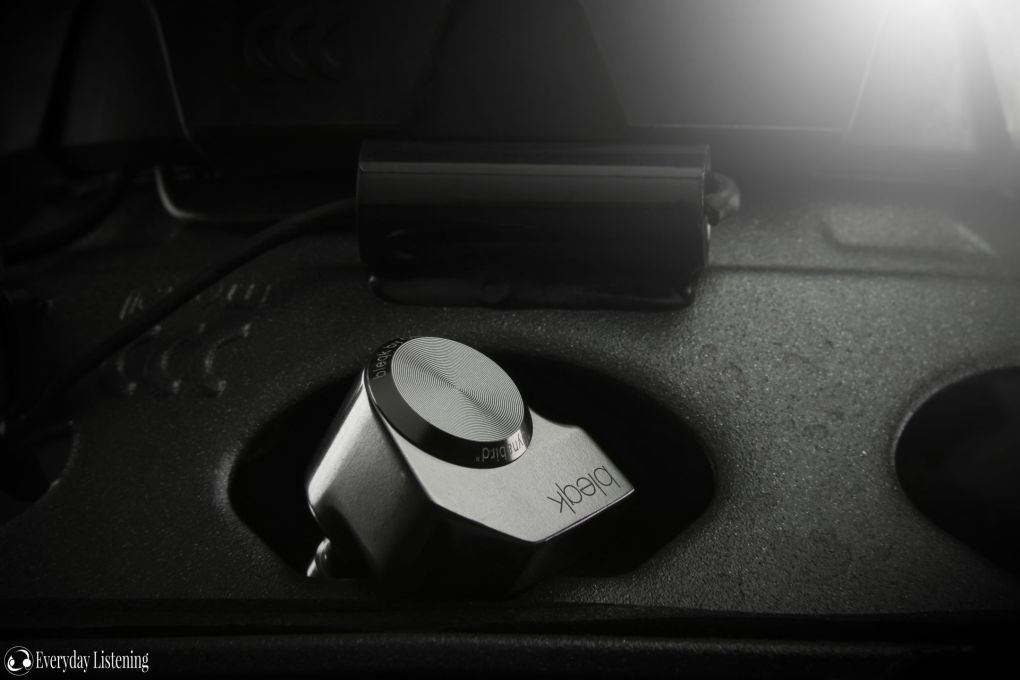
Up top, the IEM utilises a 2-pin removable cable system and the cable is also similar to that included with the OD100, only now in a black colour way. It’s a nice braided unit with comfortable pre-moulded ear guides and matching silver metal hardware. The cable itself is a bit tacky but is compliant with minimal memory. It is easy to live with and doesn’t upset the fit of the compact housings. No balanced connectivity is offered but this isn’t common around the asking price.
Fit & Isolation –
The OD100 was supremely comfortable due to its sheer minuteness and the Dynabird shares these strengths. The protruding rear can dig into the outer ear but simply rotating the housings forward slightly alleviates this well. As they are so compact, it is easy to avoid hotspot formation and those with smaller ears shouldn’t have a problem accommodating the Dynabird.
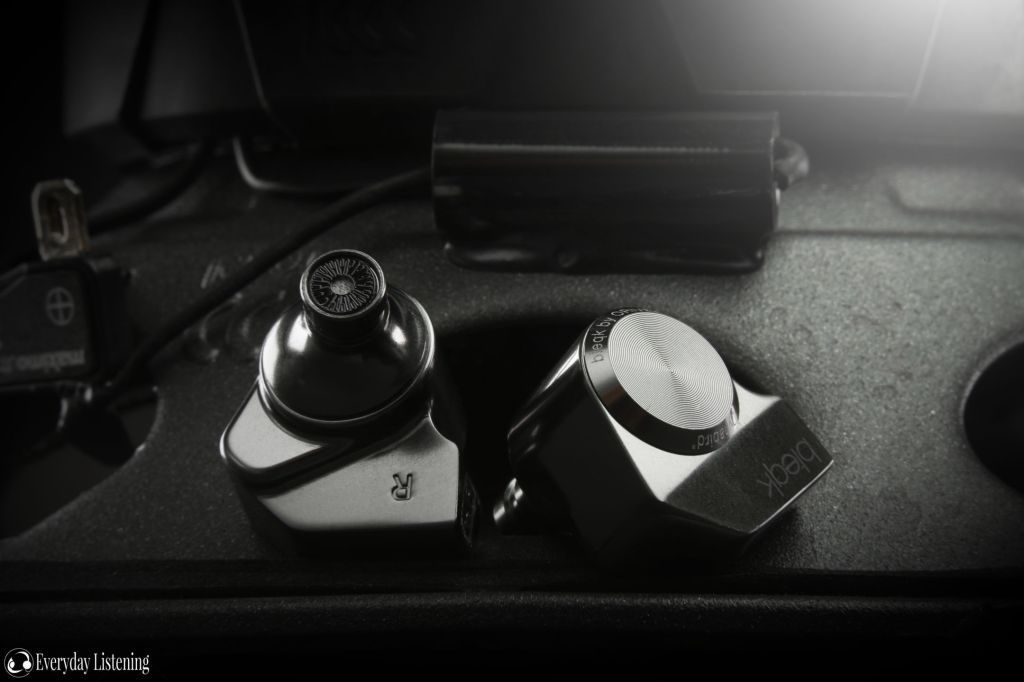
With that said, the fit isn’t especially low profile as the nozzles are on the larger side, so the fit depth is just medium. They seal nicely and some driver flex is evident but very minimal. The housings are vented which reduces wearing pressure. However, as the vents are very small and the dense metal shells attenuate well, overall passive noise isolation is quite good and above average for a dynamic driver IEM.

Ryan Soo
Avid writer, passionate photographer and sleep-deprived medical student, Ryan has an ongoing desire to bring quality products to the regular reader.
 Everyday Listening