

Erzetich Thalia v2024 Review – Better Than Ever
Sound –
Tonality –
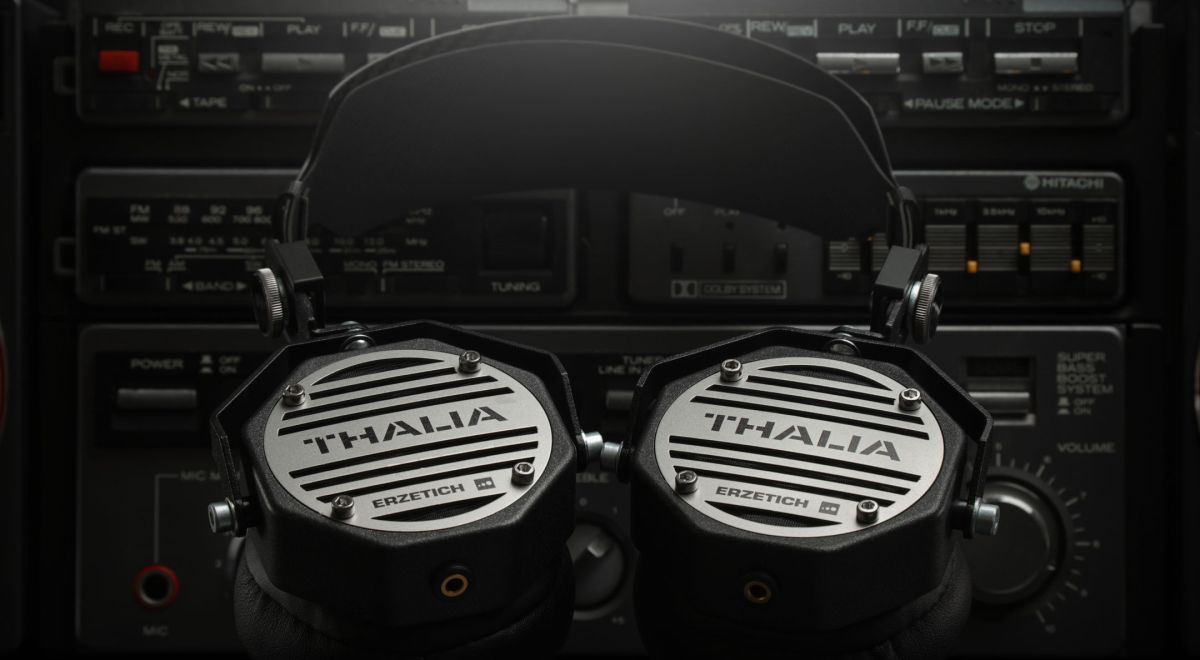
The Thalia is an organic-sounding headphone with a mild L-shaped tonality. To that end, it suits those wanting a forgiving yet still highly detailed sound on account of stunning technical ability throughout. Its relaxed character is imbued by a small linear bass shelf with a full-bodied midrange and well-extended high-end sitting just behind in equal measure. The tonality overall showcases sound linearity and smooth transitions meaning it sounds consistent despite not having the most neutral sound tuning out there. The Thalia is evidently coloured but does so with good restraint, upholding a natural voicing and solid genre versatility. With that said, treble extension and overall note definition are fantastic so though the headphones are on the smooth and relaxed side, the Thalia is still very insightful and surprisingly engaging too. Altogether, it’s a very impressive sound especially considering it is packaged into such a compact headphone.
Bass –
Sitting just at the forefront of the presentation, the Thalia’s low end offers sensational quality, both factors that equally make this as a focal point on first listen. The tuning showcases even broad elevation with a small albeit progressive sub-bass roll-off. This effectively puts a slight spotlight on the mid and upper bass giving the headphones a thick, structured, and slightly warmer voicing. While the Thalia lacks the visceral sub-bass pressure offered by full-size headphones, it still offers strong impact and punch above alongside excellent audible sub-bass detail. Accordingly, I wouldn’t label the Thalia as lacking dynamics.
Bass is full and powerfully expressed with heaps of structure, so you never feel that the low-end is lacking in any way. Arguably, adding a boosted sub-bass on top may have pushed things too far and I found the Thalia to achieve a convincing balance without this despite the recent popularisation of sub-bass-focused tunings. Notes are indeed bold but avoid rounding, tubbiness and bloat due to the mostly linear tuning and top-tier driver quality. This will be a recurring theme in this review as note definition in general is fantastic. In the bass, this is evident through its extremely tight presentation meaning notes are snappy and highly textured.

Combined with quick decay speed, separation performs at a respectable level despite the thicker bass note presentation. I must note that the Thalia’s thicker bass isn’t the cleanest and most separated through the mid-bass region. As such, fans of faster genres such as modern pop and electronic might want to look elsewhere. However, every fine detail is still clearly apparent, and the headphones are overall very responsive which makes them a delight for jazz, rock and instrumental tracks. The Thalia 2024 crafts a highly satisfying and textured low-end that is richly voiced and simply heaps of fun to listen to. It is easily one of the most impressive bass responses I’ve heard from a compact headphone.
Mids –
As the bass isn’t excessively warm, the midrange tone is only lightly coloured and is more defined by its full and smooth character. This is due in equal parts to a small rise in the lower midrange alongside a nadir in the upper midrange. In turn, the headphones offer quite an organic sound coloured that is smooth, coherent, and full-bodied. While I personally would have liked to tone down the 1kHz region a few dB, it is not excessively bothersome to my ears. Still, clarity and extension aren’t the Thalia’s forte so those valuing these qualities will likely want to look towards something brighter. The Thalia excels instead with its natural voicing, forgiving nature and excellent layering with tight-knit imaging. Male vocals take a slight spotlight being bolstered with increased size and fullness whilst avoiding too much fuzz or chestiness in the upper bass region.
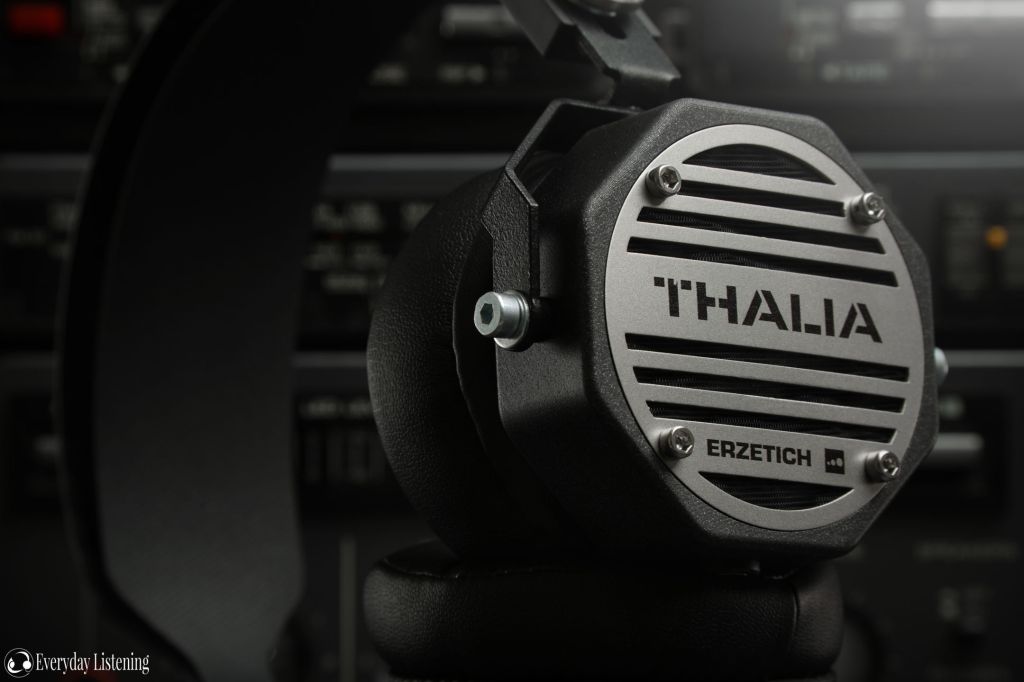
Female vocals are dense, clean, and smooth but are still nicely defined. The tonal colouration is never pushed too far, and the headphones have a very consistent colouration and voicing across different albums and genres due to the lack of sharp peaks and drops. Everything is mild, progressive, and smooth mirroring the frequency response. At the same time, the headphones are reasonably articulate, so details still come through if not being emphasized to the listener. They don’t have the highest separation nor the most overt detail presentation. Resolution of fine details in the midrange is probably the least impressive region for this headphone, but they still impress with overall note definition. Instruments have a lovely sense of texture and the Thalia impresses with its richly coloured-in note presentation that lacks any iota of intensity or fatiguing properties.
Highs –
The top-end offers a refined listening experience through and through. It has enough clarity to engage without ever overstepping in terms of forwardness, sitting in good balance with the midrange. There’s a small bump in the lower-treble region before a slightly dark albeit linearly extending mid and upper treble. Overall, notes sound accurately bodied and well-damped. There’s a sharp transient response delivering a defined foreground and adding heaps of bite to percussion without introducing too much brightness or sharpness. Fine detail retrieval performs at a high level appropriate for the price point. However, due to the tuning, treble details aren’t pushed too far forward. They are all clearly defined but generally sit slightly behind in the mix.
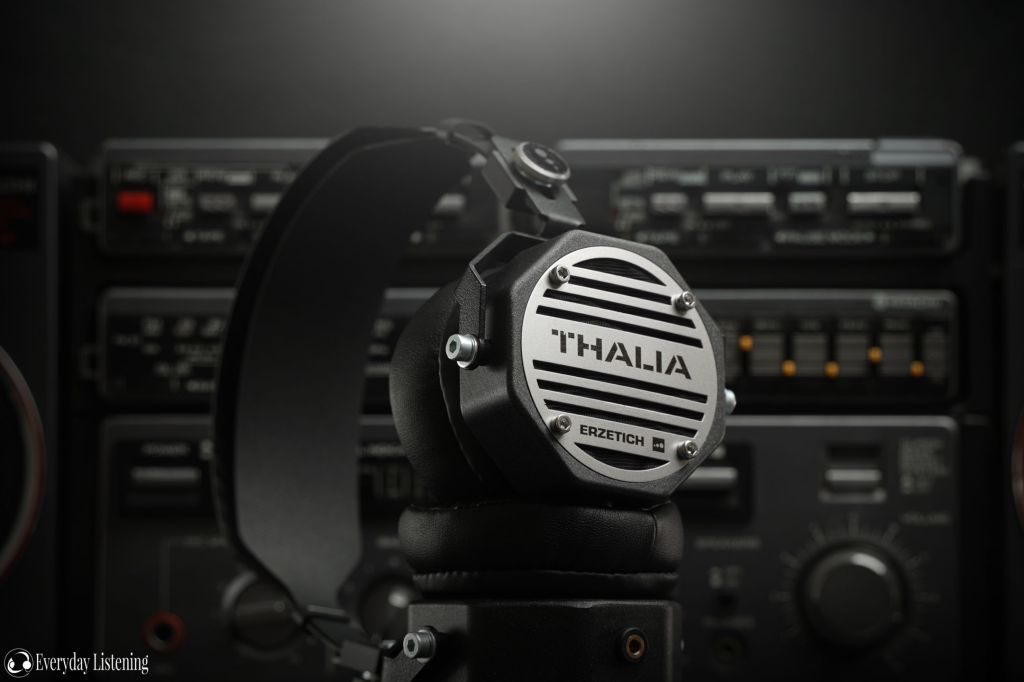
Still, when called for, the Thalia has plenty of treble definition and energy. With a slight darkness in the mid-treble, the background is dark and impressively clean. Cymbals sound slightly over-damped with slight reductions in shimmer and air being evident. However, overall notes sound textured and relatively lifelike. Sibilance is also reduced, and the Thalia completely lacks glare and brittleness. The extended upper-treble similarly means that sparkle and micro details are apparent and nicely defined but again, aren’t overly emphasized within the mix. The Thalia 2024 has a very intriguing presentation overall that is very technically adept but also quite relaxed in its portrayal. This makes it a great choice for those sensitive to high-end that still want excellent resolving power or for those preferring high listening volumes.
Soundstage –
On ears have never been lauded for their soundstage space and the Thalia is no different despite its excellent extension and technical chops. Width is capable, being able to stretch confidently beyond the head. However, the Thalia tends to present its mix in a more intimate fashion, so this isn’t overtly apparent. What is more impressive is depth which frequently projects in a more convincing manner, adding dimension to the overall sound. The imaging is very sharp and highly coherent.
Directional cues are tack sharp and the Thalia, despite its coherence, layers very well too. Not only does it differentiate clearly, but it also offers a multi-layered presentation permitting immersive distance portrayal. Separation is just mediocre due to its more organic tuning. The Thalia isn’t congested or overly intimate but doesn’t have much space between its rich, enlarged notes. Small details are easy to discern but aren’t highlighted in their own space.
Driveability –
The Thalia has a 32Ohm impedance and unspecified sensitivity. While I did find it needed a bit more volume than something like the Meze 109 Pro for instance, the Thalia is quite efficient and doesn’t suck current either. As a result, you don’t need the huge amplification to drive these headphones unless you are a very high-volume listener.
Output Impedance Sensitivity
Using a single dynamic driver, the Thalia doesn’t respond too much to output impedance to the extent that they will sound very consistent from most solid-state sources. Switching to a much higher impedance such as that found on tube amplifiers will produce a slightly brighter and clearer sound so this can be a good pairing for those who find the Thalia too thick for their liking.
Driving Power
Comparing my desktop stack to the DITA Navigator revealed minimal change in tonality and a convincing sense of dynamism from the portable source too. While the Thalia did sound noticeably better from my THX desktop amplifier, they keep their core qualities from portable sources too. Switching over to the desktop source or adding a dedicated amplifier resulted in a tighter bass and a more textured sound in general. The soundstage opens up notably and the headphone did sound quite intimate from the Navigator alone.
Suggested Pair Ups
The Thalia as marketed, is driven convincingly by low-power portable sources while still offering plenty of headroom to scale with dedicated amplification. To extract the best sound, the Thalia benefits from a good amp and a neutral to bright source which helps to balance out its thicker mix. Warmer sources may push coherence too high, but those prioritising bass may enjoy the added punch this provides. The Thalia, otherwise, isn’t sensitive to hiss or output impedance. Very large source output impedance can produce a slightly brighter sound which may be to listener preference also.

Ryan Soo
Avid writer, passionate photographer and sleep-deprived medical student, Ryan has an ongoing desire to bring quality products to the regular reader.
 Everyday Listening