

Jomo Audio Nautilus Review – Heavy Hitter
Pros –
Class-topping build quality and design, Natural yet engaging tuning, Excellent bass quality, Powerful vocal performance, Outstanding imaging
Cons –
Engaging tuning compromises absolute coherence, Treble could have a bit more bite, 4.4mm termination only, Needs a powerful source
Verdict –
The Nautilus would be on my shortlist if you value an IEM that stands out both in terms of look and feel and technical performance.
About Jomo –
Jomo Audio is a Singaporean audio company who’ve been making high-end IEMs for over a decade and a half. Joseph, the man behind the brand, has a background in electrical engineering and extensive experience with audio mixing and broadcasting. Starting out as an enthusiast, Joseph had humble beginnings re-shelling and repairing IEMs from local audiophiles which opened the opportunity to develop his own models. Over the years, Jomo reached the international market and has become one of the most renowned brands in the high-end boutique market. Jomo now works out of a medical-grade lab with professional tools and relations with Knowles, Sonion and Egger. They have access to the latest technologies including 3D scanning, CAD and printing. Jomo has continued to push the boundary of technology since.
Introduction –
While Jomo mostly focused on summit-fi designs over the last year, the recent announcement of the Nautilus came as a surprise to many. Jomo’s latest model was ornate and ambitious yet, when Joe released that this model would cost $800 USD, it certainly wasn’t the unobtanium many had expected. For the money, the Nautilus delivers a fantastical steampunk aesthetic inspired by Jules Verne’s Twenty Thousand Leagues Under the Sea, a gold-plated brass chassis, 3D printed internals and a complex driver system that complements all of this. Jomo has also focused on a more comfortable fit and a more balanced sound than preceding models. As always, Joseph’s designs pack both tech and flare in spades yet value for money appears to be his most pertinent frontier with this design.
The Nautilus is available for $800 at the time of writing. You can read more about it and secure one for yourself at Jomo Audio!
Disclaimer –
I would like to thank Joseph very much for reaching out to organise a review of the new Nautilus. All words are my own and there is no monetary incentive for a positive review. Despite receiving the earphones free of cost, I will attempt to be as objective as possible in my evaluation.
Contents –
- Page 1: Intro, Unboxing, Design
- Page 2: Sound and Source Pairings
- Page 3: Comparisons & Verdict
Specifications –
- Drivers: Custom 10mm DLC DD, Custom 6mm PMD, 2x Sonion BCD
- Crossover: 3-channel CrossSync Uniphase
- Frequency Response: 20 Hz – 45 kHz
- Impedance: 11 Ohms
Behind the Design –
Legendary Construction
Jomo never disappoints in the build and design category, but the Nautilus is easily one of their most striking works yet. It features solid bass shells with a gold-plated exterior and mother-of-pearl faceplate underlay. These have been precision milled using CNC machining and laser etched for extra visual intricacy. Jomo promises a winning blend of comfort, aesthetics and durability.
Drivers & Acoustics
The Nautilus is cutting-edge inside and out, sporting a 10mm nano-diamond coated DLC full-range dynamic driver with a custom 6mm planar magnetic tweeter. 2 Sonion bone conduction drivers augment the experience. Joseph unites these drivers with a 3D-printed acoustic chamber for the 6mm planar tweeter and CNC machined brass chamber for the DLC dynamic driver. The Sonion bone conduction drivers are mounted in the chassis to maximize their efficacy.
Sonion Bone Conduction
Bone conduction drivers have become a popular driver choice in recent years and are often lauded for their ability to create a wide, out-of-the-head soundstage. They are perhaps not so aptly named given that they are never placed in a manner that contacts bone, only the cartilage of the outer ear. Despite this, cartilage conduction, though less marketable, is a real phenomenon used by hearing aids. Researchers even argue that it is more efficient as cartilage is lighter than bone, meaning less pressure and vibration power is required to transmit audio to the hearing systems.
Premium Cable
Jomo have always included premium cable options with their IEMs and the Nautilus is no exception. Out of the box, the Nautilus comes with a 4-strand 21 AWG OCC copper cable with a tough yet stylish fabric sheath. It has CNC-milled metal hardware matching the superlative quality of the housings. This is finished with a 4.4mm gold-plated balanced plug.
Unboxing –
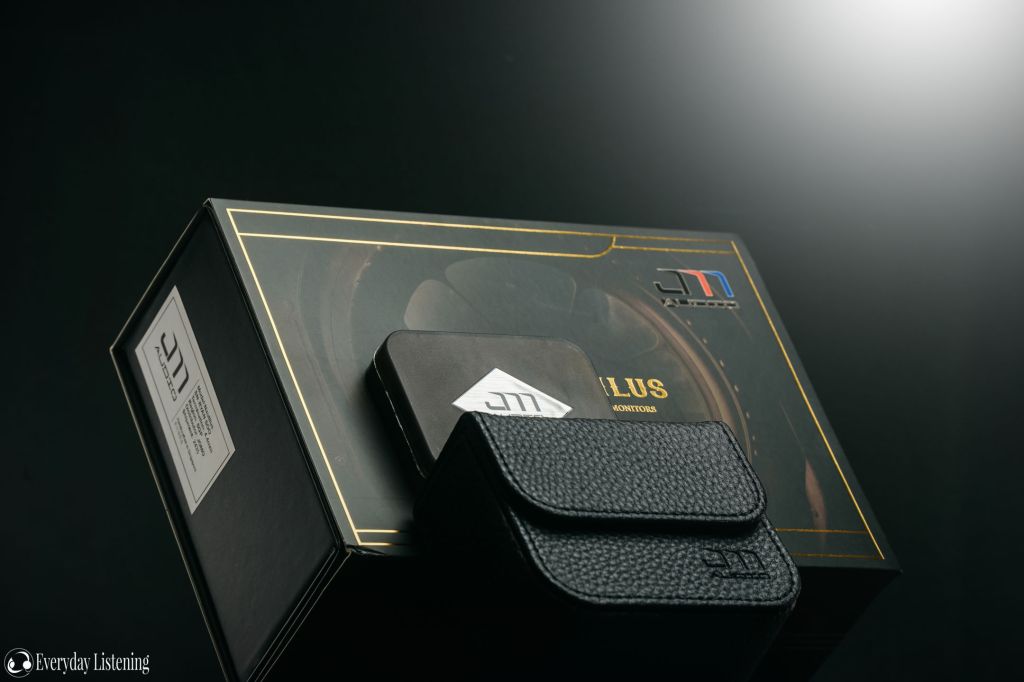
If there’s one area where Jomo has made sacrifices relative to their TOTL models, it’s the unboxing. Personally, this isn’t an issue for me as this has enabled Joe to invest more into the IEMs themselves. You get a clean, simple box with a graphic sleeve on the outside. Opening the box reveals the Jomo-branded magnetic leather carrying case and ear tips within a plastic organiser. Jomo provides papers, airplane and ¼” adaptors in addition. The IEMs themselves come protected within the case with a two-compartment mesh bag separating each earpiece to avoid scratches during transit. This can also be used as a compact storage solution when on the go. The cable comes pre-attached to the IEMs and it’s a nice thick Jomo-branded unit with a premium fabric sheath. It only comes with a 4.4mm termination which was a good call given the Nautilus thrives with a powerful source. Still, a modular option would have been good to see given wide adoption elsewhere.
Design –
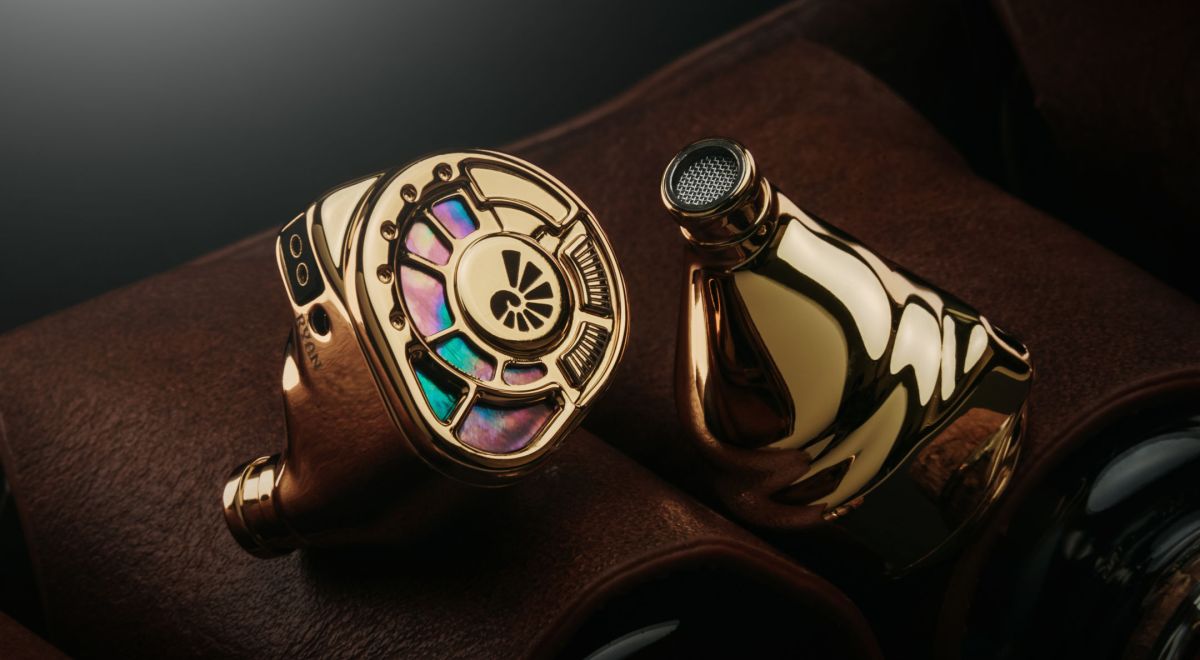
As intended by the designers, the Nautilus looks like something materialized from the pages of a fantasy novel. Joe has achieved a bold steampunk aesthetic blending high polish gold with ornate, iridescent mother of pearl. The faceplate underlays showcase dazzling colour, combining with the CNC-milled intricacies above to form a mesmerizing play on light. Despite this, the overall silhouette is quite streamlined, its triangular shape being reminiscent of the profile carried by most Fir and 64 Audio IEMs. Of course, with the premium BOM comes hugely satisfying heft and density in the hand. Just as impressive is the attention to detail as every join is minimal and perfectly uniform. The Nautilus is a true masterclass of IEM construction quality and inspired design.
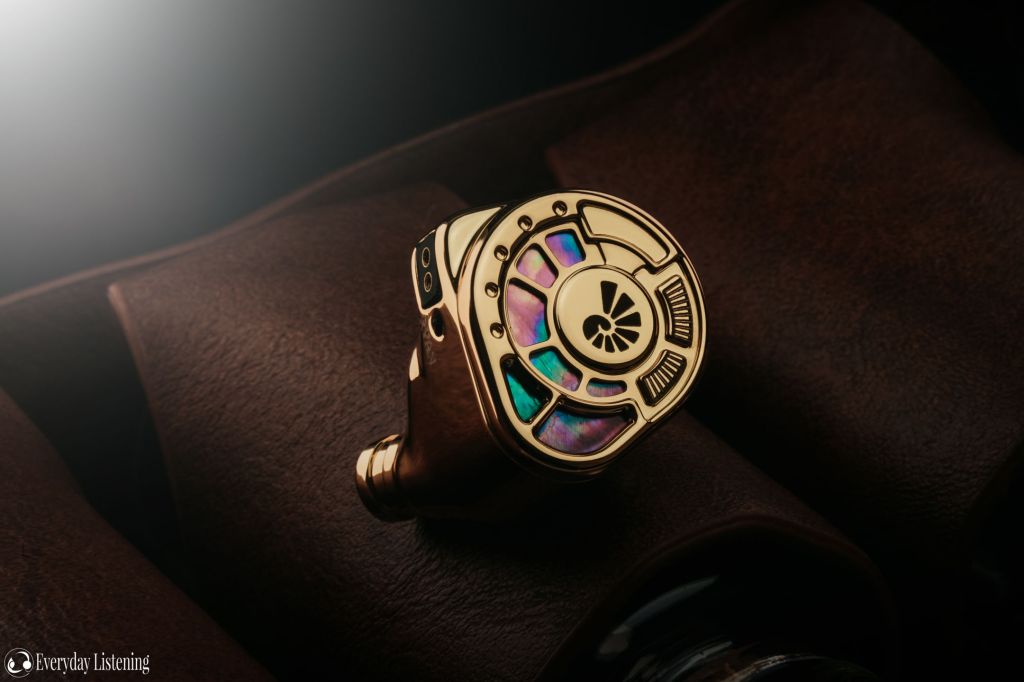
Ubiquitous 0.78mm removable cable connectors make a return as seen on Jomo’s other IEMs. Accordingly, replacements and upgrades are abundant. That said, the stock cable is of excellent quality. It’s thick and beefy at 21 AWG, feeling no less robust than the hefty metal shells. In addition, the simple flat black metal hardware and fabric sheath beautifully really allow the gold shells to shine. In listening, the cable has modest weight and is reasonably soft. It has a little spring to it which makes it a touch more microphonic than most braided cables, but it still isn’t too obtrusive on account of the over-ear fit style. I found the pre-moulded guides to be comfortable and stable fitting and overall, the cable has excellent tangle resistance. The cable terminates in a 4.4mm balanced connector but unfortunately, has no modular capability nor are other terminations offered at checkout.
Fit & Isolation –
Though one of a kind in looks, the Nautilus offers a comfortable and familiar ergonomic experience. They don’t disappear in the ear quite like more compact in-ears but are still comfortable and very stable fitting. This is due equally to their weight and generally broad contact area with the outer ear. This appears intentional on Jomo’s behalf to maximise the efficacy of the bone conduction drivers and stabilise the heavy housings. As the contact patch is so large, hotspots are minimised and wearing comfort is still very good with some pressure forming only after several hours of continual use. The triangular profile has nice rounded edges and tapers to a slim front which avoids placing too much pressure on the tragus – a common point of discomfort.
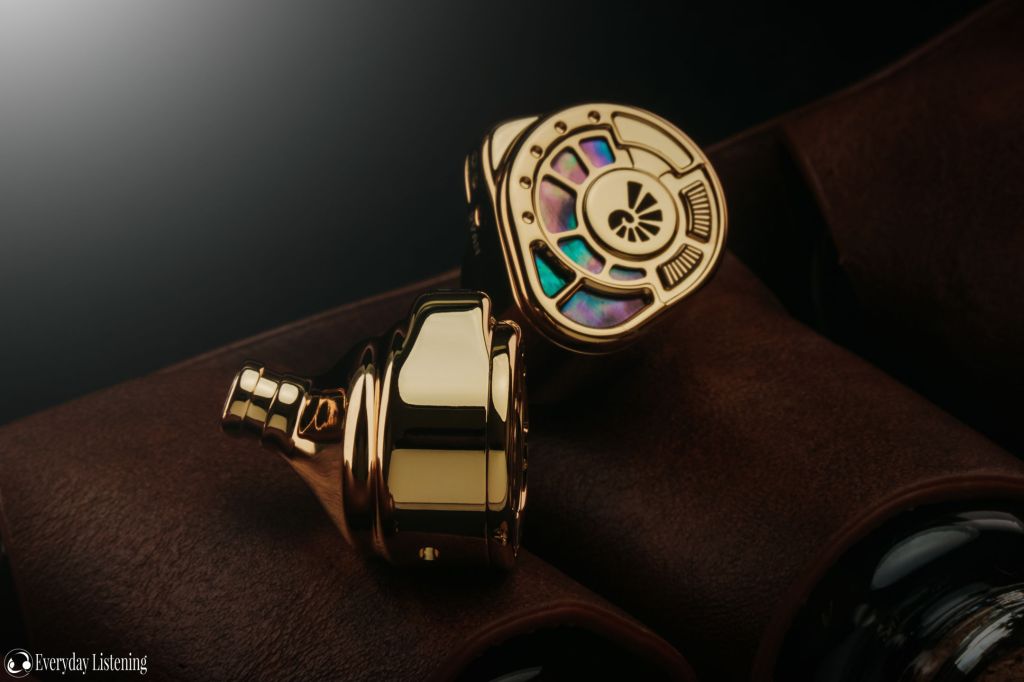
The inner face is sculpted very nicely, hugging the folds of the outer ear and achieving a very stable, snug fit in conjunction with well-angled nozzles. The nozzles are on the larger side fitting T-400 size tips (smaller at a stretch) meaning fit depth is just moderate. However, I was able to achieve a strong and consistent seal all the same. There’s also no driver flex and minimal wearing pressure due to multiple large vents. Despite this, passive noise isolation is sound for a hybrid monitor, sufficient for public transport and commute with the metal shells providing good low-frequency attenuation in particular. With that said, they aren’t nearly as good at blocking voices and high-pitched noises as fully sealed monitors and won’t be suited for especially loud environments such as air travel as a result.

Ryan Soo
Avid writer, passionate photographer and sleep-deprived medical student, Ryan has an ongoing desire to bring quality products to the regular reader.
 Everyday Listening