

Kinera Thorking Review – Flat Plus
Comparisons –
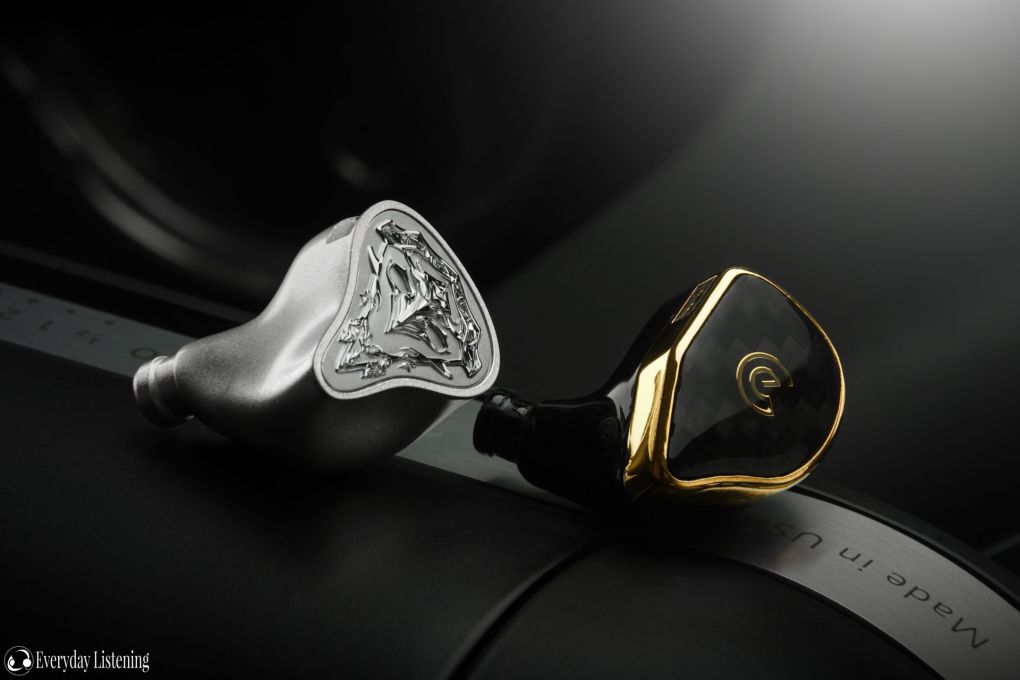
Fir M4 ($1899): The M4 has more of a W-shaped voicing and is overall a more aggressive monitor. Its bass is more present, especially in the deep bass. The voicing is thicker and it is considerably more energetic, dynamic and hard-hitting. The Thorking is more neutral, linear and separated but lacks the same bottom en oomph. The M4 offers similar definition and control above, the main difference is the tuning itself.
Within the midrange, the M4 has more of a vocal focus due to its earlier 2kHz hump. It also has more upper-midrange extension giving it a more vivid voicing. The Thorking is more balanced with more equivalent vocals and instruments. It has slightly higher definition and a more transparent tone as the M4 has some warmth bleeding in from its bass. The M4 has similar resolving power and similarly excellent layering. The Thorking has better separation due to its more neutral note size.
Treble is similarly present on both monitors, being slightly more aggressive on the M4. It has more lower-treble presence with a flat shelf from 5-6kHz giving its notes a more defined leading edge and also a bit more texture and body. Above, the M4 has a darker background before a more prominent upper-treble sparkle. The Thorking has a smoother treble but offers greater air, shimmer and energy through the mid-treble. It has similar sparkle and headroom at the very top. The soundstage is wider on the Thorking while the M4 is more rounded. The M4 has more delineated layers while the Thorking has slightly more accurate positioning and better separation.
Campfire Audio Astrolith ($2199): The Astrolith offers a more vibrant, V-shaped tuning on a dual planar driver platform. The bass is notably more prominent on the Astrolith, it has a notably more visceral slam than the Thorking. It also has notably more mid-bass which gives it a lot more impact and punch. By comparison, the Thorking is far more linear granting it a notably more neutral tone and much better separation with less rounding of its notes. The Thorking is tighter and a bit more responsive giving it a more technical nature. Astrolith offers similar note definition, it just has a more exuberant tuning with less space between its larger notes.
The midrange is more laid-back on the Astrolith with smaller and more coloured vocals. The more balanced Thorking presents more natural and coherent vocals with higher resolving power and definition. Campfire Audio’s offering is glossier, warmer but also more articulate. It doesn’t quite resolve the fine details with such zeal but has an engaging voicing and excellent layering. On certain tracks, the Astrolith matches the Thorking for resolving power and definition but it is more track-dependent as its warmth can overshadow intricacies at times.
Up top, a similar trend can be observed. The Astrolith offers a similar treble presence albeit due to the Thorking’s less prominent bass it sounds a touch more isolated. In terms of voicing, the Astrolith is clearer and crisper. Its notes are thinner and more aggressive with higher definition. The Thorking conversely offers a more linear, textured presentation. Though it doesn’t bring nuances to the fore as much and isn’t as hard-edged, it offers more natural notes and slightly higher micro detail retrieval due to its less peaky tuning. The soundstage is a touch wider on the Thorking while the Astrolith has more of a rounded stage. The Thorking has more layers while the Astrolith has more hyper-separated foreground and background layers.
Soft Ears RS10 ($2500): The Thorking and RS10 make for interesting foils. Where the Soft Ears epitomizes Harman-target tuning on a traditional 10BA setup, the Thorking uses a more novel tribrid setup to realize a more traditional DF-neutral tuning. The RS10 has slightly higher contrast. It has more sub-bass giving its bass a thicker, weightier nature. The Thorking does have a bit more pressure and slam at the very bottom but the RS10’s bass is punchier with more impact due to the tuning. Decay and texture are more natural on the Thorking while the RS10 delivers higher note definition and agility so separation is equivalent between the two.
Both earphones sport natural, revealing and tonally transparent midranges. The RS10 is more vocal forward and slightly more extended in the upper midrange while the Thorking has a slightly fuller, smoother voicing. The RS10 has slightly higher resolving power of fine details but the Thorking isn’t far behind and offers better layering and space with less intensity. The treble presentation is more present on the Thorking and more energetic with the RS10 being more linear but less vibrant. The RS10 has a bit more bite and definition to its lower treble, it has slightly higher foreground detail retrieval. Meanwhile, the Thorking presents mid-treble details with greater clarity.
The RS10 has a more natural note body and a darker background that gives it more texture and slightly better tri-frequency balance. The Thorking offers more air and sparkle with more emphasis on bringing out micro details. In terms of stage, the Thorking is more spacious and holographic while the RS10 is more intimate with more accurate imaging. Albeit it is less layered and immersive in so doing. Both have excellent separation.
Verdict –
I haven’t reviewed an IEM like the Thorking for some years now, it was quite a nostalgic experience. Years ago enthusiasts had the choice between BA or DD IEMs, a solid bass response or an extended treble. With the introduction of 3D printing, CAD and multi-driver designs, buyers no longer need to make compromises. The Thorking exemplifies this for though its tuning isn’t as glamorous as many contemporaries, its technical ability is no less convincing. Accordingly, instead of the neutral tuning coming at the expense of bass response or imaging, it has instead enabled standout separation and transparency through the full frequency range. The Thorking’s relatively bass-light tonality does sacrifice some versatility relative to most modern offerings, but in this sense, it offers an excellent foil to them and excels beyond in select metrics as aforementioned.
As always, the hobby is built atop personal preference so a move like this is to be encouraged even if it will not necessarily have the widest appeal. There remains a dedicated niche of enthusiasts that still crave the ultra-flat Etymotic sound that is difficult to find even from the brand’s own releases as of late. Where Kinera mixes it up is by realised this through cutting-edge modern technology enabling substantially improved imaging and end-to-end extension. Combined with a little extra zest in the treble and a subtle bass lift, the listener is constantly reminded that this is a high-end flagship IEM. The Thorking is an earphone that offers a slightly more forgiving take on an old-school neutral tuning realised through gorgeous design and excellent technical ability.
The Thorking is available from Kinera Audio (International) for $2499 USD at the time of writing. I am not affiliated with Kinera and receive no earnings from purchases made through these links.
Track List –
Billie Eilish – dont smile at me
Bob Seger – Night Moves
Courtney Barnett – Rae Street
Cream – Wheels of Fire
Dire Straits – Communique
Dirty Loops – Next To You
Eagles – Hotel California
Elton John – Honky Chateau
Fleetwood Mac – Rumours
H.E.R – I Used To Know Her
Jasen – BYE
John Mayer – Continuum
Kanye West – Ye
Missy Higgins – The Sound of White
Radiohead – OK Computer
TALA – ain’t leavin` without you
The Beatles – Abbey Road
The weeknd – After Hours
Vampire Weekend – Father of the Bride

Ryan Soo
Avid writer, passionate photographer and sleep-deprived medical student, Ryan has an ongoing desire to bring quality products to the regular reader.
 Everyday Listening