

Dita Mecha Review – Organic
Sound –
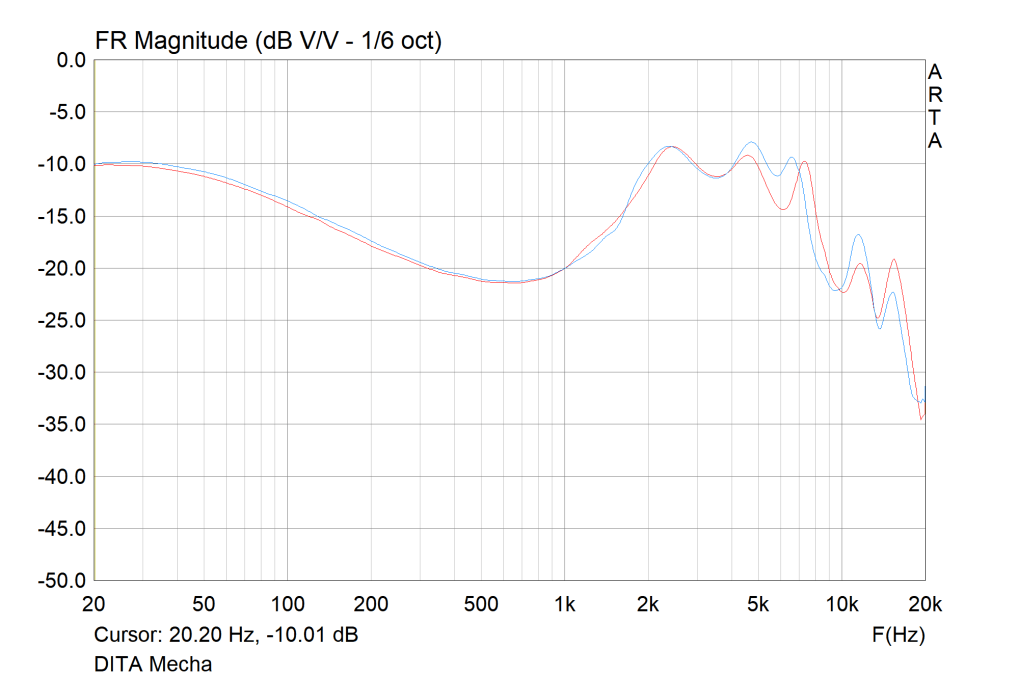
Testing Methodology: Measured using Arta via IEC 711 coupler to Startech external sound card. 7-9KHz peaks may be artifacts/emphasised due to my measurement setup. Measurements besides channel balance are volume-matched at 1KHz. Fit depth normalised to my best abilities to reduce coupler resonance. Still, due to these factors, my measurements may not accurately reflect the earphones or measurements taken by others. I gave Mecha 100-hrs of burn-in prior to review.
Tonality –
Mecha is well-balanced IEM with a slight L-shaped tonality. It isn’t a reference monitor but is defined by a natural, organic character throughout with minor and tasteful colouration. To my ears, DITA always tunes a good low-end, and Mecha is no different. Elevation is moderate and split nicely between sub and mid-bass. This contributes to natural bass notes that aren’t overly rounded or boomy. A small lower-mid dip aids separation before a rise to dual centre and upper midrange bumps that uphold strong vocal presence. Though the midrange has enhanced clarity, it has a smoother articulation and also picks up a tinge of warmth from the bass, contributing to a euphonic and well-metered presentation without intensity. Treble broadly sits behind. While it isn’t overshadowed, it also never steals the spotlight. It is defined by an excellent texture, timbre and a natural sense of air and headroom that isn’t exaggerated.
Bass –
Mecha’s low end is hearty and organic with moderate elevation pushing bass just to the forefront of the sound. There’s a hint of sub-bass over mid-bass bias, granting a light warm tone, but overall, this isn’t a rounded, mid-bassy IEM but a structured and powerful one. To clarify, while notes are enlarged, their timbre still comes across as authentic and balanced. As usual, DITA shines equal spotlight on both dynamics at the very bottom and texture above. Mecha offers superb extension and rumble, yet never at the sacrifice of punch and warmth when required. It has excellent timing and texture in abundance despite not boasting the most concise note presentation or the greatest retrieval of micro details.
Indeed, I was surprised by the note presentation of Mecha, which is controlled but never aggressive. It is a versatile performer that moulds to the character of the track. Once again, naturalness is a descriptor I find myself returning to. Mecha lacks incisive speed and hard etched texture but is composed and organised all the same. I would hesitate to call Mecha detail-oriented and agile but well-controlled is surely apt; impact isn’t the tightest I’ve heard, but is very visceral, and notes are allowed to decay slowly but clearly in a very natural manner more akin to a subwoofer than your typical IEM. Despite this, notes are well-defined and well separated at all times. Mecha isn’t lacking detail and produces a lovely texture. It presents notes with a smooth, organic quality that really showcases its dynamic driver soul.
Mids –
Though bass tends to steal the show, the midrange still captivates and does so without sacrificing a natural character. Lower-mids are slightly pulled back, increasing contrast and separation, and reducing tonal colouration from the bass. Nevertheless, mids carry a light warm character, especially notable with male vocals. Above, emphasis climbs, peaking at 2.5kHz before a small dip and subsequent 4kHz rise. Accordingly, mids aren’t large and powerful but are light, clear and well extended. Vocals have a small push due to the earlier pinna gain and light upper-mid emphasis that brings them forward whilst enhancing their clarity. At the same time, the smoother 6kHz range ensures that though mids are clearly expressed, they aren’t breathy or intense either.
I would consider the Mecha to be fairly balanced and neutral leaning in the grand scheme of things. The chief colourations come in the form of the light warmth from the bass and the subtle upper-mid rise, both of which work in tandem and neither of which especially define its presentation. Altogether, this permits good coherence and an appealing overall voicing. Mecha layers nicely with good contrast between the foreground and background. It also delineates somewhat between individual layers. Overall resolution and layering are not quite as highlighted as on more revealing IEMs, but are still evidently on the performance level you’d expect at its asking price. It does so with a natural, versatile voicing that offers plenty of engagement without sacrificing timbre.
Highs –
DITA have retained enough treble to provide an enjoyable experience and to service the soundstage; however, it is on the polite side over being energetic and vibrant. I actually found this to be a refreshing change as it is rare to have a mellow and balanced treble on high-end IEMs these days. There is a small emphasis around 5kHz and another at 7kHz before a darker mid-treble. The upper treble extends nicely but isn’t overly present, meaning sparkle and micro detail are presented in a more subtle fashion. Those wanting the most defined fine detail and bountiful, airy, open treble will likely be disappointed. Mecha once again provides excellent timbre, naturalness and texture. Notes offer accurate body and a nicely defined attack. They decay naturally thereafter, contributing to the natural textures aforementioned.
As the mid-treble takes a step back, the background is very dark and clean, which helps foreground details to pop a little more. It also enhances the perception of space and layers – especially in conjunction with above-average treble extension and detail retrieval. While Mecha isn’t detail-forward and won’t technically outperform class-leaders, the tuning is more approachable than most, and the imaging is just as immersive. Still, those desiring such a treble unfortunately won’t find it here. Mecha does have very solid extension, especially when taking into consideration its single driver design, but delivers that minutiae in a very laid-back manner, so it doesn’t scream energetic and detailed. Rather, Mecha suits those wanting a treble that is organic, natural and mellow with excellent headroom without sounding blunted or rolled off.
Soundstage –
Mecha presents a larger stage that extends beyond the head when called for. It offers a slight width bias, aided by the dark background, which adds to the sense of distance portrayal. The foreground is defined and focused, and vocals are also well-centred. This contributes to stable and accurate imaging with accurate localisation. While individual layers don’t have the best separation and Mecha doesn’t have the most holographic or three-dimensional imaging, it is still very organised at all times. Separation is above average but not a standout due to the greater focus on textures and decay over sheer speed and definition.
Drivability –
Mecha offers a 32 Ohm impedance and a 113dB sensitivity which makes it quite efficient and not too demanding either in terms of voltage or current. Add in the single dynamic driver configuration, and you should get a package that is forgiving of source pairing, a prime benefit of the driver platform.
Output Impedance Sensitivity
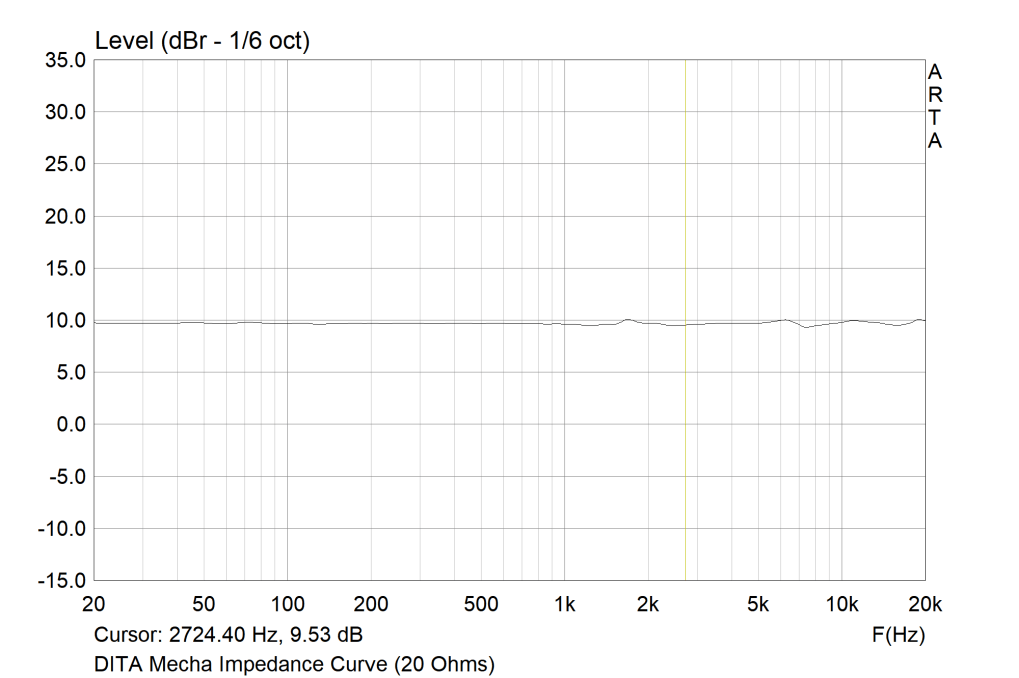
As expected, Mecha offers a nigh linear impedance curve which means it should sound consistent source to source. I confirmed this in listening, experiencing no change in tonal balance when adding impedance adaptors besides the expected drop in volume.
Driving Power
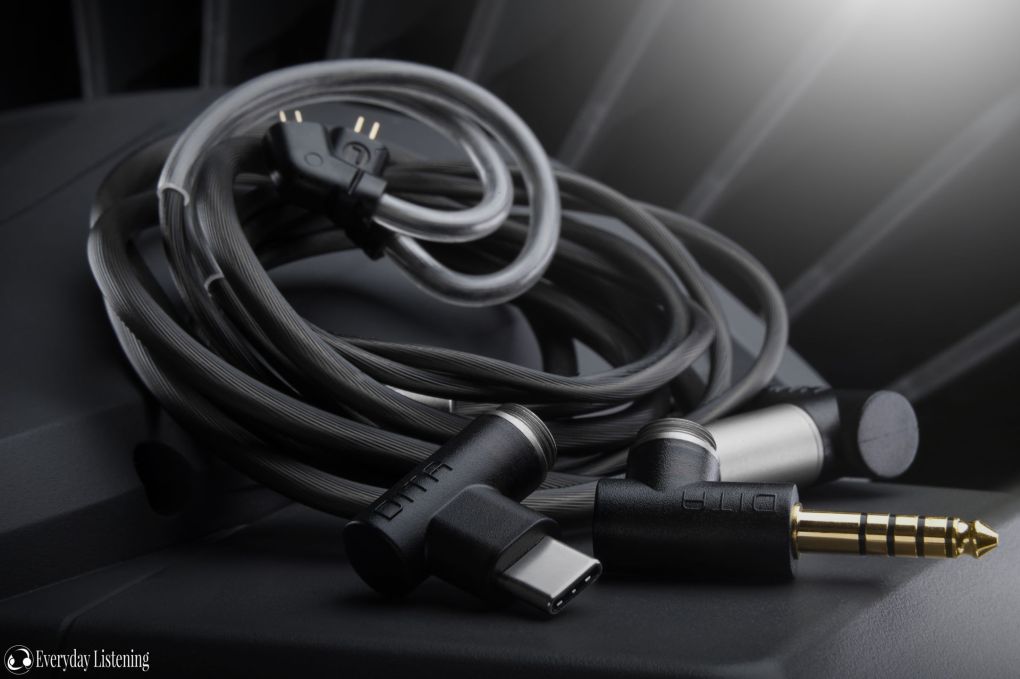
Though Mecha is relatively efficient, it isn’t especially hiss-sensitive. It does scale with better, more powerful sources, but not to a huge degree and is quite happy when driven from portable sources. The chief differences listeners will experience are regarding dynamics and soundstage expansion when stepping up to a more potent source. However, tonally, a similar balance is upheld and the same natural texturing even from hyper-portable sources such as the included type-C DAC/AMP attachment.
Suggested Pairups
Mecha is one of the easier high-end IEMs to drive being neither sensitive to hiss nor output impedance. This opens up a wider range of pairing options to end users. While they do scale with amplification, the differences are not night and day to the extent that a dedicated amp should feel necessary. Tonally, Mecha is forgiving due to its natural tuning. Those wanting a bit more warmth can consider more mid-bass forward sources, while those wanting more zing can pair with brighter sources. For my personal preferences, a neutral to bright leaning source with a defined note presentation matches best such as those using THX’s amp chips. However, I can see some wanting to lean further into the smooth organic side as well; it is a matter of personal preference.

Ryan Soo
Avid writer, passionate photographer and sleep-deprived medical student, Ryan has an ongoing desire to bring quality products to the regular reader.
 Everyday Listening