

Dita Mecha Review – Organic
Comparisons –
DITA Project M ($325): It’s interesting that DITA’s more premium model uses a more simplified driver setup. Where Mecha is lush with a more laid-back treble, Project M is distinctly brighter and more V-shaped. Mecha’s bass steals the spotlight while Project M has a more restrained and balanced tuning here. Both have excellent extension and texture. Mecha is notably more dynamic and powerful at the very bottom. Mecha also has higher note definition while Project M has a cleaner, more separated tuning. The midrange is notably more present on Mecha. Its vocals are larger and more liquid with higher clarity. Project M has a bit more body from its lower midrange but less warmth from the bass, giving it a more neutral tonality. Despite this, it isn’t leaner, simply not as rich and vibrant. Project M is a bit more laid-back as well. Mecha has more texture and fine detail to its presentation. It also layers better, but once again, Project M has a bit more separation simply due to its cleaner tuning.
The treble is where the two really diverge as treble stands at the forefront of the sound on Project M while taking a backseat on Mecha. Project M is notably brighter in the mid-treble. As such, its notes are thinner, higher clarity, but also more brittle. Mecha offers more bite and definition in the foreground. It presents a more natural note body and texture. Subjectively, Project M actually delivers a bit more extension and energy where Mecha offers a darker background with a less aggressive background detail presentation. Despite this, Mecha offers a noticeably larger stage in all axes, and it has better layering, creating more immersive imaging. Project M has greater separation but doesn’t sound as concise and organised altogether.
Jomo Nautilus ($800): Nautilus is another gorgeous metal IEM from Singapore adopting a DLC DD, planar driver and dual bone conduction driver hybrid design. The tuning for both is on the lush and warm side with Mecha being a bit more laid-back and coherent, Nautilus being more W-shaped and engaging. Bass quantity is similar; Nautilus has a lick more mid-bass while Mecha has more sub-bass. In turn, Nautilus is warmer, punchier, and its notes are slightly rounder. Mecha offers greater dynamics and tonal cleanliness. Despite this, Nautilus offers a slightly more defined, concise note presentation that gives it the edge on detail retrieval. By comparison, Mecha has a bit more oomph and power at the bottom alongside a more authentic natural texture. The midrange is slightly more present on the Mecha, but both have a similar style of tuning with an earlier 2k rise and a later 4.5kHz peak.
Mecha prioritises the centre midrange, giving it more present, powerful vocals, while Nautilus has more upper-mid presence, giving it greater clarity and articulation. Nautilus has more warmth, which balances this out to some extent. Nautilus offers slightly better definition while Mecha offers greater texture and layering. The treble is also similar on both, with good bite in the lower treble and a darker background. The chief difference is that Mecha has notably more note body and texture while Nautilus is more incisive but also thinner. Nautilus also has an upper-treble boost which gives it more sheen, sparkle and micro detail. Both earphones offer similar soundstage proportions. Nautlius has more holographic imaging and slightly sharper distance portrayal while Mecha offers more defined, clear-cut background/foreground layering.
Campfire Audio Fathom ($1099): Fathom uses 6 balanced armatures in a 3×2 configuration. Overall, it offers a more coherent, less contrasted sound. Fathom has less bass overall, sub-bass especially, but a warmer, fuller tuning. Mecha offers sizably more slam, dynamics and rumble. Fathom is noticeably quicker decaying and still quite punchy. It has rounder bass notes due to its fuller mid and upper-bass. The midrange is slightly more present on Fathom, and it has a more coloured voicing. Mecha has greater vocal bias and more delicate, neutral-toned mids, but overall is slightly more laid-back. Fathom offers a slightly fuller, warmer but also more articulate voicing. Fathom is a bit more forgiving but also less transparent. Fathom is notably brighter, and it brings the nuances more to the fore. It has a more defined presentation but the voicing isn’t quite as natural and consistent as on Mecha.
Fathom is notably brighter but not by a huge amount. The chief difference is the level of mid-treble, with both having a crisp, well-detailed lower-treble. Fathom has notably more mid and upper-treble presence, giving it a more energetic, airy presentation. Mecha has more body and texture in the lower-treble, providing a more natural note presentation. Conversely, Fathom brings fine and micro details more the fore. It offers better extension and more holographic imaging. Both offer large, wide stages. Mecha has more contrast between background and foreground, while Fathom offers slightly better separation and delineates better between individual layers.
Verdict –
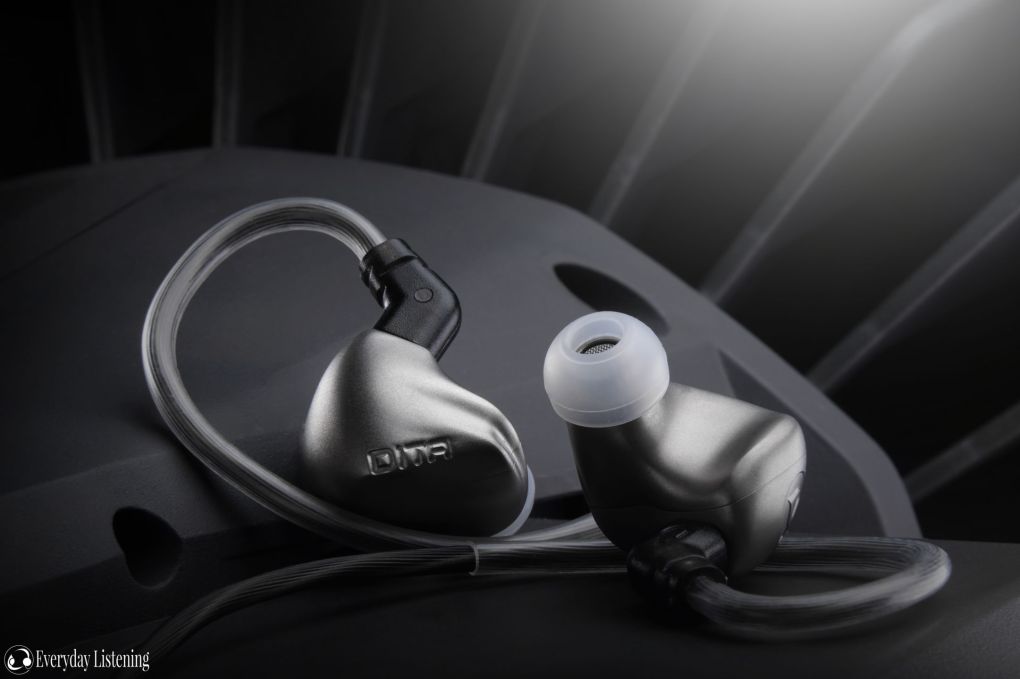
DITA’s first model, almost 10 years ago, was a bold demonstration that a single dynamic driver IEM is not only relevant but could be highly competitive within the high-end market. In the modern day, and despite hybrid designs becoming increasingly complex and accessible, they’ve proved just the same with Mecha. This starts with the gorgeous and bulletproof titanium shells, offering both excellent durability and strong ergonomics. I always enjoy DITA’s commitment to providing quality accessories too; highlights being the stylish TANOS carrying case and modular Churro cable with included DAC/AMP. Tonally, Mecha offers a winning blend between modern Harman-target tuning and old-school warmth and coherence. It offers enough clarity and energy to engage but with a focus on naturally lingering, textured notes and long-term listenability; qualities that are often all but forgotten in the modern day. While this won’t suit those wanting the most detailed or sparkly treble nor the most responsive, defined note presentation, Mecha still proves dynamic, extended and pleasantly resolving even if it never does so in an overt manner. DITA’s latest IEM is robust, lush and spacious, offering strong versatility with a particular focus on organic tonality and natural texture.
Mecha is available from DITA Audio (International) and Minidisc (Aus) for $899 USD/$1569 AUD at the time of writing. I am not affiliated with CFA and receive no earnings from purchases made through these links.
Track List –
Billie Eilish – dont smile at me
Bob Seger – Night Moves
Courtney Barnett – Rae Street
Cream – Wheels of Fire
Dire Straits – Communique
Dirty Loops – Next To You
Eagles – Hotel California
Elton John – Honky Chateau
Fleetwood Mac – Rumours
H.E.R – I Used To Know Her
Jasen – BYE
John Mayer – Continuum
Kanye West – Ye
Missy Higgins – The Sound of White
Radiohead – OK Computer
TALA – ain’t leavin` without you
The Beatles – Abbey Road
The weeknd – After Hours
Vampire Weekend – Father of the Bride

Ryan Soo
Avid writer, passionate photographer and sleep-deprived medical student, Ryan has an ongoing desire to bring quality products to the regular reader.
 Everyday Listening