

Unique Melody MEST Jet Black Review – Bright & Brilliant
Comparisons –

Craft Ears Omnium (2499 EUR): Omnium offers a similar style of sound but with greater mid to treble balance. Omnium actually has a bit more sub-bass focus giving it terrific dynamics and physicality at the very bottom, better than MJB. Incidentally, this also means it suffers more from the mid-bass starvation problem that affects MJB, which actually offers a bit more texture to its mid-bass. Both have top-tier speed and responsiveness, with Omnium being a touch tighter at the very bottom and slightly more defined overall. The midrange is more upfront on Omnium. It has a slightly more natural timbre due to its greater lower-mid presence and more natural centre midrange tuning. Both have somewhat of a vocal focus and err on the leaner side. Both are quite revealing and are not on the forgiving side.
Omnium doesn’t suffer from the same metallic timbre but is still quite detail-forward and can err on the intense side. MJB is more laid-back and a touch smaller sounding, but never sounds diminished in so doing. Omnium has slightly higher resolving power, picking up fine details and textures with aplomb. Treble is similarly present on both, with Omnium having a more broadband emphasis, MJB more of a distinct lower and upper-treble boost. Omnium, in turn, is a touch airier and more open. Its lower treble doesn’t have the same incisive attack but isn’t far off, and it offers better balance between foreground and background. Omnium also has a slight edge on sparkle and upper-treble resolution. Staging is a tad wider on MJB, and its BCD’s give it a bit more of a multi-dimensional quality. Omnium has better layering meanwhile, and more accurate placement. Both have top-level separation.
Soft Ears RS10 ($2500): Soft Ears’ flagship reference monitor offers a similarly revealing and highly insightful listen. It is vastly less coloured and has a greater midrange focus. RS10 has slightly less bass but its low end has a more balanced character. Specifically, its sub-bass has a bit more parity with its mid-bass lending it a more even-handed quality track to track. MJB offers a more dynamic, extended and powerful bass with a more potent rumble and slam, albeit at the expense of mid-bass presence. Though it has better separation, RS10 is quicker and therefore equally well defined albeit lacking a natural DD texture and decay. The midrange is notably more upfront on the RS10 and it has more lower-mid body set to a more laid-back treble. MJB takes an inverse approach, being more laid-back, leaner but also more articulate. In turn, MJB is broadly more coloured but it is also more revealing, bringing intricacies more to the fore.
When listening to RS10 one can’t help but feel this is what the music should sound like, but at the same time it does lack that same wow factor and pizzaz. Separation is similar on both and resolving power is top level with RS10 having just a slight advantage. While RS10 doesn’t have the brightest treble, it has incredible foreground fine detail retrieval and a natural note timbre that flatters textures. MJB is thinner and more etched. Its foreground lacks the same texturing, but it has a sparklier and more vibrant mid and upper-treble, bringing the micro details more to the fore. The soundstage is wider on MJB, and its imaging is more holographic and atmospheric. RS10 by comparison has more organised layers and its imaging is sharper and more stable. Both have excellent separation with MJB taking the edge here.
DITA Perpetua ($2999): Perpetua offers a very similar kind of quality with a laid-back midrange set to a brighter, more esoteric treble. It is, however, notably more forgiving due to its higher peak and warmer bass that give it a more coherent character. Bass is the biggest differentiator. Perpetua offers a step more presence and excellent extension and slam at the very bottom but shifts emphasis more to a warmer mid and upper bass giving it a smoother, fuller and less aggressive character. MJB is more dynamic, hard hitting and quicker. Perpetua is more textured and full. MJB offers greater separation while Perpetua still manages excellent composure on complex tracks but there isn’t as much space between each note. The midrange is laid-back on but this effect is more apparent on Perpetua as it isn’t quite as bright overall. In addition, Perpetua has greater warmth balancing out its articulate top-end. MJB is leaner, more revealing and more separated. It offers greater detail retrieval and definition at the expense of sounding more metallic and intense.
Perpetua is very easygoing but still manages to almost meet MJB’s resolving power. It doesn’t quite carve out the fine details as clearly but all of the information is apparent, albeit presented in a relaxed manner. Though its sound is also a little breathy, the enhanced body and warmth give it a more natural timbre overall. Where MJB has more lower-treble boost, Perpetua shifts the emphasis a bit higher. In turn, Perpetua offers a high clarity and well-defined treble with surprisingly good extension for a single DD design. However, MJB does have a crisper and more detailed lower-treble, it also offers more information and emphasis at the very top, being more energetic, sparkly and airy. Perpetua has a bit more note texture but isn’t quite as detailed overall as MJB. MJB has a wider stage while Perpetua is deeper. MJB has better separation while Perpetua has more organised layering.
Verdict –

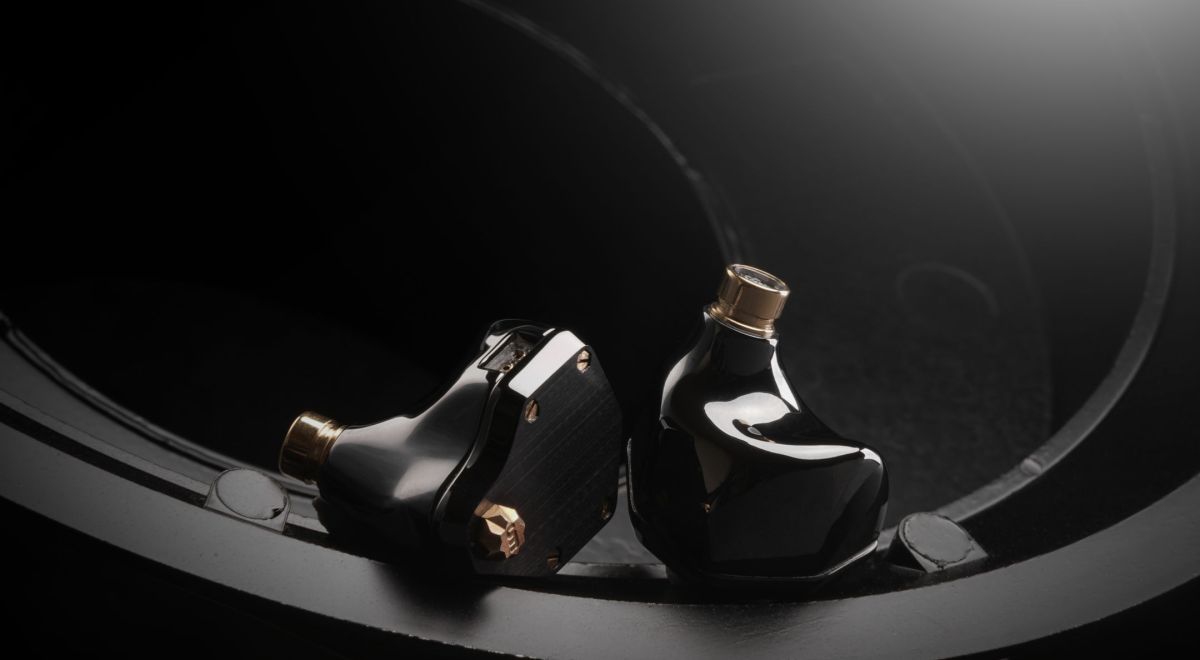
Jet Black was an intriguing introduction to the MEST series, and it became easy to see why UM’s midrange model has achieved such popularity. MJB offers a distinctly different listening experience from most IEMs due to both its tuning and its bone conduction driver system. For me, it delivered the sensation of hearing new details more than any IEM I’ve tested in recent memory. I was also very impressed by the build quality, especially the zirconia shells that offer superb strength and scratch resistance. The PW Audio cable is a nice addition as well, and definitely one of the best included cables on an IEM I’ve tried.
A lot of MJB’s magic stems from its unique tuning that makes it both appealing and polarising – especially for those sensitive to the 6kHz range or those craving enhanced bass presence and warmth. UM is clever to include different ear tips that offer a more balanced, versatile tonality, albeit at some expense of MJB’s unique soundstage and detail presentation. With that said, listening to MJB as intended with its stock ear tips, it is clear that the IEM errs on the analytical side, forgoing forgiveness and at times, coherence in its pursuit of detail retrieval and space. This is an IEM purpose-built for technical performance above all else, with innovative bone conduction driver tech serving to enhance soundstage width and separation.
MEST Jet Black is available for $1,999 USD at the time of writing. You can read more about it and secure one for yourself at Unique Melody! I am not affiliated with Unique Melody and make no earnings from purchases made through these links.

Ryan Soo
Avid writer, passionate photographer and sleep-deprived medical student, Ryan has an ongoing desire to bring quality products to the regular reader.
 Everyday Listening