

Grado GT220 Review – Built Different
Sound –
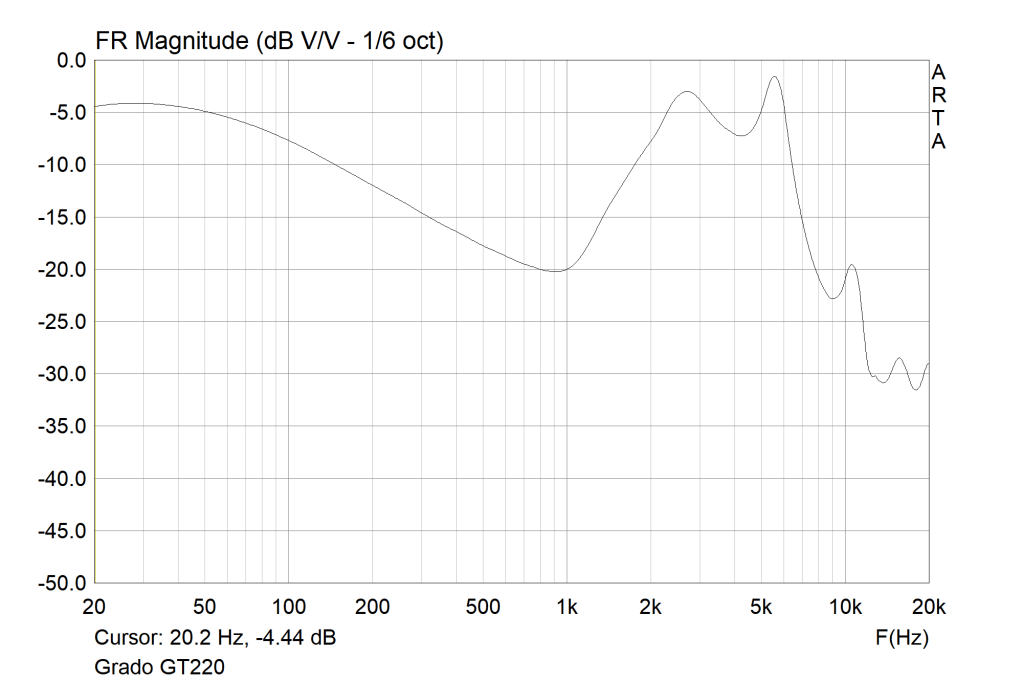
Testing Methodology: Measured using Arta via IEC 711 coupler to Startech external sound card. 7-9KHz peaks may be artefacts/emphasised due to my measurement setup, less so with deep fit. Measurements besides channel balance are volume matched at 1KHz. Fit depth normalised to my best abilities to reduce coupler resonance. Still, due to these factors, my measurements may not accurately reflect the earphone or measurements taken by others. Of note, I was receiving some inconsistencies with my measurements, this graph most resembled my subjective experience, however, please take this with a grain of salt due to these factors. I gave the GT220 100hrs burn-in to ensure maximum performance prior to subjective breakdown.
Tonality –
The GT220 has a rich and engaging sound tuning with a mild W-shaped character. In totality, it comes across as well-balanced with a mild tilt towards the low-end, something you would expect from most TWS products. However, what sets aside the GT220 from competitors is its gorgeous tonality and natural yet revealing midrange that is distinctly Grado in nature. Indeed, the company’s magical house-sound experiences a modern reincarnation in their TWS offering, it isn’t at all generic of formulaic and the Grado DNA pulsing through its veins makes itself clearly known. As we’ve come to expect from the company, the GT220 offers a smile-inducing sound signature alongside just above average technical performance. One thing I did note about the GT220 is that it has above average background hiss so this is something to consider if you’re sensitive to these noises.
Bass –
Lows hold precedence in the sound but do not overwhelm as the GT220 counterbalances its big, bold bass notes with a forward, revealing midrange. There’s a clear sub-bass focus instigating a great sense of depth, richness and drive in addition to strong dynamics for a TWS in-ear. Extension is strong with pleasing but not overt pressure and prominent yet highly defined rumble at the very bottom. Bass then begins a progressive decline into a recessed lower-midrange which minimises bass bleed and contributes to the revealing nature of their midrange. In turn, bass isn’t bloated nor is it overly warm whilst retaining a full character with ample mid-bass texture alongside engaging punch and slam. Technically, Grado have produced a well-performing driver if not one that stands clearly above the rest.
It offers a sound performance that is ample to prevent any sense of drone or muddiness and uphold a natural note presentation. It has a slightly softer transient response which takes the edge off its big sub-bass for a more natural presentation. It isn’t too aggressive but lies on the smoother side. Decay is also on the slower side though, as control is quite good, mid-bass remains defined and textured with zero drone. Separation is not the highest given the fuller bass note portrayal but never felt lacking. This is a fun bass tuning with good but not outstanding technical performance considering the level of emphasis. As the mid and upper-bass are not too forward, it is able to retain admirable levels of definition and separation whilst maximising energy, dynamics and rumble.
Mids –
In true Grado character, the midrange is where the GT220 excels. Though they aren’t perfect in timbre, forward nor linear in the conventional sense, the GT220 is a highly ear-pleasing model with a very natural voicing. Following the lower-mid valley, there’s an equally steep rise to 3kHz hump before mild fall-off for density and smoothness. The amplitude lies roughly on par with the bass though due to the nature of human hearing and the in-ear form factor, bass still lies at the forefront of the presentation to a mild degree. Still, mids are not at all overshadowed. Vocals are brought forward, female especially, and they are presented with subjectively the nicest tonality I’ve experienced from a TWS in-ear. The large dip instigates a clean, revealing, and high-definition image.
The softer transient response once again means the presentation doesn’t err on the side of sharpness and the bass emphasis means vocals don’t come across as overly thin, intimate or forward either. The GT220 has a delightfully delicate and clear presentation whilst retaining a highly natural voicing. Body is on the thinner side though a light warm tone from the bass restores healthy sonic balance. The uptick of upper-midrange density means that, though they do employ a lower-treble peak and are quite clear, vocals simply come across as articulate rather than over-articulated, sharp or sibilant. Grado’s extensive history developing driver in-house clearly pays off here, there’s a sense of refinement here that many TWS earphones do not achieve.
Highs –
The top-end is where the driver and circuitry most showcase their limitations. Once again, Grado have demonstrated their strong understanding of ear-pleasing sound tuning despite the technical performance perhaps leaving some to be desired. There’s a small lower-treble bump around 6kHz which provides a crisp, clean and also relatively thin instrument portrayal here. There’s a nice sense of attack and above average fine detail retrieval too. Separation is a high-point as details appear well separated from the bass and midrange, enabling their W-shaped character. Meanwhile, the background is dark and there is minimal micro or background detail to be observed.
This is fairly standard for a TWS in-ear, with only a select handful extending beyond this region. The GT220 provides a pleasing superficial experience but, of course, none of the nuance, layering and positioning of a good wired earphone around the same price. This is to be expected even from premium TWS earphones and, at the very least there is a well contrasted foreground and background alongside a presentation that is engaging but not fatiguing. The GT220’s top-end flatters the rest of its sound without stealing the spotlight nor fading into the background and this is a fine result in the current state of wireless technology.
Soundstage –
As expected, the GT220 does not provide the most overtly expanded soundstage but a pleasing sense of headroom that ensures it never comes across as claustrophobic either. Width stretches just beyond the head as does depth, forming a just slightly oval stage. Imaging is quite good for a TWS earphone with a strong centre image and clear foreground and background layer. Directional cues are sharp albeit a little truncated at times and positioning achieves a good lateral spread. Separation is quite high overall though slightly reduced in the bass due to the bolstered note body.

Ryan Soo
Avid writer, passionate photographer and sleep-deprived medical student, Ryan has an ongoing desire to bring quality products to the regular reader.

