

Astrotec S70 Review – Confused Identity
Sound –
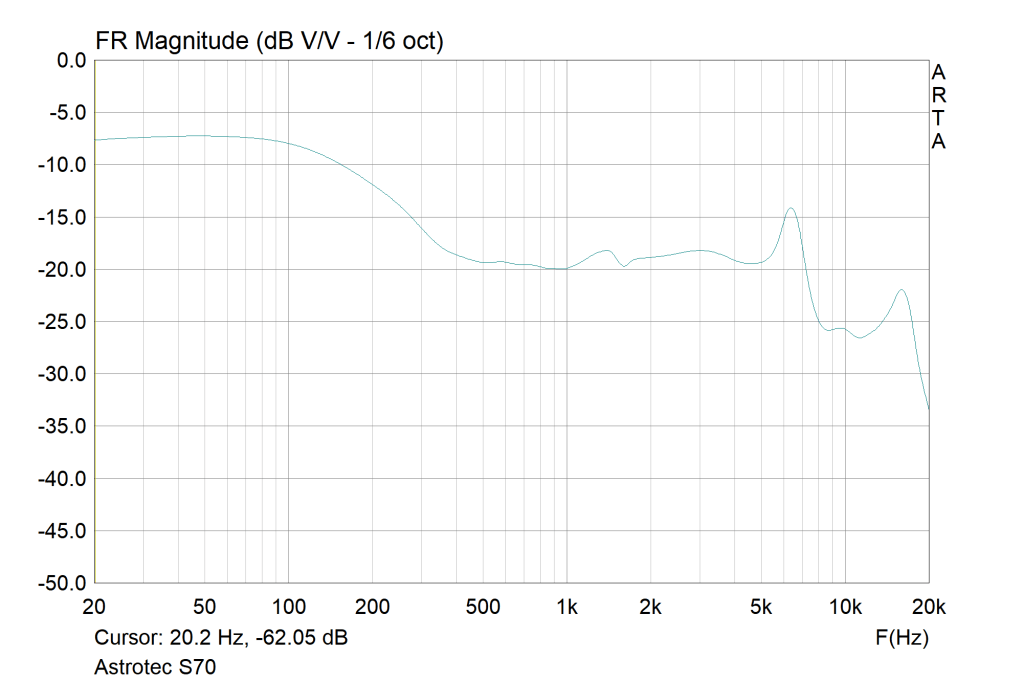
Testing Methodology: Measured using Arta via IEC 711 coupler to Startech external sound card. 7-9KHz peaks may be artefacts/emphasised due to my measurement setup, less so with deep fit. Measurements besides channel balance are volume matched at 1KHz. Fit depth normalised to my best abilities to reduce coupler resonance. Still, due to these factors, my measurements may not accurately reflect the earphone or measurements taken by others. I gave the S70 100hrs of burn-in to ensure maximum performance prior to subjective breakdown.
Tonality –
The S70 provides a meaty, bass forward tuning set to a smaller lower-treble emphasis, assuming a sizeable V-shaped character. Its low-end is defined by a large shelf extending linearly from the sub through to mid-bass before dropping off quickly through the upper-bass into the lower-midrange. In turn, it isn’t an overly warm or stuffy sound but bass does sit very forward in the mix. While the midrange too is mostly naturally voiced and not exceedingly tubby or congested, a lack of any pinna gain also makes it very recessed/laid-back. The lower-treble bump reintroduces openness and clarity into its sound, a common tuning decision. Altogether, the S70 doesn’t strike as a strange sound, but it is a heavily coloured and bass-forward one. I will note as well that driver control improves slightly with ANC off and there is no impact on the tonality in any setting. Comments below will be with ANC off.
Bass –
The low-end is the most prominent part of the mix but has a respectable voicing with no huge faults. Despite the mid and sub-bass sitting in relative parity, sub-bass does roll off which is to be expected from many micro-driver IEMs. Accordingly, it doesn’t provide hugely authoritative slam or pressure, but a good amount of weight nonetheless. The mid-bass tends to draw more focus meaning this earphone is full, punchy and medium warm. Its notes come across as thick and heavy rather than rounded and tubby as the sub-bass has been lifted in fairly equal proportion to mid-bass despite the roll off. Similarly, as it tapers off sharply in the upper-bass, decent tonal cleanliness is maintained.
Driver quality performs at an average level but in the same vein, isn’t a bad performer at a below average price. Attack isn’t super concise which, combined with the mediocre extension means you don’t get an especially satisfying slam. Decay isn’t especially quick either leading to a low-end that is thumpy but not especially responsive and articulate. Control remains admirable, retaining firmly good note definition and ensuring this isn’t a one-note bass lacking texture. There is definitely some detail here to be enjoyed, just don’t expect balance nor huge dynamics and control. Altogether, a pleasantly textured mid-bass and a bold, weighted presentation that does well in loud environments.
Midrange –
With minimal lower-mid attenuation, rather, a lack of midrange presence to separate it from the bass, don’t expect the cleanest, clearest voicing here. Conversely, this isn’t quite as congested as I’d have thought by looking at the measurements alone. However, the S70 is certainly very full-bodied and lacking separation resulting in a rather stuffy and veiled presentation. Male vocals especially often sound ill-defined and overly filled-out. However, female vocals uphold ample clarity, and the lack of upper-midrange presence means the boost in articulation doesn’t manifest in the form of intensity nor sibilance. It goes without saying that this is a recessed and laid-back midrange, meaning those valuing vocal performance and intimacy won’t be sated.
With that said, though the midrange does sit notably behind the treble and especially the bass, vocals uphold a natural voicing with no huge oddities besides the bloated body on certain male vocals. The tonality also isn’t exceedingly warm which I find is mostly common on earphones with a more isolated mid-bass or upper-bass emphasis. I do think this helps to retain an enjoyable experience here as any additional warmth would have pushed this earphone to more overt congestion. If you do enjoy bass, or don’t mind cranking the volume higher than usual, then the voicing on display can be enjoyed.
Highs –
I certainly wouldn’t expect a $50 ANC earphone to blow me away and the S70 performs accordingly. The top-end is defined by a medium 6k peak that sits in front of the midrange but behind the bass. In turn, it doesn’t come across as a remotely bright or sharp sound whilst rewarding the listener with an uptick of clarity and crispness. The transient response is not the sharpest here and notes aren’t especially well-defined as a result. Note attack is soft which does reduce fatigue and sharpness but results in a rather middling detail retrieval. Separating ability in the lower treble is quite good and notes are moderately textured but do lose out on body due to the isolated peak.
Otherwise, treble is fairly unremarkable, and extension is clearly limited by codec support. You don’t get much headroom or expansion nor any air or background/micro-detail. The Be-plated S80 was a clearly better performer in this regard and in my opinion, Astrotec’s best sounding monitor both technically and tonally. That said, this came at almost twice the price and with a sharper tuning that some may not consider as suited for listening at high volumes in loud environments. Conversely, I find the S70 no worse here than the S80 Plus before it, and the tuning is more appealing than that model to my ears too. The presentation is altogether pleasantly crisp yet completely inoffensive.
Soundstage –
The S70 has minimal soundstage and is very much an in the head experience regarding both width and depth. It has a diffuse centre image, tending to push laterally due to its lack of midrange presence and focus. Imaging is average and the treble bump does help to draw focus to directional cues. That said, don’t expect much layering or the sharpest sense of direction here. Separation also performs at a low level due to the thick, bass heavy tuning and lack of expansion. Again, the treble does help to cut through the mix and it isn’t an overtly congested sound. But this is surely a structured, weighted approach to sound tuning that doesn’t highlight the minutiae.
Comparisons –
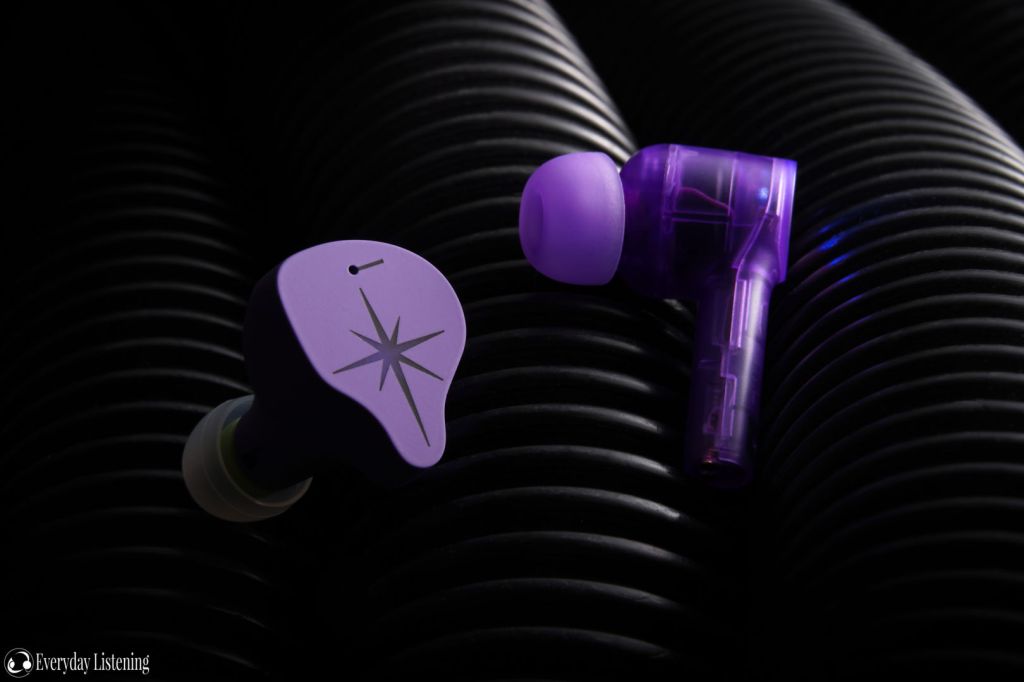
Astrotec S80 Plus ($59): The S80 Plus is a small, pod-style earphone but lacks the same call quality and lifestyle features. It has a slightly more balanced tuning with greater midrange presence and better separation. Its bass is faster, punchier and has better separation while the S70 has more weight and slam and less warmth. The midrange is similar, the S70 is fuller and more recessed, the S80 Plus is more present, clearer but warmer, neither being especially clean. The S70 does improve upon the treble performance. The S80 Plus is smoother here and this makes it sound more closed in. The S70 has a crisper and more focused detail presentation which aids clarity overall.
Lypertek Soundfree S20 ($69): The S20 is a larger earphone, and its aware mode and mic quality are much worse. It lacks ANC but is more passively isolating and has an IP rating. It is also bassy but has a more present, natural midrange. Its bass boost falls off quicker, and it has better driver control with higher note definition, being more dynamic. The S70 is thicker but with softer attack. The midrange is much more recessed on the S70, the S20 being much cleaner, clearer and more balanced. The treble is crisper on the S70 but the transient response is sharper, giving it more bite and detail retrieval. The S20 overall is more energetic, a little warmer in the mids but a much more versatile sound.
Moondrop Sparks ($89): The Sparks is more ergonomically awkward and lacks ANC but is more passively isolating. It has longer battery life and an IP rating. The Sparks is instantly more balanced, assuming a slight W-shaped character. It has a cleaner bass with a smaller mid-bass emphasis. It extends better, is more controlled and more dynamic. The S70 is much bassier but not as tight and defined. The Sparks has a more present, natural midrange with far greater clarity and cleanliness. The S70 is far more recessed, fuller and smoother. The Sparks has a similar treble tuning, but a sharper transient response. It has more bite and detail retrieval. While the Sparks sounds much better in all regards, its fit means it may not suit all.
Preamble –
I have always had a good relationship with Astrotec and genuinely want to see them succeed given they’ve had some pretty underrated products in the past. However, the S70 comes across as having a rather confused identity. The company mentioned to me that their focus is shifting with regards to TWS products, targeting the regular consumer with regards to features and sound; that, unfortunately, high performance sound quality does not produce high sales volume. This leads to many becoming disillusioned with the vision they set out to achieve at their inception and sadly, sets a bad precedent for the small boutique business in audio.
This is clearly apparent when perusing Astrotec’s own TWS product progression. The S80 sounded great, far better than its successors, but was poorly formed in terms of ergonomics and usability – but I would argue a case could be made for it due to its sound performance. The S80 Plus took a step back in sound but appended ergonomics handily – again, you may justify the acceptable sound performance due to its compactness. The S70 is another step in this direction, though at this point, carries a sound tuning that will no longer appeals to enthusiasts and with technical performance that feels like an afterthought. However, it is their most ergonomically brilliant model yet, and delivers very impressive ANC and Ambient mode performance at a stunningly low price.
Verdict –
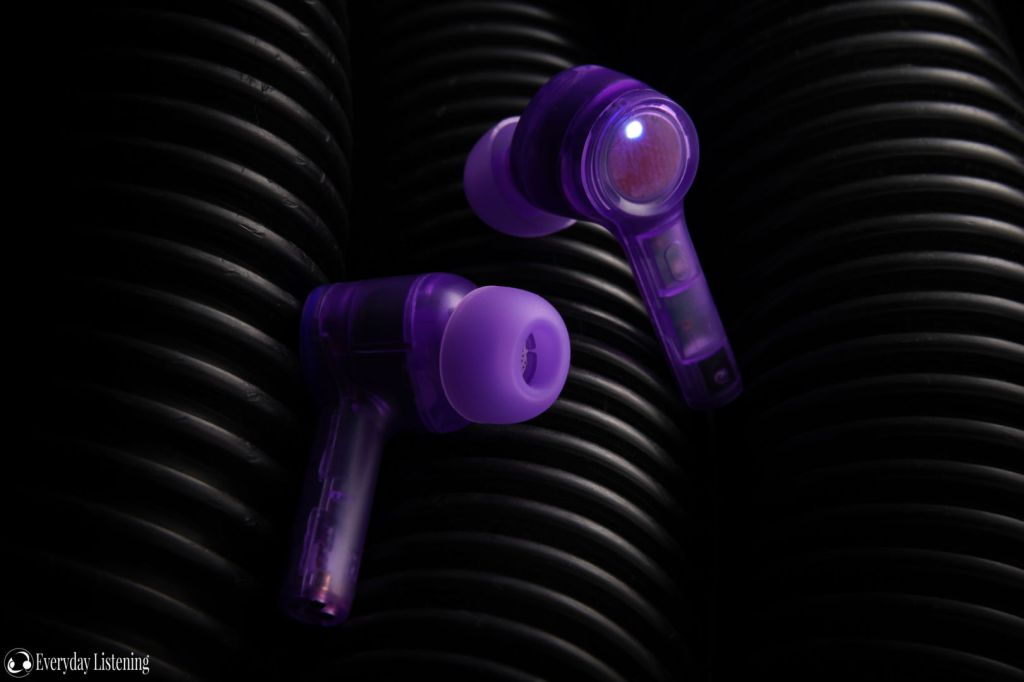
While some corners have been cut to hit such a low price point whilst retaining such sophisticated features, the overall build and design feel far more polished than before and better than its competitors too. With that said, I cannot recommend this earphone based on its audio performance as there are far more appealing models even within its economical price range. If outright sound quality isn’t your priority, the S70 is otherwise a well-formed package. For instance, no competitors match the S70 on comfort and none that I know of sport ANC and Ambient modes, yet alone such effective implementations. Ironically, the limited codec support and high latency mean the S70 is best suited for music over multi-media consumption yet its sound tuning is far more appropriate for movies and games. Returning to my initial thoughts, indeed the S70 has a confused identity and lacks a clear target demographic. Ultimately, Astrotec has created a great earphone to live with day to day but also one that is not especially enjoyable to listen to.
The S70 can be purchased from Astrotec and HiFiGO for $49 USD at the time of review. I am not affiliated with HifiGO or Astrotec and receive no earnings from purchases through this link.
Track List –
Billie Eilish – dont smile at me
Bob Seger – Night Moves
Courtney Barnett – Rae Street
Cream – Wheels of Fire
Dire Straits – Communique
Dirty Loops – Next To You
Eagles – Hotel California
Elton John – Honky Chateau
Fleetwood Mac – Rumours
H.E.R – I Used To Know Her
Jasen – BYE
John Mayer – Continuum
Kanye West – Ye
Missy Higgins – The Sound of White
Radiohead – OK Computer
TALA – ain’t leavin` without you
The Beatles – Abbey Road
The weeknd – After Hours
Vampire Weekend – Father of the Bride
Update from Astrotec –
Astrotec has since addressed complaints of poor sound quality on the S70 and have requested to have their stance made available publicly. In essence, the company reasoned that in order to have effective and comfortable ANC, the bass would have to be increased. Were they to produce an audio-focused model, the ANC performance would not have been up to par and, in the case of the S70, sound quality was sacrificed for an efficacious ANC implementation. Astrotec communicated to me that they are fully-capable of making a TWS earphone with great sound quality and are currently working to provide products along this line in future based on feedback from critics and the community.

Ryan Soo
Avid writer, passionate photographer and sleep-deprived medical student, Ryan has an ongoing desire to bring quality products to the regular reader.
 Everyday Listening