

Moondrop KATO review – Scion
Sound –


Testing Methodology: Measured using Arta via IEC 711 coupler to Startech external sound card. 7-9KHz peaks may be artefacts/emphasised due to my measurement setup, less so with a deep fit. Measurements besides channel balance are volume matched at 1KHz. Fit depth normalised to my best abilities to reduce coupler resonance. Still, due to these factors, my measurements may not accurately reflect the earphone or measurements taken by others. I gave the KATO 100hrs burn-in to ensure maximum performance prior to subjective breakdown.
Tonality –
Unsurprisingly, the KATO employs an incarnation of Moondrop’s VDSF tuning curve. According to their marketing material, it was designed to be less intense than that seen on the KXXS and, by extension, it represents a larger departure from the signature that was mostly upheld by the Starfield and Aria. Looking through my collection of measurements, the KATO is somewhat of a hybrid between these models and the Blessing 2, featuring a slightly taller 3kHz bump and a faster fall off through the 4-5kHz region. It also has a slightly more linear treble region than Moondrop’s former budget DD models.
As before, this isn’t the most extended and sparkly sound but one that showcases superb linearity and balance through the audible range below. The upper-mid area remains a touch forward but lacks excessive intensity, especially if you’re already acclimatized to Harman/VDSF target IEMs. The largest change is the jump to note definition permitted by a noticeably sharper transient response. Where the Aria represented a small technical bump over the Starfield, the KATO has immediately keener note attack than its predecessors, a persisting complaint with these earphones that has been best addressed here.
Tuning Nozzles

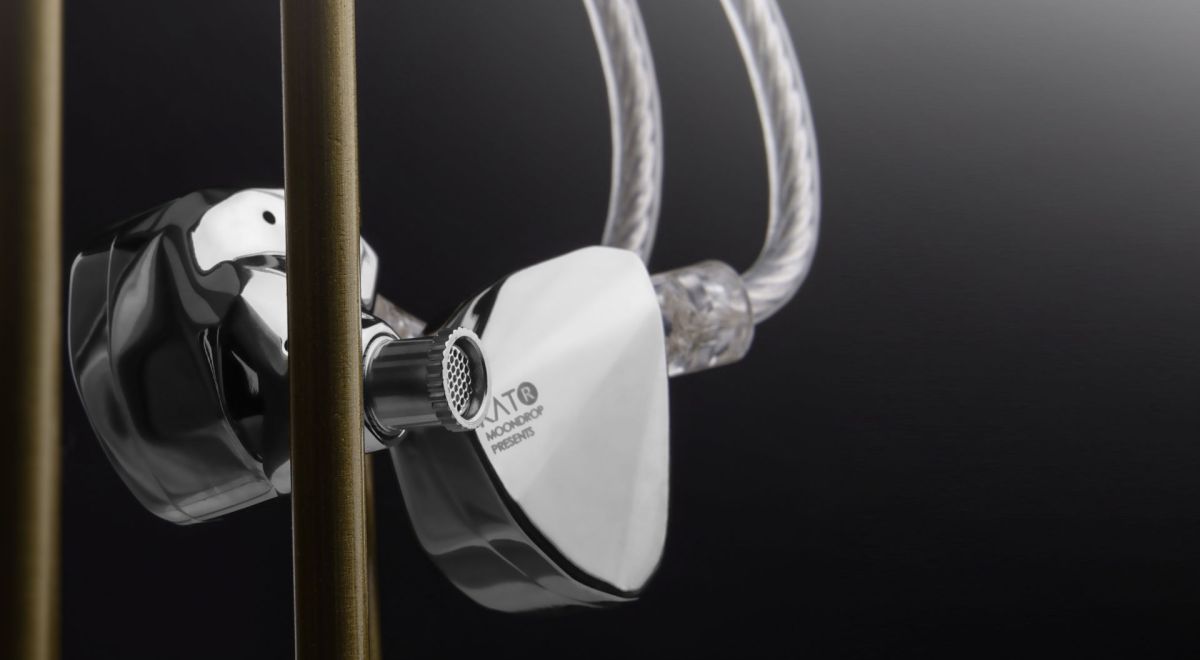
The KATO comes with two pairs of nozzles, the silver pair pre-installed out of the box and a pair of shorter gold/brass nozzles. I found the gold nozzles to provide a slightly brighter sound in both measurement and subjective listening. However, the changes are relatively specific with the bass and midrange being essentially unchanged and only treble sitting one step forward. The stock nozzles are clean, balanced and offer good coherence with a very light smooth character/vocal-forward. Conversely, the gold nozzles are slightly more articulate, offering one step of additional clarity and crispness in the treble. They have a bit more bite in the lower-treble and give highs greater energy and headroom. While I don’t find them to have much advantage on raw detail retrieval, it’s a tasteful level of enhancement that gives the Kato a more engaging character. Personally, I did enjoy the tonal balance of the silver nozzles and will use these for the following review. That said, I do feel that the gold nozzles are a very viable tuning option that many listeners will enjoy.
Ear tips
As Moondrop is now offering the Sping Tips for separate purchase, it calls to question exactly what these tips are doing for the sound. It felt most appropriate to compare with the stock Moondrop tips that came with the Aria and Starfield. The Spring Tips offered a denser and smoother top-end and a slightly harder-hitting sub-bass. Midrange changes are mostly a result of colouration in neighbouring frequency ranges. Meanwhile, the generic Moondrop tips provide a slightly fuller mid-bass and a brighter top-end, giving the impression of a thinner, slightly more revealing sound. Overall, I did prefer the Spring tips on the KATO as they provided a more coherent and even-handed presentation. Conversely, on the Aria, the Spring Tips appeared to tone down the bass, perhaps as its sub-bass sits further back and isn’t as deeply extended as on the KATO. Though the midrange and highs were a touch smoother, the sound became thinner overall which was not to my liking. If you prefer a cleaner sound, these are a good low-cost option to explore at just $12.99 or 3 pairs.
Bass –
This was the area where I felt the Starfield fell behind and while the Aria did a good job at enhancing control and separation, it still wasn’t a highlight of that earphone by any means. The KATO changes this quite substantially. Tonally, it returns to the mild sub-bass focus observed on the Starfield with a slight emphasis continuing into the mid-bass before an upper-bass/lower-mid nadir for midrange separation and cleanliness. The result is a light warm bass with minimal fuzz, bloat or bloom and a dynamic character. This is made more apparent by the KATO’s immediately improved extension and sub-bass tightness relative to its predecessors. The KATO has real power behind its movements, its presentation is weighted, hard-hitting and rumble is both physical and clearly defined – far more so than on previous models despite no additional emphasis.
The improvements to driver quality and control mean the KATO sounds substantially different from the Starfield despite the tonal similarities. Its far keener note attack and quicker decay permit a more palpable slam and pressurisation alongside a sizeable jump in note definition and separation. To further contextualise these comments, I would now consider the KATO to be one of the better performers in the $200 price range, and this is augmented by the tasteful sub-bass boosted tuning. It means you now get the best of both worlds, great slam and impact properties alongside a pleasantly textured and responsive mid-bass. Moreover, both are achieved without the smear of the Starfield or the reduced slam of the Aria. The KATO represents a great step forward in dynamics, control and overall detail-retrieval that bring out the best in its similarly refined and likeable tonality.
Mids –
If you’re familiar with the Aria and Starfield, you know exactly what to expect here. While the KATO makes small refinements, its presentation upholds a very similar character. Still, this is to be seen as a positive as these earphones were standouts in terms of balance, refinement and timbral accuracy. The KATO maintains the same strengths, possessing a neutral tone and note size alongside a highly natural voicing while introducing a slightly more articulate nature on top. Those that considered the previous models intense will be delighted to hear that the 4-5kHz region has been slightly smoothed off and that, similarly, the treble is slightly more even and progressive. However, there is a dB more pinna gain which means some may still consider it a touch vocal-forward and on the revealing side – though I didn’t personally find this to be the case. I don’t have a lot to say about the KATO’s midrange as it’s simply a very solid performer that leaves little room for complaint.

From a resolution standpoint, it is once again performing above average in-class and the perception of small details is enhanced by the clean tuning that maximises separation. The voicing is natural and even-handed, vocals are well-sized without skewing overly lean. The tonality is clean, and separation is excellent, aided by the more defined note structure achieved by the improved driver and surrounding acoustics. The chief colouration I can observe is that the KATO is a little more articulate than before. However, it is hardly overly so, leaving a clear and well-resolved image that is never raspy or remotely sibilant. This is surely still not a sound that appeals to those wanting an especially rich or smooth sound, but a clean and nicely resolving one. If you’re looking for a natural midrange with a hint of vocal focus, the KATO remains a standout even at its elevated price point.
Highs –
The Aria provided a subtle lower-treble bump over the Starfield and here, we once again see the KATO skew more towards the latter in terms of tonality. That means you get a smoothly transitioning, linear lower and middle-treble equating to a well-bodied and immensely refined presentation. At the same time, the KATO upholds solid headroom and air above. The Aria provides greater energy and crispness in the lower-treble albeit at the cost of a thinner, more brittle note presentation. The KATO has a more accurate body and simply sounds more natural and wholly resolved. I do find it to carry a very slight smooth character in the lower treble however, like the bass, notes have a far more defined leading edge. This means though the tuning is smoother, the KATO is no less defined, boasting a large jump in texture and body alongside greater fine detail retrieval and separation.
For those craving a more energetic top end, the gold nozzles also provide an avenue for greater clarity. If not, the silver nozzles, to my ears, offered a superlative balance between timbral accuracy, articulation and treble clarity. Above, the KATO has a mostly neutral mid-treble presence that gives it a pleasant amount of air without introducing any intensity or glare. I find this helps to imbue a more natural sense of shimmer and decay that darker earphones lack. Otherwise, extension and resolution perform on an average level. There are better performers around this price most with regards to raw treble extension especially, however, once again the KATO’s strength lies in its tonal refinement and balance. To these ends, I find the KATO a highly inspiring earphone.
Soundstage –
I find the KATO to provide a good jump in spaciousness coming from the Aria and Starfield in all regards. Swapping between them, you can immediately notice a sharper and more complex stage. Amongst similarly priced competitors, the KATO provides a well-proportioned stage with well above-average stage dimensions. It can extend beyond the head in both axes. Imaging has been a highlight of Moondrop’s in-ears that benefit from accurate distance portrayal and positioning due to their even-handed tuning. The KATO is no different, vocal and instruments are well-separated and occupy their rightful positions.

Background and foreground layers aren’t hyper-separated but there are many layers and each is nicely delineated. Localisation is sharp despite the smoother treble and the KATO is able to portray distance nicely as its signature doesn’t skew too bright or forward. Separation is the standout, these earphones are clean and note definition is solid. Small details are easy to discern as a result meaning though they aren’t the most technical in-class, they take the most advantage of what they have.
Driveability –
With a moderate 32 ohm impedance and a high 123 dB sensitivity, the KATO is slightly less efficient than many competitors but hardly difficult to drive in any regard. Some may consider this a plus as it leaves plenty of volume headroom, even from portable sources, whilst still offering solid source noise resistance.
Output Impedance Sensitivity
Given that the KATO is a single dynamic driver design, one would not expect much source interaction from a tonality point of view. This was indeed my experience as, comparing between the Shanling M2X (1 ohm) and the Hiby R6 (10 ohms), revealed a minimal shift in tonality beyond colouration inherent to the sources. While you would theoretically want to keep the output impedance below 4 ohms going by the 1/8th rule for optimal driver control, you can happily enjoy Moondrop’s legendary tuning from a wide range of sources.
Driving Power
The KATO does benefit from a bit more juice that said, it scales nicely with a dedicated source. A desktop amp isn’t necessary but a more powerful dongle such as the Cayin RU6 and Hidizs S9 Pro delivered a noticeable bump in dynamics and stage dimensions relative to my smartphone’s integrated headphone out. In terms of volume, all were more than sufficient for my preferences and source noise also isn’t a problem as, with the amp circuit active on volume 0 using the M2X, zero background noise was audible.
Suggested Pair Ups
The benefit to a simple driver setup is that is also simplifies source pairings, and this is all the more the case due to the KATO’s balanced sound tuning. It is efficient enough to run from most portable sources and scales nicely up to the level of a higher-end dongle or low-midrange DAP. At the same time, huge driving power isn’t required and it isn’t too sensitive to source noise. Colouration comes through quite clearly due to the more tonally neutral nature of the KATO. It is both smooth enough to tolerate a bright/revealing source and clean enough to benefit from greater warmth. I will suggest users match according to personal preference as a result.

Ryan Soo
Avid writer, passionate photographer and sleep-deprived medical student, Ryan has an ongoing desire to bring quality products to the regular reader.
 Everyday Listening
dude…your site is absolutely fantasy level in its look. You did such a great job with the pictures and you really put in great work with the reviews. You should be honored seriously!
LikeLike
Hey,
Thanks so much for the kind words! It has not always been this way, so I’m glad the website has come to a state where I’m receiving compliments like this. Made my day 🙂
Warm regards,
Ryan.
LikeLike