

Shokz OpenRun Pro 2 Review – Liberation
Usability –
Connectivity
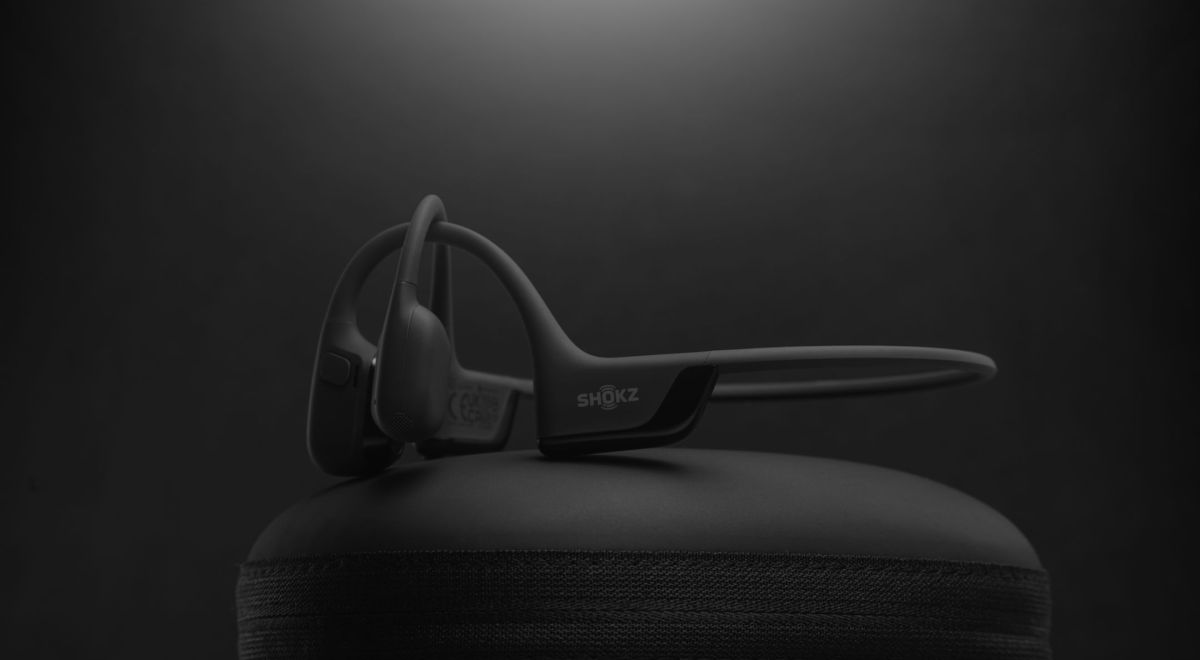
Usage is just as simple as on previous models and operates more like a headphone as opposed to a TWS in-ear as they lack a charging case. I believe this streamlines the experience as you don’t have to worry about the earphones not turning off or missing a charge if not fully seated in the case. Power is controlled by holding the volume up button, accompanied by haptic feedback and an audio chime. Holding for an additional 2 seconds will enter pairing mode with a voice prompt. They sport BT 5.3 but not high bitrate codecs, just regular SBC. Given the sound quality ceiling and intended use case for sports, this wasn’t a bottleneck in my testing. I found the range was very good and the connection was stable even in crowded areas with lots of interference, no artifacts were notable. Latency is typical of a BT headphone with some lip-sync issues noticeable when watching videos. It isn’t unbearable but apparent. Multipoint connectivity can be enabled from the accompanying app and you can also choose to turn it off if it becomes obtrusive.
Controls and Charging
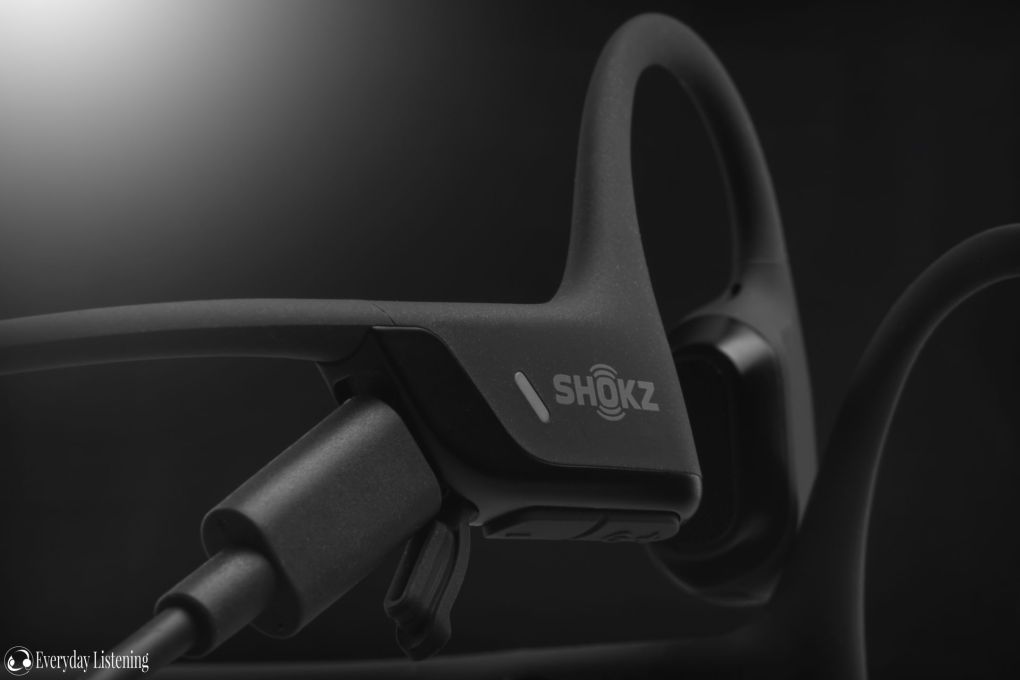
The right side houses the volume rocker/power button and a type-C charging port covered by a silicone cover enabling IP55 weather resistance. They can’t be fully submerged like the OpenSwim Pro, but are protected from dust and can be rinsed with low-pressure water. Accordingly, they’re more than up to the task for sweat and a gentle rinse after exercise for cleaning. While I do like the magnetic charger on the regular Pro, the adoption of a ubiquitous type-C port is undoubtedly more convenient. I didn’t find the rubber cover too obtrusive either, it feels more robust than most with a thicker articulation area less prone to breakage.
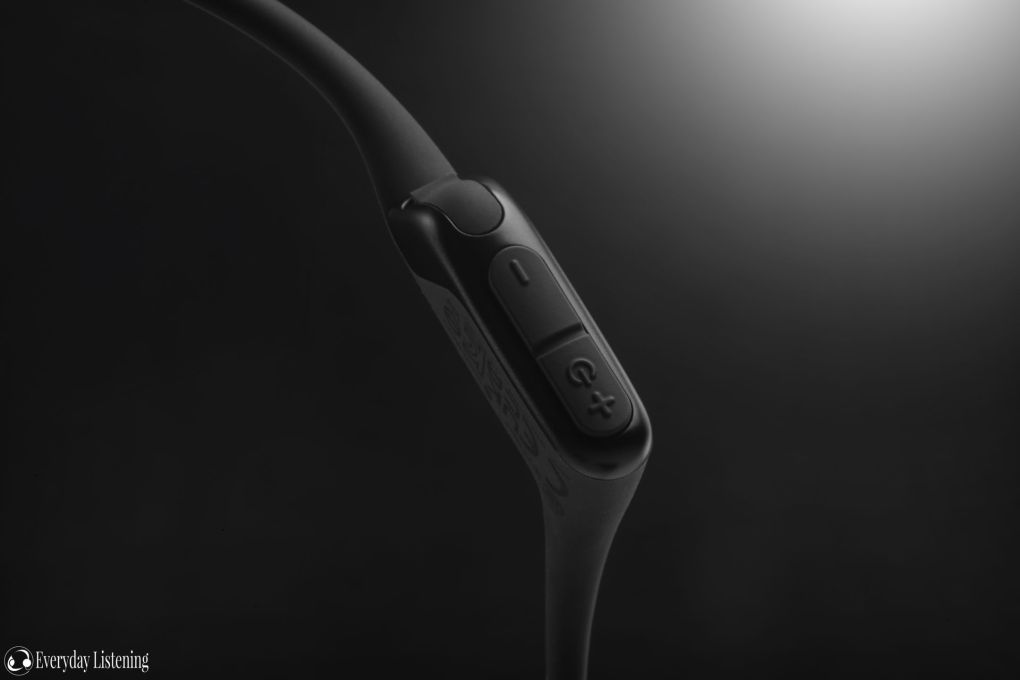
The left earpiece contains the MFB responsible for playback controls and smart assistant activation. It’s a convenient location as pressing the button doesn’t upset the fit or listening experience at all, an upside to the bone conduction form factor that sits on the TMJ instead of within the ear. Of note, the buttons are larger than those on the Pro 1 which is a huge help when wearing gloves. Separating the sides makes differentiating controls much easier, I rarely found myself missing a click even when riding at speed.
Call Quality
The outer face and top have been chosen to place the cutouts for the dual noise canceling microphones as they are low wind noise areas. Shokz has implemented an AI noise reduction algorithm designed to reduce background sounds for clear calling in loud areas. In quiet areas, recipients noted I was defined but slightly muffled relative to top performers. Most in-ears with stems have an advantage in this regard simply as the mics can be placed closer to the mouth.
When out and about background noise cancellation works about as well as most high-end competitors. Cycling at lower speeds under 20km/hr, recipients noted I was always audible with minimal wind noise if a bit choppy at times. They were similarly suitable for calls during running, especially at a slower zone 2 pace. At any higher speeds, the mics really struggle to overcome the noise albeit this is an environment that no headset will perform well in.
With that said, I wouldn’t recommend the OpenRun Pro 2 as a headset if you mostly call in louder environments. I enjoy the open-ear aspect greatly when talking with no pounding reverberations within the head as with sealed form factors. However, though clear to the recipient, I found the volume to be extremely low when in calls. I can only attribute this to the dual-driver array. The lack of bass during calls means the air conduction drivers aren’t contributing as much, with the BCD’s doing the heavy lifting, reducing overall volume. Hopefully, this is something that can be addressed with a later firmware update.
Battery life & Volume
Shokz promises 12 hours of listening time and quick charging permitting 2.5 hours of listening in 5 minutes. I found their estimations to be quite accurate. I suspect most listeners will be using the OpenRun Pro 2 at near maximum volume as the ceiling is quite low relative to other form factors. Doing so will understandably reduce run times. As a note on max volume, I am usually a very low-volume listener and rarely exceed 30-40% of the volume range. I was able to listen at full volume comfortably with my preferred range being in the 60-70% range leaving some headroom for louder environments. The overall volume output is similar to the OpenRun Pro. While the headphones are designed to promote spatial awareness, I can see some users wanting for more volume.
App Integration
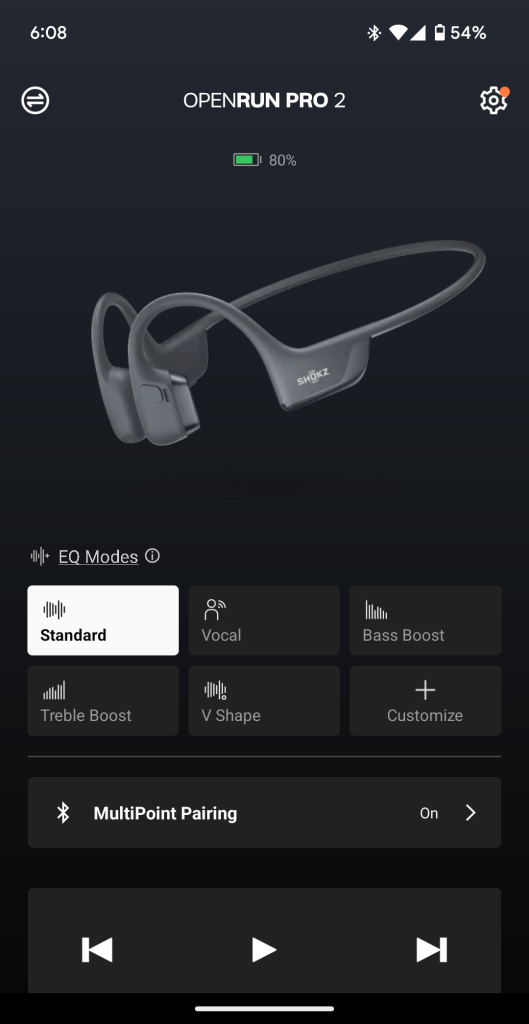
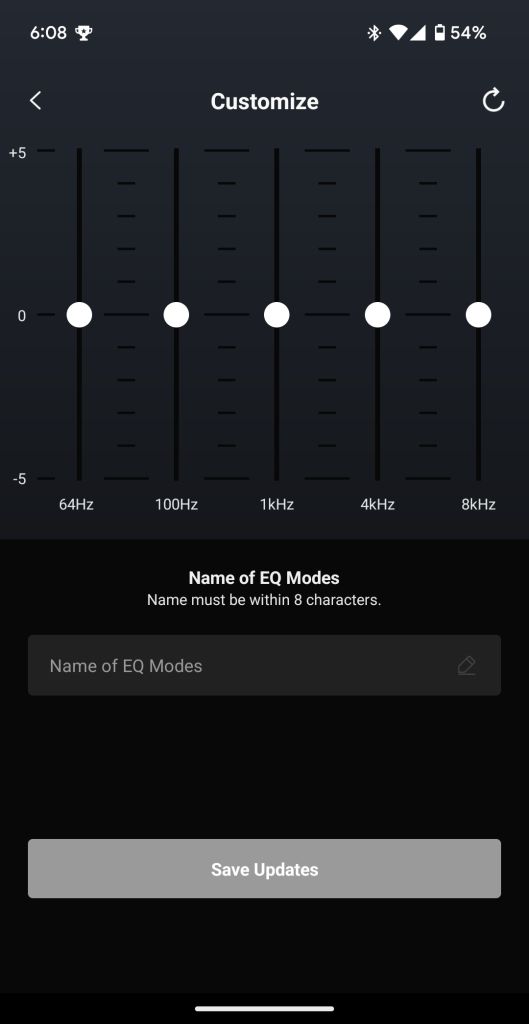
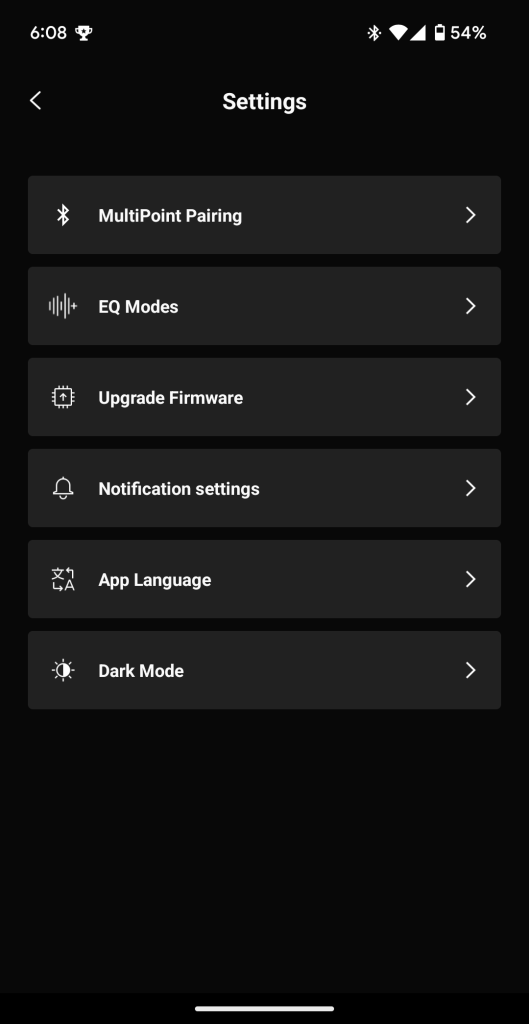
The companion app is easy to use and effective. It connects quickly to the earphones and has a clear, simple UI. There are 4 eQ presents – standard, bass boost, vocal boost, treble boost. All work well and effectively. In addition, Shokz permits up to 2 user-configured eQ profiles that offer 6dB of adjustment over 5 bands. The included presets offer a much larger effect on the sound than the user defined eQ. Treble boost I found the most useful for boosting voices and the effect of the BCD while bass boost sounds very boomy in quiet environments but more balanced in the presence of ambient noise.

Ryan Soo
Avid writer, passionate photographer and sleep-deprived medical student, Ryan has an ongoing desire to bring quality products to the regular reader.
 Everyday Listening
nice 👍. I just bought a pair
LikeLike