

Shokz OpenRun Pro 2 Review – Liberation
Pros –
Effortless comfort, Excellent fit stability, Intuitive controls, Low wind noise, Best in class sound quality, Excellent battery life
Cons –
Sound quality still bested by other form factors, Low call volume, Less BCD contribution, More sound leakage than in-ears and the OpenRun Pro 1
Verdict –
The OpenRun 2 is an evolutionary change over its predecessor and offers best-in-class sound quality both in quiet and loud environments.
About Shokz –
Shokz is an American consumer audio brand focusing on open-ear technology, a space within which the brand holds over 4,300 patents. As opposed to sound isolating in ear and over-ear designs, Shokz’ designs don’t obscure the ear canal in any way. This has made them among the top choices for athletes and consumers wanting to enjoy music yet without any loss to spatial awareness. The company has achieved renown for their bone-conduction and air-conduction models. Recently, they have combined the two in a world’s first on their latest flagship model.
Introduction –
Long before I was a self-proclaimed audiophile, I picked up a love for running and cycling. Through these passions, I became very critical of my devices as both are incredibly challenging environments for music listening. For instance, both require stability yet also long-term comfort. There are also scenarios where one may want either isolation or openness. In addition, in-ear designs are prone to pressure changes such as footstep noise, yet vented designs can experience huge issues with wind noise at speed. The onset of TWS models with ANC and aware modes drastically improved practicality yet at the expense of either fit stability or comfort.
I had mostly given up on having music during my cardio until Shokz (then known as Aftershokz) came along with one of the first bone-conduction headphones on the market. They fit comfortably and were stable during activity, compact enough to slide under glasses or a helmet, and offered perfect spatial awareness. This, unfortunately, came at the expense of sound quality as the technology was unable to produce any form of bass frequencies. While Shokz made progressive improvements to the range offered by its headphones, none glimpsed that offered by canal buds. The OpenRun Pro 2 seeks to offer the best of both worlds implementing both air and bone conduction technology in the same beloved form factor.
The OpenRun Pro 2 is available for $319 AUD. You can read all about it and treat yourself to a unit on Shokz.
Disclaimer –
I would like to thank Shokz very much for their quick communication and for organising a review of the OpenRun Pro 2. All words are my own and there is no monetary incentive for a positive review. Despite receiving the headphones free of cost, I will attempt to be as objective as possible in my evaluation.
Contents –
- Page 1: Intro, Unboxing, Design
- Page 2: Usability & App
- Page 3: Sound Breakdown
- Page 4: Comparisons & Verdict
Behind the Design –
DualPitch
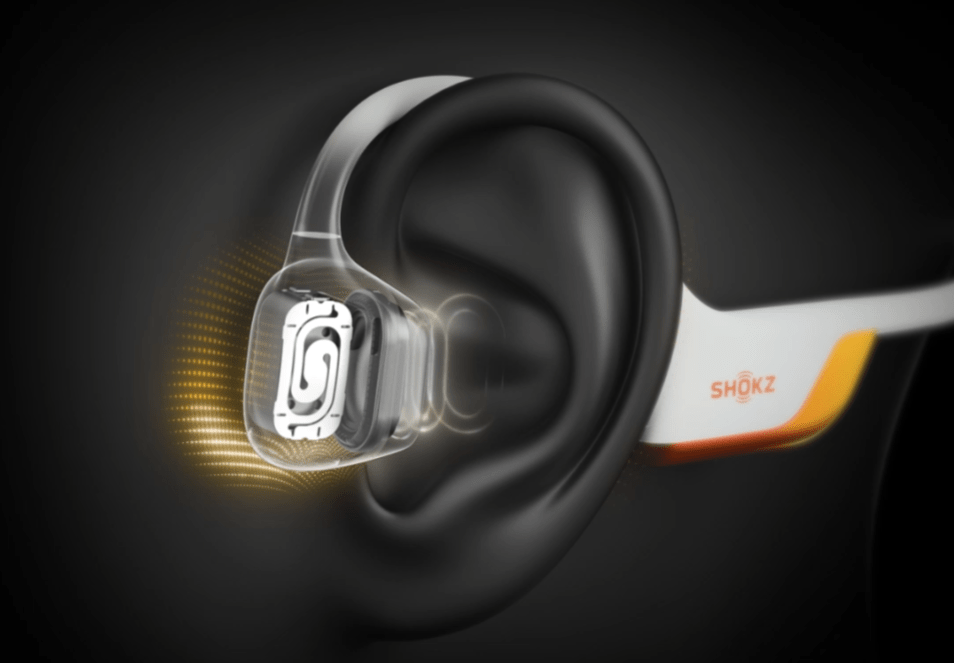
The OpenRun Pro 2 is a hybrid dual-driver design. Covering the mids and highs is a new-generation bone conduction driver featuring dual reeds and voice coils for a more detailed listening experience. Bass is now handled by an air conduction dynamic driver measuring a huge 18x11mm. The woofer has a featherlight dome-shaped diaphragm which offers lower distortion at high volumes and a polymer surround increasing excursion for controlled bass reproduction. As the BCD no longer handles bass, Shokz also promises less vibration which some users found uncomfortable on previous models.
Reduced Sound Leakage
BCD headphones have been lauded for their low sound leakage, Shokz promises to retain this despite the addition of air conduction with DirectPitch. This technology makes the sound output more directional and therefore, less likely to be heard by others.
DSP
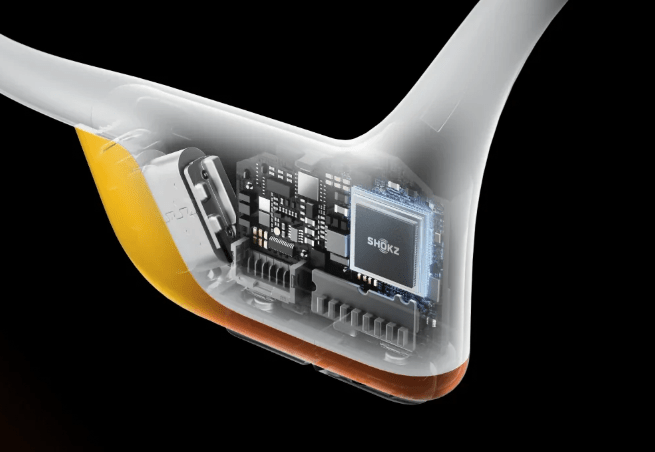
In addition to upgraded audio hardware, so too have the electronics been updated to suit. The OpenRun 2 uses a custom DSP chip that handles the crossover of frequencies between the two drivers. They also have DRC (dynamic range compression) to prevent clipping and distortion at high volumes. App integration enables 4 eQ modes in addition to two user-customizable eQ profiles.
Unboxing –
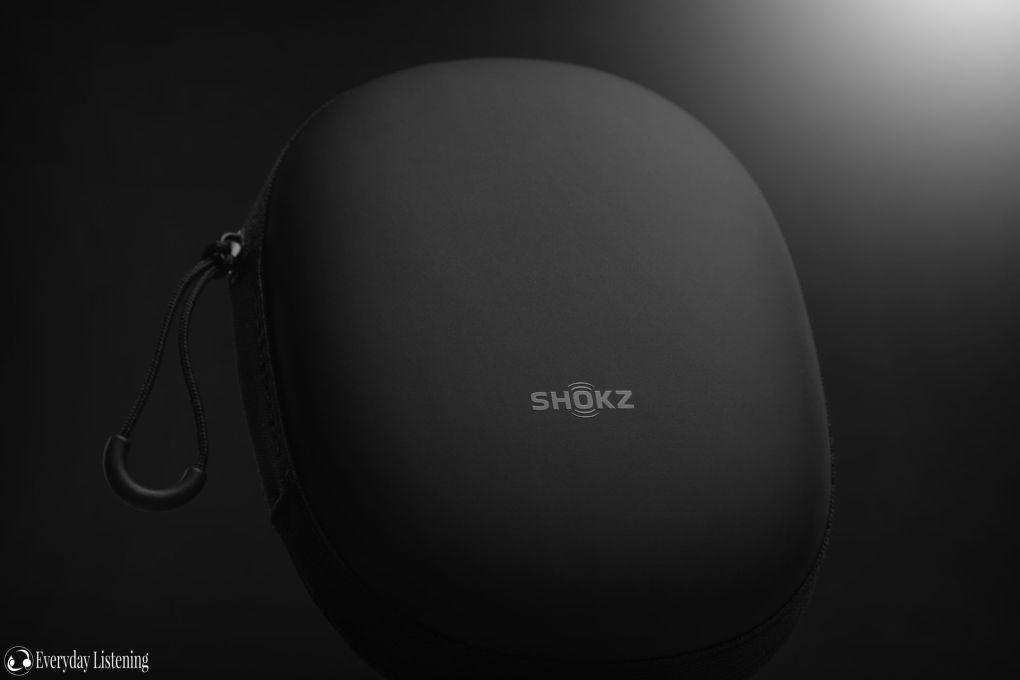
The unboxing experience is very minimal and similar to other consumer audio brands. They come in a recycled cardboard box with a graphic sleeve on top. Opening the box reveals the carrying case with papers and warranty card just below. The case contains the earphones and a type-C charging cable. It’s a relatively large unit that accommodates the entire neckband form factor of the OpenRun Pro 2’s. Notably, the case is wider than that included with the OpenRun Pro which permits an additional pocket in the centre that holds a type-C charging cable and other accessories you may want to carry too. The case is zippered with a hard skeleton, a non-scratch felt internal liner and a rubber inlet that snugly holds the headphones to reduce scratches during transit. The OpenRun Pro 2 comes in two sizes, regular and mini which only affects the size of the neckband. Shokz has a video on their website showcasing how to choose which size is for you.
Design –
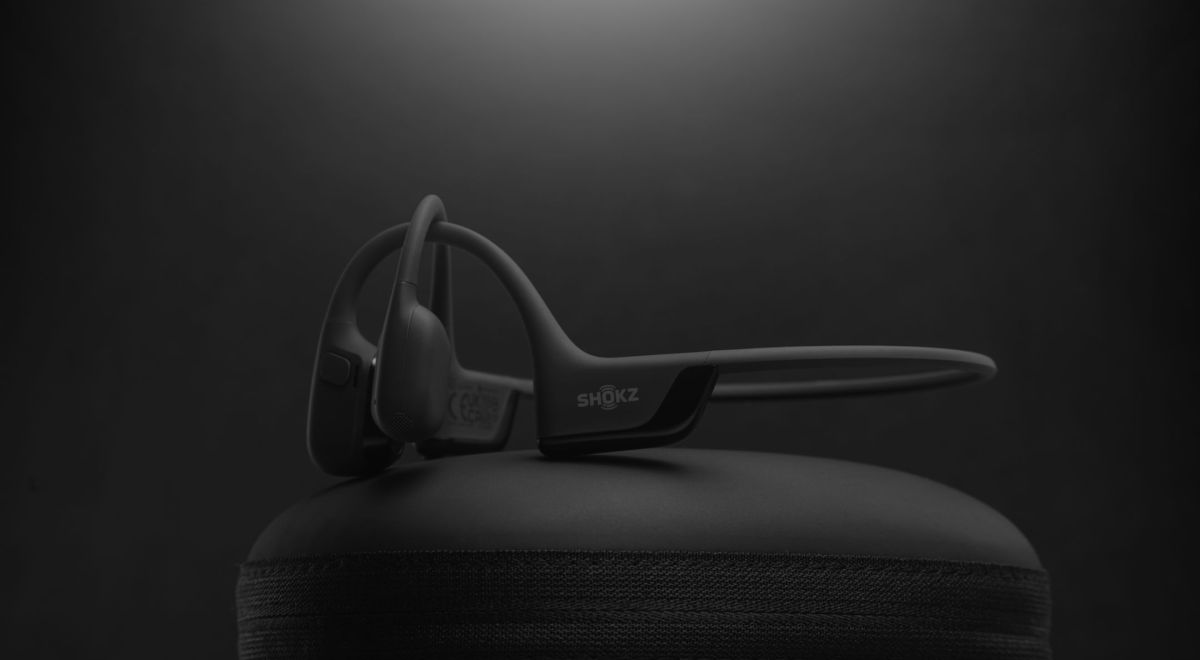
The OpenRun Pro 2 showcases a sleek take on the neckband open-ear form factor adopted by the majority of sports-focused models. The earpieces lie at the front, melding seamlessly into the ear hooks, control module/battery block, and neckband at the rear. Complications such as metallic accents on the modules and rear-facing air-conduction driver grills grant a more up-market aesthetic over competitors and reinforce key areas designed to be rigid. I also admire the visual integration of the two driver types in the design; the air conduction drivers look right at home despite merging two drastically different technologies forming a packing no less svelte than the 1st generation model.
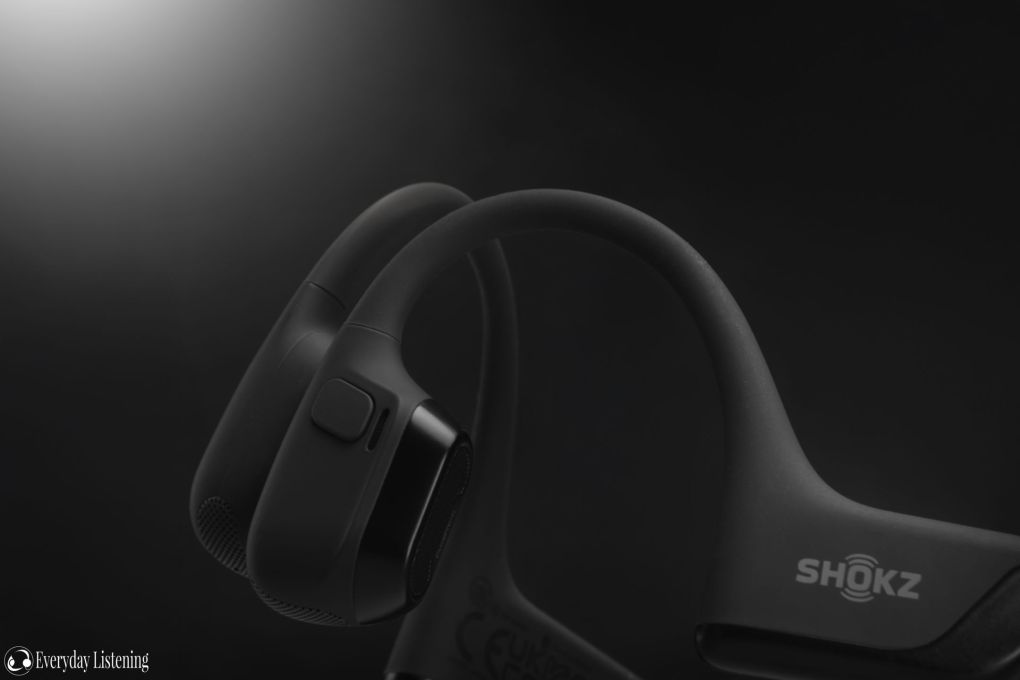
Each earpiece houses two vents for the air conduction driver, given the size of them I’d presume they’re moving serious air. The broad exterior is coated in a soft moisture-resistant silicone that I’m told houses a nickel-titanium alloy internal skeleton. Indeed, the OpenRun 2 is incredibly lightweight and springs back to shape religiously. Overall, Shokz delivers a coherent, lightweight, and perfectly adapted form factor for its intended use case. I can see why the brand has stuck to the same core tenets with its designs and why so many competitors have come to adopt the same too. From experience also, so long as you clean them after use, the silicone does hold up well to use without becoming too tacky or stretching loose from the frame.
Fit & Isolation –
The OpenRun Pro 2 comes in at 30.3g which is almost identical to the 29g of the Pro 1. In turn, so too does the fit feel very familiar. The earpieces are slightly bigger but besides this, I don’t feel there’s a substantial difference in the overall ergonomics. This is a good thing for I found the original model to be very well-considered for all-day comfort and stability. This mostly comes down to the combination of a broad surface area of contact over the skull and a very lightweight neckband spring.
With weight balanced evenly between the earpieces and battery/control modules, the headphones achieve even distribution over the outer ear that prevents tipping and promotes a stable listening position. Clamp force is said to be down 16% also albeit this was never an issue for me personally; I suspect this was mostly intended to lower the amount of buzz felt from the BCD’s. While I still find I sweat a little in front of my ears, the open-ear form factor is far more forgiving than any in-ear or over-ear design in this sense.
They are also incredibly low profile meaning wind noise is a non-issue yet despite this, I didn’t find the OpenRun Pro 2 to be a good companion for bedtime use and sleep due mostly to the neckband design. Perhaps I would have had better luck with the mini model (I chose regular based on Shokz instructional video) as when lying flat or on the side, even tucking the headband down until it was flush on my neck, the pressure on the band would cause uneven sound output on one of the earpieces.
Besides this, comfort was mostly flawless to the extent that you can truly forget you’re wearing them. I didn’t experience any hotspot formation even during wear with a helmet and glasses – I wear them under the glasses while some prefer above. They also felt stable while riding at speed so I was never concerned about losing them. When not listening they can be worn conveniently around the neck but given the open-ear form factor, I never felt the need to remove them when having a conversation.
By design, these have zero noise isolation and don’t obscure the ear canal in any way. Spatial awareness is perfect as a result. The fit will take acclimatization if this is your first neckband headphone. They don’t sit as snugly and firmly as an in-ear, and you can adjust the angle of the drivers by tipping the neckband which affects the air conduction output. I find it best to let the earphones find their balance point, you can open your jaw once or twice to get the earpieces to sit stably. After, they will be stable and provide the most consistent sound output.

Ryan Soo
Avid writer, passionate photographer and sleep-deprived medical student, Ryan has an ongoing desire to bring quality products to the regular reader.
 Everyday Listening
nice 👍. I just bought a pair
LikeLike