

Shokz OpenRun Pro 2 Review – Liberation
Sound –
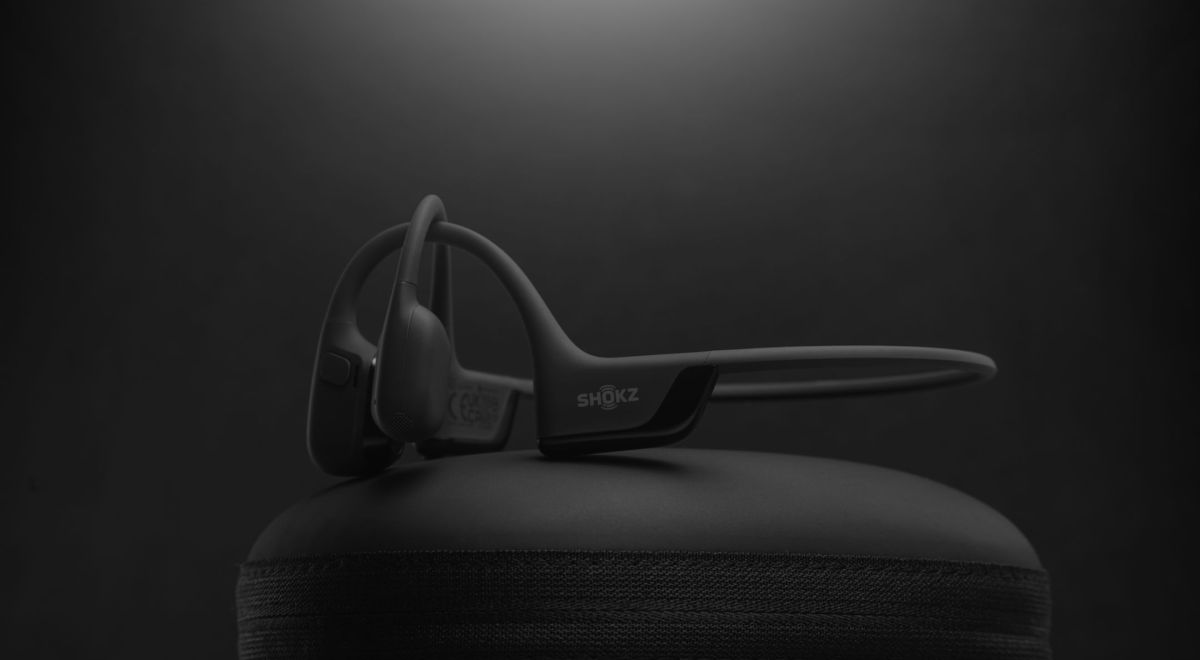
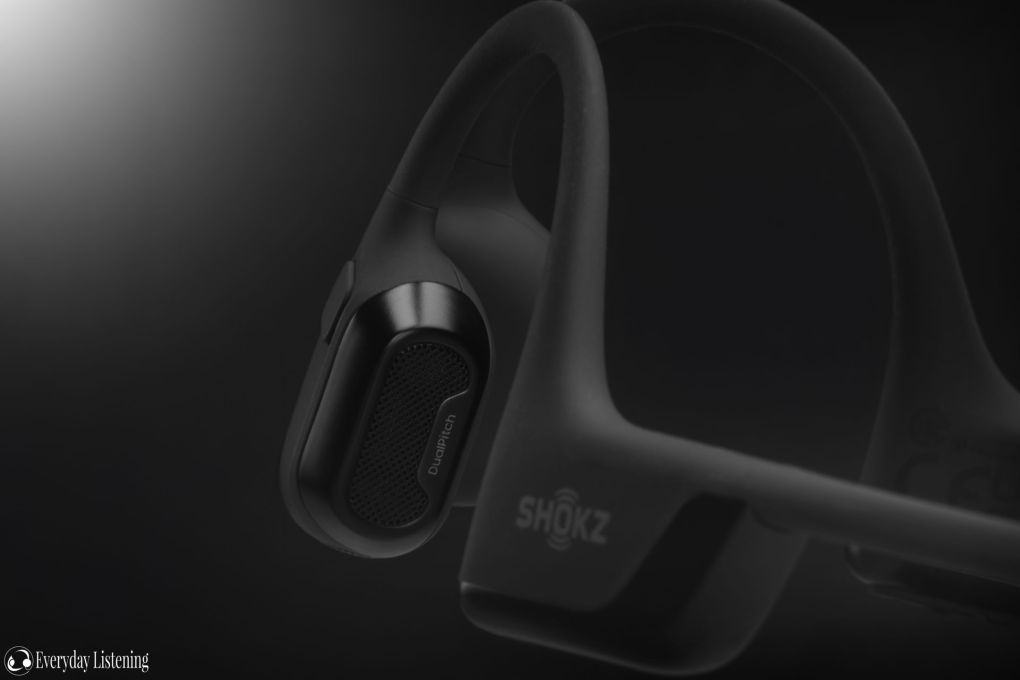
If you’re expecting any kind of audio fidelity, pure bone conduction technology will always leave you wanting. The technology has inherent limits mostly extending to bass reproduction; even non-sealing earbud-style earphones produce a more robust and extended low end. The OpenRun Pro 2 seeks to change this, adding in air conduction technology in addition; effectively a small speaker driver that plays directly into the outer ear. The difference is indeed dramatic yet with no seal, it’s still important to keep expectations within reason.
Accordingly, the Pro 2 now produces bass and a reasonably balanced overall sound profile to boot. Despite the use of two novel technologies, Shokz has achieved shocking coherence – to the extent that I was unsure the BCD’s were contributing at all. However, lifting the earpieces off the jaw joint reveals that they are indeed functioning quite potently as tweeters with the air conduction drivers handling “full range” below. If I had to comment on their contribution, it would be about 30/70 BCD to ACD. Some may lament the loss of effect, however, the upside is a more comfortable, less “buzzy” listening experience.
The sound profile is what you may expect from a sports-focused headphone. It’s gently L-shaped and designed to be warm, forgiving and widely appealing whilst minimising fatigue. There is no notable sub-bass slam but an audible rumble and a nice warm mid-bass punch set to a slightly warm and full-bodied midrange. The treble is present but quite rolled off and sits behind the other frequencies. Overall resolving power is just ample, there’s bite to percussion and cymbals have some air and shimmer. However, don’t expect immersive layering and imaging nor any real form of micro detail. The upside to the open form factor comes in the form of soundstage expansion as the Pro 2 delivers quite a wide, out-of-the-head experience in this regard simply due to the nature of its sound reproduction.
For an audio enthusiast, the quality and overall range will be ample. You can tell thought was put into the tuning and there are no huge issues with the voicing. In this regard, the OpenRun Pro 2 is very impressive as even many sports-focused in-ears suffer from huge tonal issues. While I also found the Pro 1 produced ample sound quality when exercising, in quiet environments, it lacks the full-range sound of the Pro 2 and hence, I found myself reaching for my other headphones instead. The Pro 2 I am able to wear all day, comfort and battery both contributing, and I never felt I was missing out on too much for general music listening around the house, or when watching movies or videos.
Of course, when critically listening to complex tracks, nothing beats a good in-ear or over-ear and the Pro 2 clearly lacks nuance by comparison. However, for louder environments for which it was designed to be used in – think commuting or exercising – the benefit to the BCD comes into play as the audio produced by these drivers is less affected by the presence of external noises. For instance, while bass is usually drowned out by ambient noise, voices are still very audible even in the presence of wind despite the limited maximum volume. This means you can still enjoy videos, podcasts and the vocals in music when out and about. The downside to the new design is sound leakage. If you are a high-volume listener, and are sitting in close proximity to others, your music will be audible due to the air conduction design. Below ~60% volume, there is very minimal leakage even in quiet environments but this is one area where the first-generation model may be preferable.
As a side note, the included eQ presets are all effective and useful. The standard mode is warm and smooth but still relatively balanced while the bass boost is full and somewhat boomy but sounds more balanced when in louder environments where bass tends to get drowned out. The vocal boost does just that while the treble boost injects a bit more energy and clarity into the sound. For those wanting the most fidelity, you can use the user eQ to increase the 64Hz range and a touch of emphasis at 8kHz to form a more well-rounded listening experience with more impact. The effect is far more subtle than the 4 Shokz presets but this also makes the eQ presets you create more versatile and fine-tunable.
Next Page: Comparisons & Verdict

Ryan Soo
Avid writer, passionate photographer and sleep-deprived medical student, Ryan has an ongoing desire to bring quality products to the regular reader.
 Everyday Listening
nice 👍. I just bought a pair
LikeLike